How to Draw Food
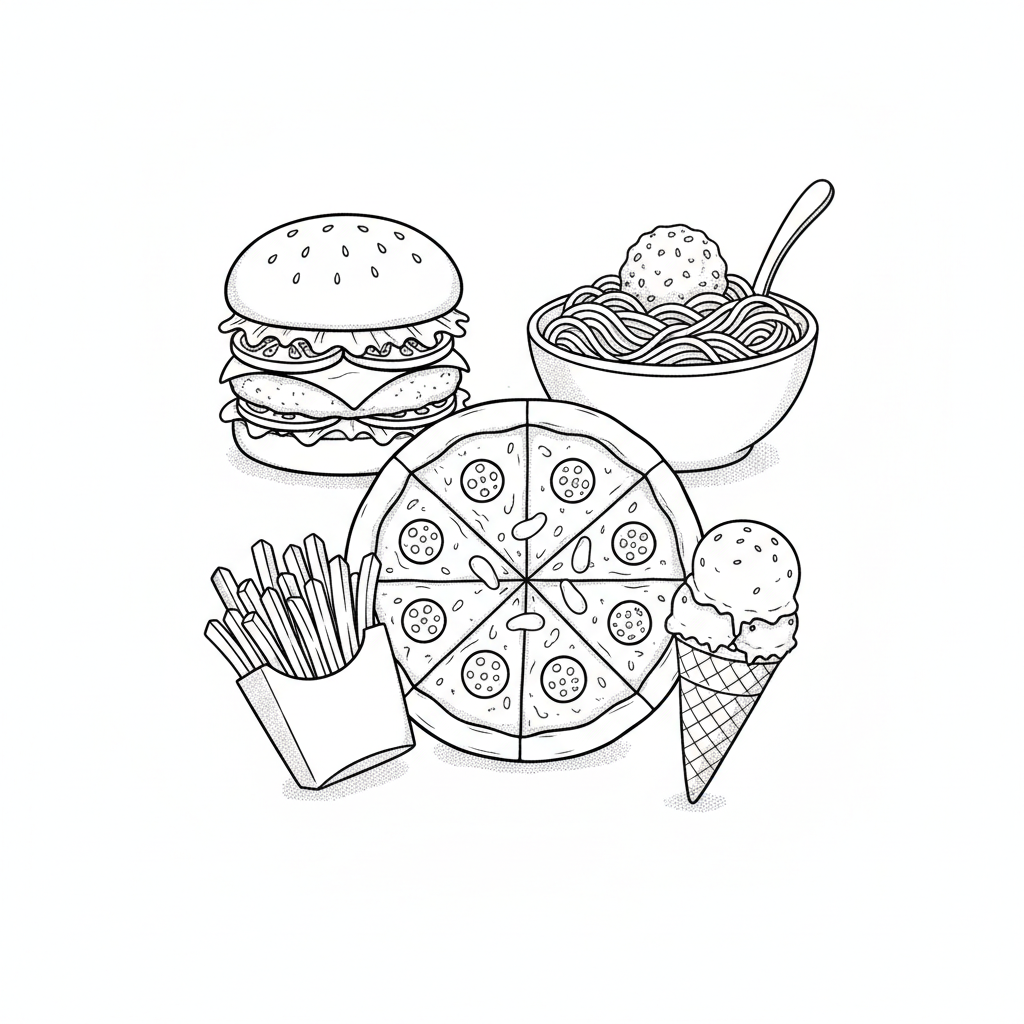
Draw five different foods (fruit, sandwich, pizza, cupcake, soup) using simple shapes, shading, and color to practice observation, proportion, and texture.
About this tutorial
Draw five different foods (fruit, sandwich, pizza, cupcake, soup) using simple shapes, shading, and color to practice observation, proportion, and texture.
What you need
Instructions
- 1
Step 1
Gather all your materials and clear a flat space to work on.
- 2
Step 2
Decide where on the page you will put each of the five foods so they do not overlap.
- 3
Step 3
Pick a real food item or a picture to look at for each of the five foods to study its shape and details.
- 4
Step 4
Lightly sketch a simple base shape for each food: a circle for fruit a rectangle for a sandwich a triangle or circle for pizza a dome for a cupcake and a bowl shape for soup.
- 5
Step 5
Turn the circle into your fruit by adding a stem a leaf or the fruit curve as you see in your reference.
- 6
Step 6
Turn the rectangle into a sandwich by drawing bread outlines and simple layer lines for filling.
- 7
Step 7
Turn your pizza shape into a pizza by drawing the crust and a few topping shapes.
- 8
Step 8
Turn the cupcake dome into a cupcake by adding a liner and swirled frosting lines.
- 9
Step 9
Turn the bowl shape into a soup bowl by drawing the rim a spoon and the soup surface.
- 10
Step 10
Add light pencil shading to each food to show roundness and depth using short strokes and your blending tool to soften edges.
- 11
Step 11
Add texture details like seeds on fruit sprinkles or crumbs and steam lines to make each food look realistic.
- 12
Step 12
Darken the final outlines with your black marker or darker pencil to make the drawings stand out.
- 13
Step 13
Gently erase any stray pencil lines that you no longer need.
- 14
Step 14
Color each food paying attention to the real colors proportions and textures you observed.
- 15
Step 15
Share your finished creation on DIY.org
Get inspired
Fun facts
How do I guide my child to draw five different foods to practice observation, proportion, and texture?
Start by picking five foods: a fruit, sandwich, pizza slice, cupcake, and bowl of soup. Have your child look closely and block each item into simple shapes (circles, rectangles, triangles). Add details—seed dots, crust lines, frosting swirls—then use light pencil shading to show roundness and depth. Finish with color, matching hues and highlights. Praise attempts, compare sizes for proportion, and repeat with different references to improve observation skills.
What materials do I need to draw five different foods with simple shapes, shading, and color?
You’ll need plain drawing paper or a sketchbook, a few pencils (HB and 2B), a soft eraser, colored pencils or washable markers, and a sharpener. Optional items: blending stump or finger for shading, a ruler for proportions, and printed photos or real foods as references. Use non-toxic, child-safe art supplies and a washable mat to protect surfaces for younger children.
What ages is this food-drawing activity suitable for?
This activity works for preschoolers through preteens with adjustments: ages 3–5 focus on simple shapes and bold color, 6–8 add details, basic shading, and size comparison, and 9–12 practice proportion, texture, and more realistic shading. Provide closer supervision for younger children and introduce more technique and observation challenges as skills improve. Tailor the complexity to your child’s attention and fine-motor level.
What are the benefits of drawing different foods using shape, shading, and color?
Drawing foods strengthens observation, fine motor control, and visual-spatial skills by practicing shapes, proportion, and layering color. It teaches texture recognition (sprinkles, crust, soup steam) and encourages careful looking, patience, and vocabulary about food and art. The activity also supports creativity, hand–eye coordination, and confidence when children see their progress. It can tie into healthy-eating conversations or a simple still-life lesson.
Watch & Learn
Need help?
What can we use instead of a blending tool or a black marker if we don't have them?
If you don't have a blending tool, use a cotton swab or your clean fingertip to soften the short pencil strokes, and if you don't have a black marker darken outlines with a dark colored pencil or fine-tip pen.
My foods are overlapping and my shading smudges—what should I do differently?
Before darkening outlines, redraw and resize the light base shapes (circle, rectangle, dome, bowl, triangle) to fix placement so they don't overlap, and prevent shading smudges by placing scrap paper under your hand and blending gently with short strokes.
How can I adapt this drawing activity for younger or older children?
For preschoolers have them trace or stick large base shapes and color with crayons, for elementary kids focus on adding simple texture details like seeds and crumbs, and for older kids encourage close study of a real food reference to add advanced shading and color blending before sharing on DIY.org.
How can we make our food drawings more creative or personal?
Personalize each item by inventing toppings or patterns, add a placemat or background scene, try a wash of watercolor for the soup surface, and label each drawing or write a tiny recipe next to it before you darken outlines.