How to Draw Flowers
Draw several simple flowers using pencil and colored pencils. Practice petal shapes, stems, and shading to create a small floral sketchbook.
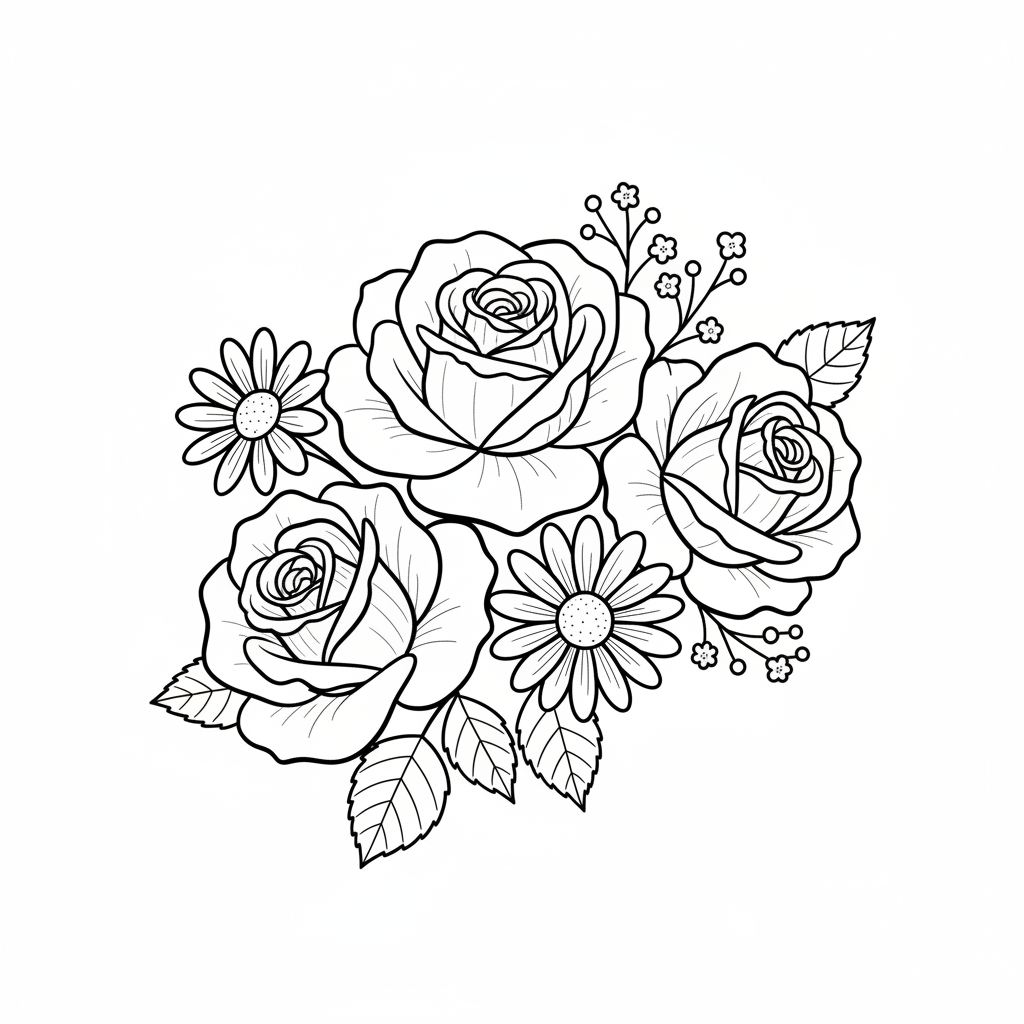
About this tutorial
Draw several simple flowers using pencil and colored pencils. Practice petal shapes, stems, and shading to create a small floral sketchbook.
What you need
Instructions
- 1
Step 1
Find a clean flat surface with good light to work at.
- 2
Step 2
Open your sketchbook to a fresh page.
- 3
Step 3
Sharpen your pencil until the tip is ready for light drawing.
- 4
Step 4
Lightly draw a small circle near the top third of the page for the center of your first flower.
- 5
Step 5
Draw five simple oval or teardrop petals around the circle, one petal at a time.
- 6
Step 6
Draw a straight or slightly curved stem from the bottom of the flower center down the page.
- 7
Step 7
Add one or two almond-shaped leaves along the stem.
- 8
Step 8
Repeat Steps 4 to 7 to draw at least two more flowers using different petal shapes like round pointy or heart-shaped.
- 9
Step 9
Add light pencil shading on one side of each petal and under the flower center to show depth.
- 10
Step 10
Use your eraser gently to lift small highlights on petals where light would hit.
- 11
Step 11
Color each flower with colored pencils using at least two colors per flower and color the stems and leaves.
- 12
Step 12
Share your finished floral sketchbook pages on DIY.org
Get inspired
Fun facts
How do I teach my child to draw simple flowers step-by-step?
Start with light pencil sketches: draw a small circle for the flower center, then add basic petal shapes (ovals, teardrops or hearts). Add a straight or slightly curved stem and simple leaves. Refine outlines, erase extra lines, then add shading to the center and base of petals for depth. Finish by layering colored pencils from light to dark, blending gently. Repeat different shapes to build a small floral sketchbook.
What materials do I need to draw flowers with pencils and colored pencils?
You’ll need a sketchbook or heavy paper, a set of HB and softer pencils (2B/4B), a small eraser, a pencil sharpener, and a set of colored pencils. Optional: a blending stump or cotton swab for smooth shading, a ruler for stems, and a reference photo or real flowers. Keep non-toxic, child-safe supplies and a washable surface for easy cleanup.
What ages is drawing simple flowers suitable for?
This activity suits many ages: preschoolers (3–5) can trace and color simple petal shapes with supervision; early elementary (6–8) can sketch basic flowers and practice shading; older kids (9–12+) can refine proportions, experiment with shading techniques, and assemble a sketchbook. Adjust complexity, tool choices, and adult help based on fine-motor skill and attention span.
What are the benefits and fun variations of making a floral sketchbook?
Drawing flowers builds fine motor skills, observation, patience and creative confidence. It’s calming and improves color mixing and shading know-how. Variations: try different styles (cartoon, realistic, silhouette), add watercolor washes under colored pencil, press a real flower as a reference, or make greeting cards from favorite sketches. Encourage date-stamping pages to track progress.
Watch & Learn
Need help?
What can I use if I don't have a sketchbook, sharpened pencil, eraser, or colored pencils?
If you don't have a sketchbook or colored pencils, tape a clean sheet of printer paper to a flat surface (Step 1–2), use a regular or mechanical pencil sharpened as in Step 3, substitute a white rubber eraser for lifting highlights in Step 10, and use crayons or markers for the coloring in Step 11.
My petals look uneven or crowded—how do I fix that while drawing?
If your five petals look uneven when drawing around the center circle (Steps 4–5), lightly mark five spacing dots around the circle before sketching each petal so they stay evenly placed and sized.
How can I adjust this activity for younger or older children?
For younger kids simplify by drawing three large petals and coloring with crayons (Steps 4, 11), while older kids can try different petal shapes, add at least two-color blending and detailed pencil shading on petals and centers (Steps 8, 9, 11).
What are simple ways to extend or personalize the flower drawings?
To extend the activity, vary petal shapes as suggested in Step 8, add a background garden or insect details, experiment with lifting highlights using the eraser in Step 10, and then photograph or scan your favorite pages to share on DIY.org (Step 12).