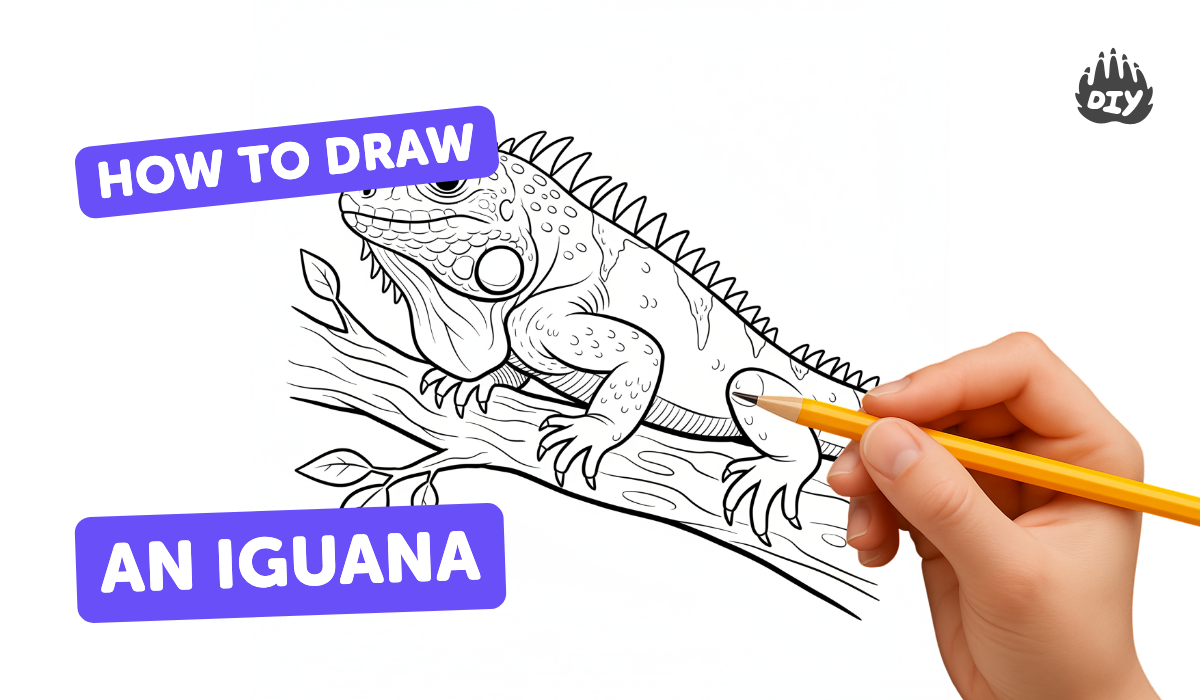
How to draw an iguana - a free iguana drawing guide
Draw a detailed iguana step by step using simple shapes, lines, shading, and color with guidance. Practice observation, proportion, and texture techniques.


Drawing Apps
Get inspired with these
Instructions
How To Draw An Iguana
Step 1
Lightly draw a small circle near the top of your paper for the iguana's head.
Step 2
Lightly draw a larger oval slightly behind and below the head circle for the iguana's body.
Step 3
Draw a long curved tapering shape from the back of the oval to form the iguana's tail.
Step 4
Draw a short curved line connecting the head circle to the body oval to make the neck.
Step 5
Mark four short guide lines on the body two near the front and two near the back to show where the legs will go.
Step 6
Draw all four legs using two connected tube shapes for each leg and add oval shapes for the feet.
Step 7
Add long curved claws to each toe by drawing thin triangle shapes at the tip of each foot.
Step 8
Draw the face details by adding a round eye with a vertical pupil a curved mouth line and a small nostril.
Step 9
Add the crest by drawing a row of small triangles along the head back and tail.
Step 10
Create the scale texture by drawing small rounded shapes across the body and larger round scales on the cheeks.
Step 11
Trace over your favorite pencil lines with the fine-tip black pen to finalize the outline.
Step 12
Gently erase the remaining pencil guide lines so only your final inked drawing remains.
Step 13
Add gentle pencil shading under the belly along the tail and under the legs and blend the shading with the tissue for smooth shadows.
Step 14
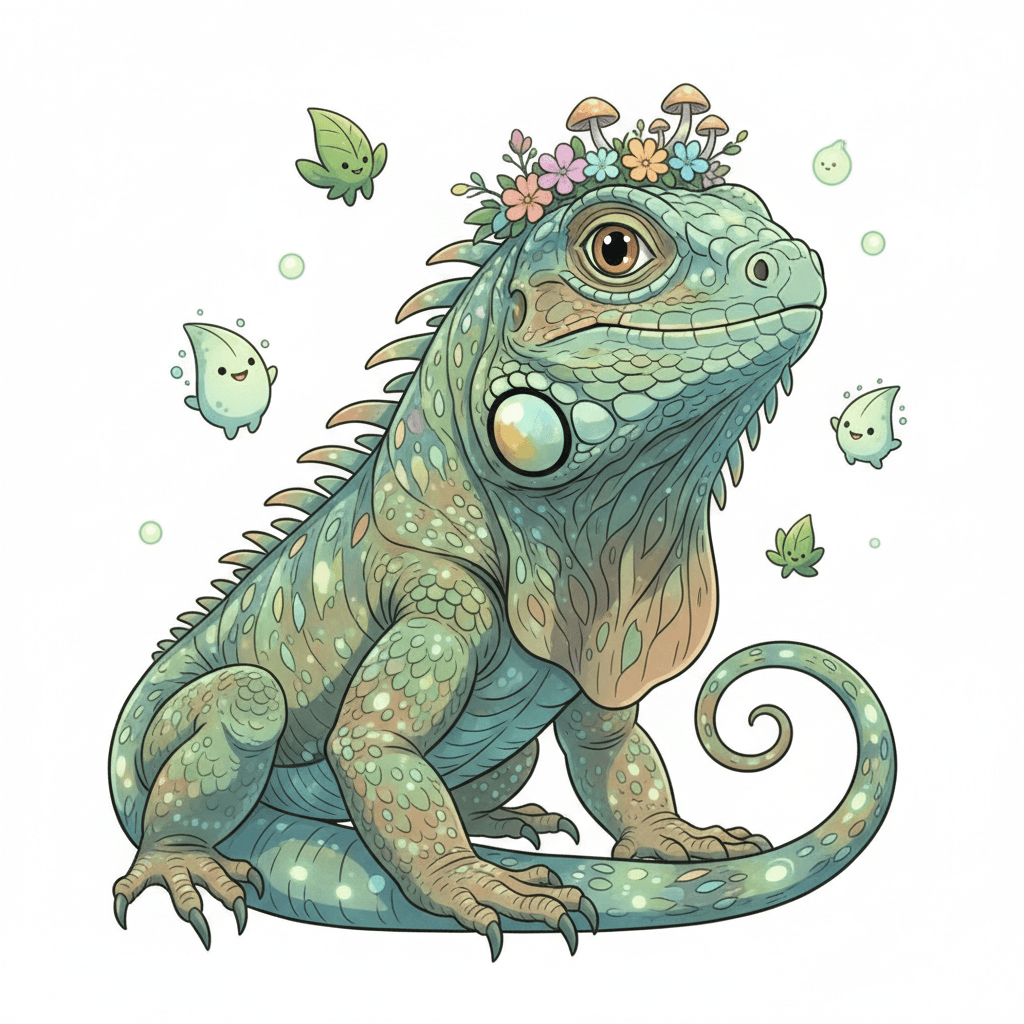
Color your iguana using greens browns and yellows and use darker colors where you added shading to make it look three dimensional.
Step 15
Share your finished iguana on DIY.org
Help!?
What can I use if I don't have a fine-tip black pen, colored pencils, or a tissue for blending?
If you don't have a fine-tip black pen, trace over your favorite pencil lines with a sharp dark pencil or thin black marker, substitute markers or crayons for the greens, browns, and yellows when coloring, and use a cotton swab or your fingertip to gently blend the pencil shading under the belly and along the tail instead of a tissue.
My iguana's legs, tail, or scales look off—what step should I redo and how can I avoid smudging when fixing it?
If the two connected tube shapes for the legs, the long curved tapering tail, or the scale texture look uneven, lightly erase and redraw them using the four short guide lines on the body to position legs correctly, then wait for the ink from the fine-tip black pen to fully dry before gently erasing remaining pencil guide lines to prevent smudges.
How can I change the drawing to suit younger or older kids?
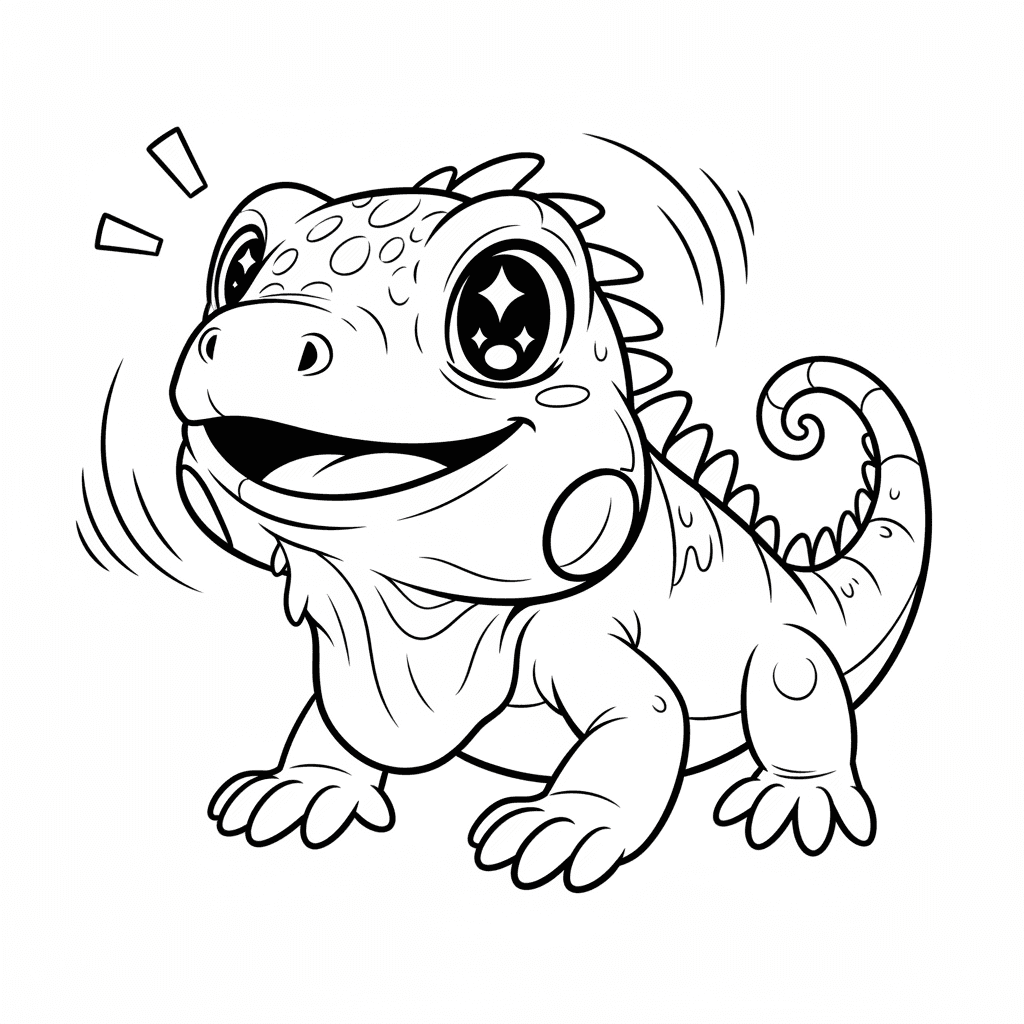
For younger children simplify by using a single rounded body and basic feet with washable markers instead of the two connected tube-shaped legs and fine inking, while older kids can add more scale texture, larger round cheek scales, detailed crest triangles, and refined pencil shading blended with a tissue for three-dimensionality.
How can we extend or personalize the iguana drawing once it's finished?
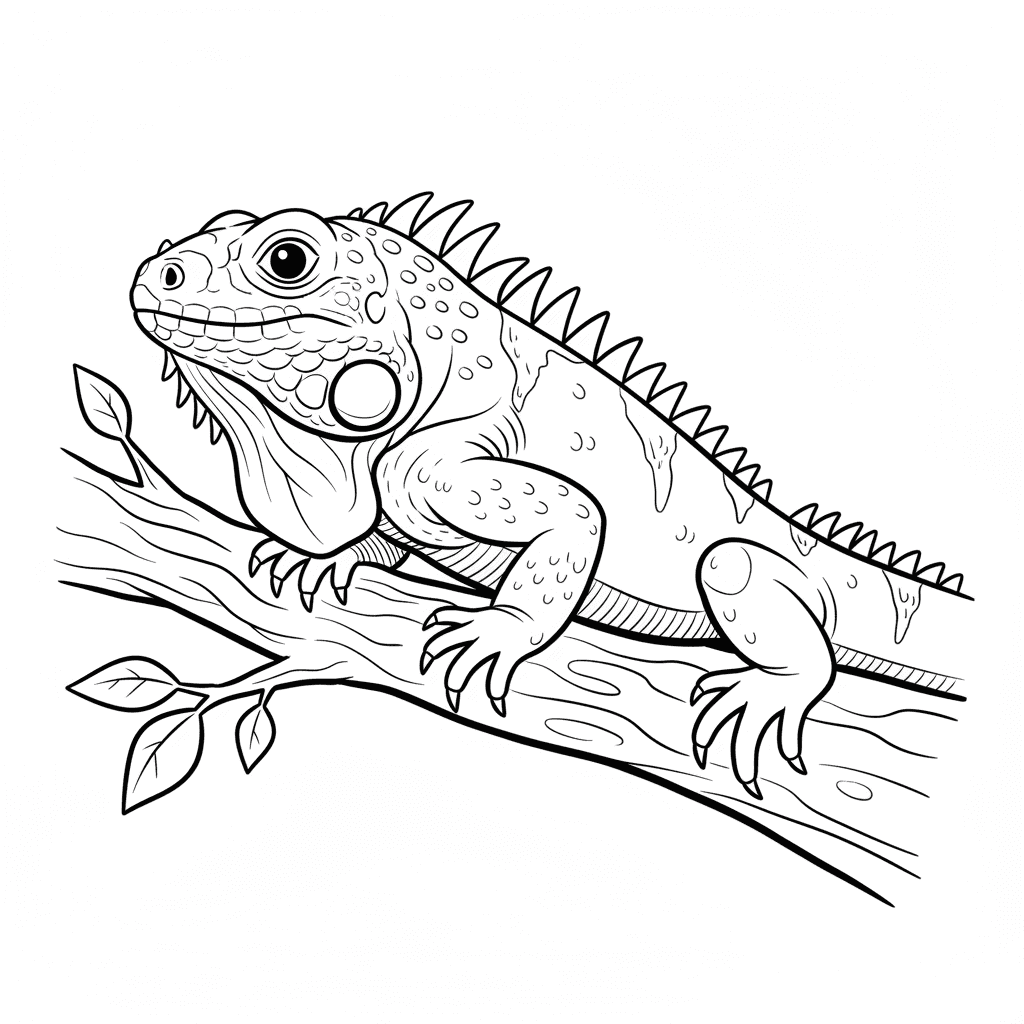
To personalize it, add a branch or leaves under the feet as a background, create a baby iguana by making the head circle proportionally larger than the body oval before inking, or experiment with bright patterned scales and mixed greens, browns, and yellows when coloring to make it unique before sharing on DIY.org.
Related videos
Easy Iguana Drawing For Kids Anyone Can Try!
4 Videos
Easy Iguana Drawing For Kids Anyone Can Try!
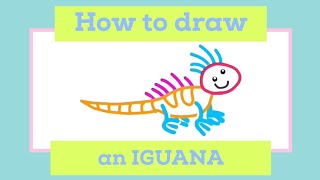
How to draw an Iguana. Easy drawing for kids & toddlers #drawing #kids #howto #easydrawing iguana
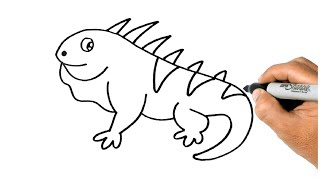
HOW TO DRAW AN IGUANA EASY STEP BY STEP
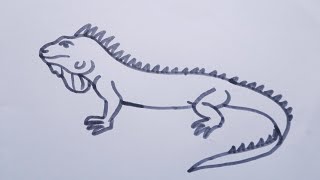
How to draw an Iguana (lizard)/Easy drawing step by step/iguana drawing tutorial
Fun Facts
🦎 Green iguanas can grow up to about 1.5–2 meters (5–6.5 feet) long including their tail — great for practicing proportion!
👁️ Iguanas have a "third eye" (the parietal eye) on top of their head that detects light and movement.
🪵 Their backs have a row of spiky scales called a dorsal crest — perfect for practicing short, textured strokes.
🎨 Iguanas subtly change shade to help warm up or cool down, so shading can show temperature and mood in your drawing.
🥬 Most iguanas are plant-eaters and nibble leaves — adding a little leafy snack can make your drawing more life-like.
How do I teach a child to draw an iguana step by step?
What materials do I need to draw an iguana with my child?
What ages is drawing an iguana suitable for?
What are the benefits of drawing an iguana and practicing texture techniques?
