How to Draw a Tiger Face
Draw a tiger face step-by-step with pencil and colored pencils, learning facial proportions, stripes, symmetry, and simple shading to create a lifelike result.
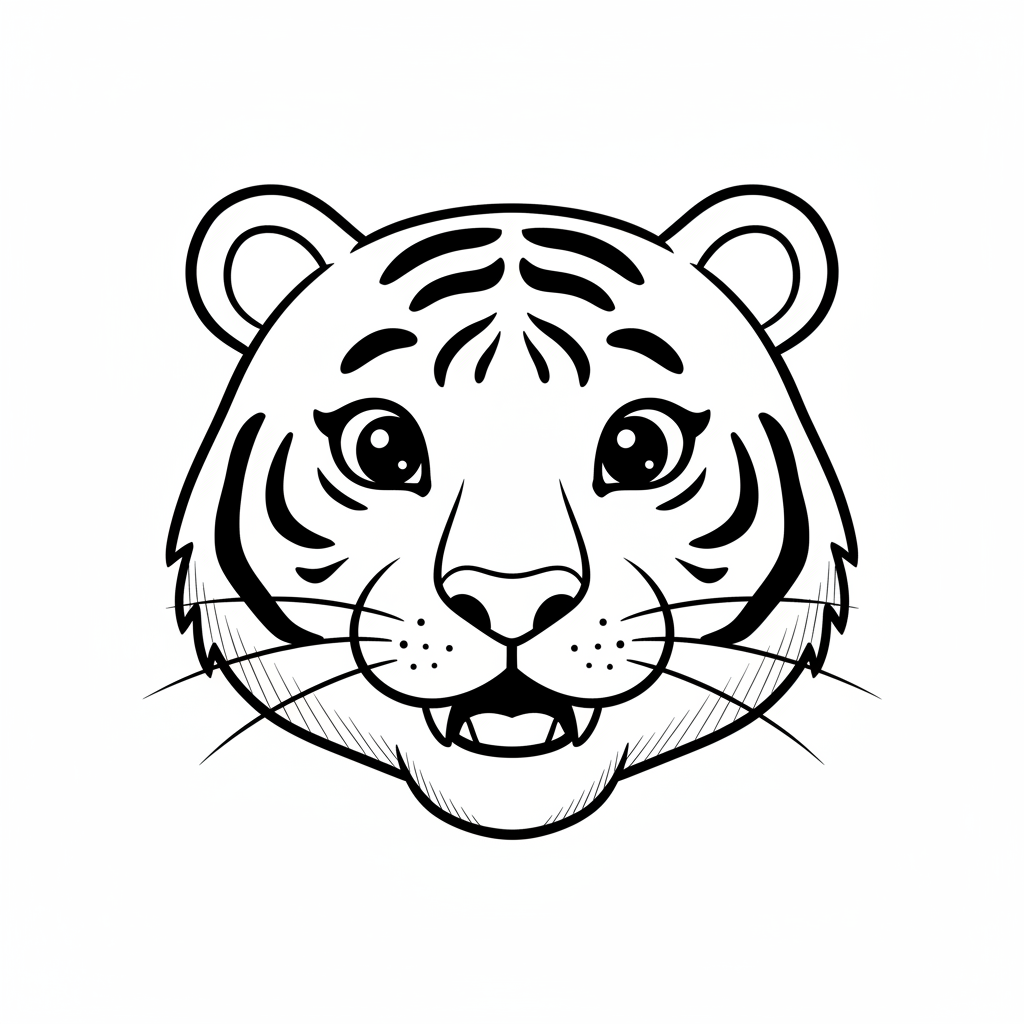
About this tutorial
Draw a tiger face step-by-step with pencil and colored pencils, learning facial proportions, stripes, symmetry, and simple shading to create a lifelike result.
What you need
Instructions
- 1
Step 1
Gather your materials and set them on a flat table.
- 2
Step 2
Place your paper and draw a light circle to make the tiger’s head.
- 3
Step 3
Draw a vertical guideline down the center of the circle to help with symmetry.
- 4
Step 4
Draw a horizontal guideline across the lower third of the circle to mark eye level.
- 5
Step 5
Mark two equal spots on the horizontal line where the eyes will go.
- 6
Step 6
Draw almond-shaped eyes around the two marks and add small pupils in each eye.
- 7
Step 7
Draw a small rounded triangle nose on the vertical line just below the eye line.
- 8
Step 8
Draw a short vertical line under the nose and two gentle curves from its end to make the mouth.
- 9
Step 9
Draw two rounded triangular ears on the top left and right edges of the circle.
- 10
Step 10
Draw soft cheek curves and a jawline to shape the lower face.
- 11
Step 11
Add mirrored curved stripes across the forehead and down the cheeks to keep the tiger symmetrical.
- 12
Step 12
Add three small dots on each side of the muzzle and draw whiskers coming out from them.
- 13
Step 13
Shade the pupils and the inside of the nose lightly with your pencil and gently blend with a tissue.
- 14
Step 14
Color the main fur orange leave the muzzle and inner ears white and color the stripes black with colored pencils.
- 15
Step 15
Share your finished tiger face on DIY.org.
Get inspired
Fun facts
How do you draw a tiger face step-by-step with pencil and colored pencils?
Start with a light circle for the skull and add a vertical and horizontal guideline to place eyes and nose. Sketch a rounded muzzle and jawline, then mark eye shapes, nose, and mouth. Add rounded ears and block in major stripe areas. Refine lines, erase extra guidelines, and darken contour. Shade lightly to show form, then use colored pencils: lay down base orange, add white on muzzle and inner ears, finish with black stripes and subtle highlights for realism.
What materials do I need to draw a tiger face with pencils and colored pencils?
Gather a sharpened HB pencil for sketching and a softer 2B for darker lines and shading. Use a quality eraser, pencil sharpener, and medium-weight drawing paper. Bring colored pencils in orange, black, white, yellow, and brown. A blending stump or tissue helps smooth graphite; a kneaded eraser lifts highlights. Optional: a ruler for guidelines and a reference photo of a tiger face for accurate proportions and stripe patterns.
What ages is drawing a tiger face suitable for?
This activity fits a wide range: preschoolers (with heavy adult help) can enjoy simple coloring and basic shapes; ages 6–8 can follow simplified step-by-step guidance; ages 9–12 handle proportions, stripes, and basic shading independently. Teens and adults can refine realism and advanced shading. Adjust complexity and time to match attention span and fine-motor skills, and supervise younger children when using sharpened pencils or small tools.
What are the benefits of drawing a tiger face for children?
Drawing a tiger face builds fine motor control, spatial awareness, and observation skills as kids learn facial proportions and symmetry. Repeating stripe patterns improves pattern recognition and hand-eye coordination. Shading introduces light and form concepts, boosting visual literacy. The project encourages patience, creativity, and confidence when a realistic result appears. It also provides a calm, focused activity that can reduce stress and spark interest in wildlife and art.
Watch & Learn
Need help?
What can we use instead of colored pencils or a tissue if we don't have them?
If you don't have colored pencils, use crayons for a softer look or fine-tip markers for bold black stripes (but test markers on scrap paper because they can bleed), and substitute a cotton swab or kleenex for the tissue when blending the shaded pupils and inside of the nose.
My tiger looks lopsided—how can I fix symmetry after drawing?
If the tiger looks lopsided, use the original light circle and vertical guideline from steps 2–3 to lightly erase and reposition the eyes, nose and ears so you can redraw mirrored forehead stripes, cheek stripes and whiskers symmetrically.
How can I adapt this tiger-face activity for younger or older kids?
For younger children, pre-draw the circle plus the vertical and horizontal guidelines and have them focus on coloring the main orange fur and black stripes from the coloring step, while older kids can add extra fur texture, detailed stripe patterns and blended shading of pupils and the nose using the tissue as described.
How can we extend or personalize the finished tiger face before sharing it?
To extend the activity, add a background jungle scene, experiment with watercolor washes behind the completed face, alter the tiger's expression or fur colors for variation, and then upload the finished tiger face to DIY.org as the final sharing step.