How to draw a sky - a free sky drawing guide
Draw a sky with gradients, clouds, sun, and horizon using pencils, crayons, or paint. Practice blending colors and simple perspective to create depth and atmosphere.


Drawing Apps
Photos of sky drawing examples with gradients, clouds, sun, and horizon
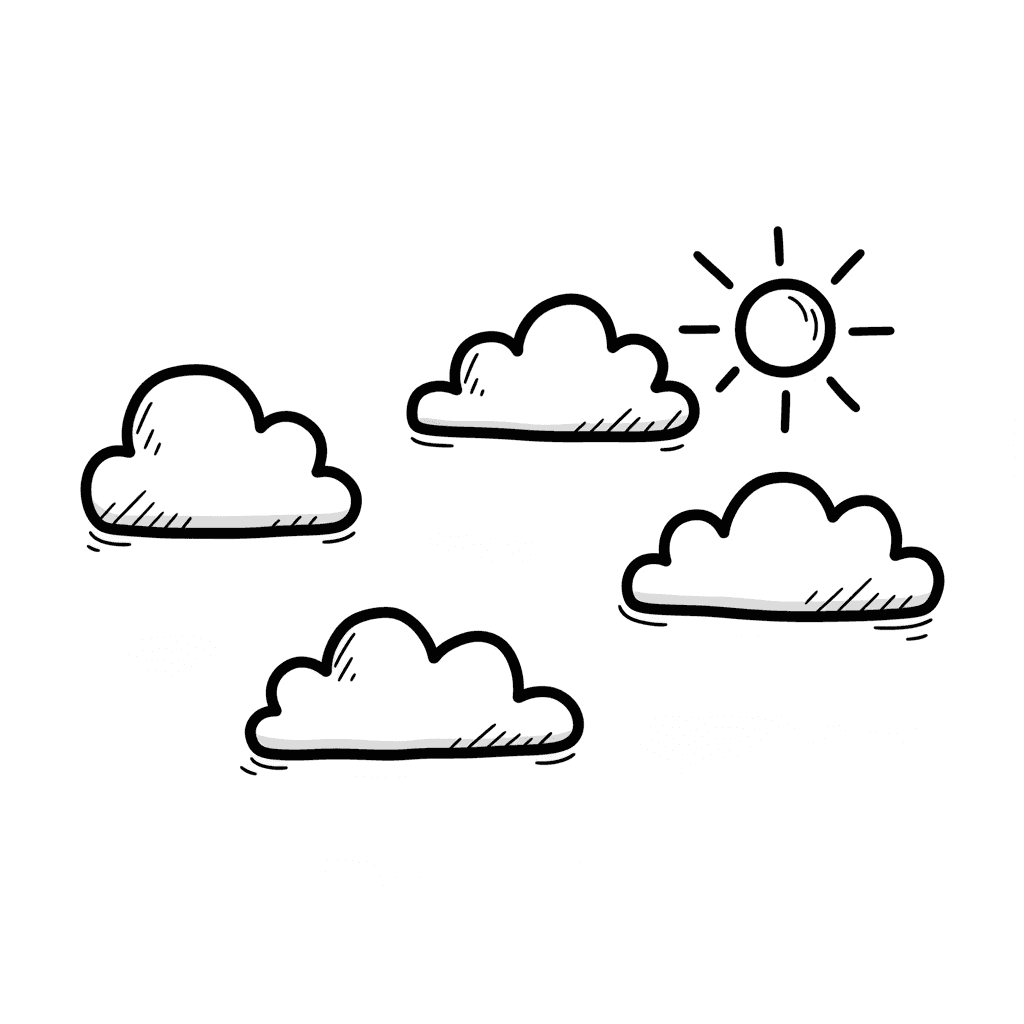
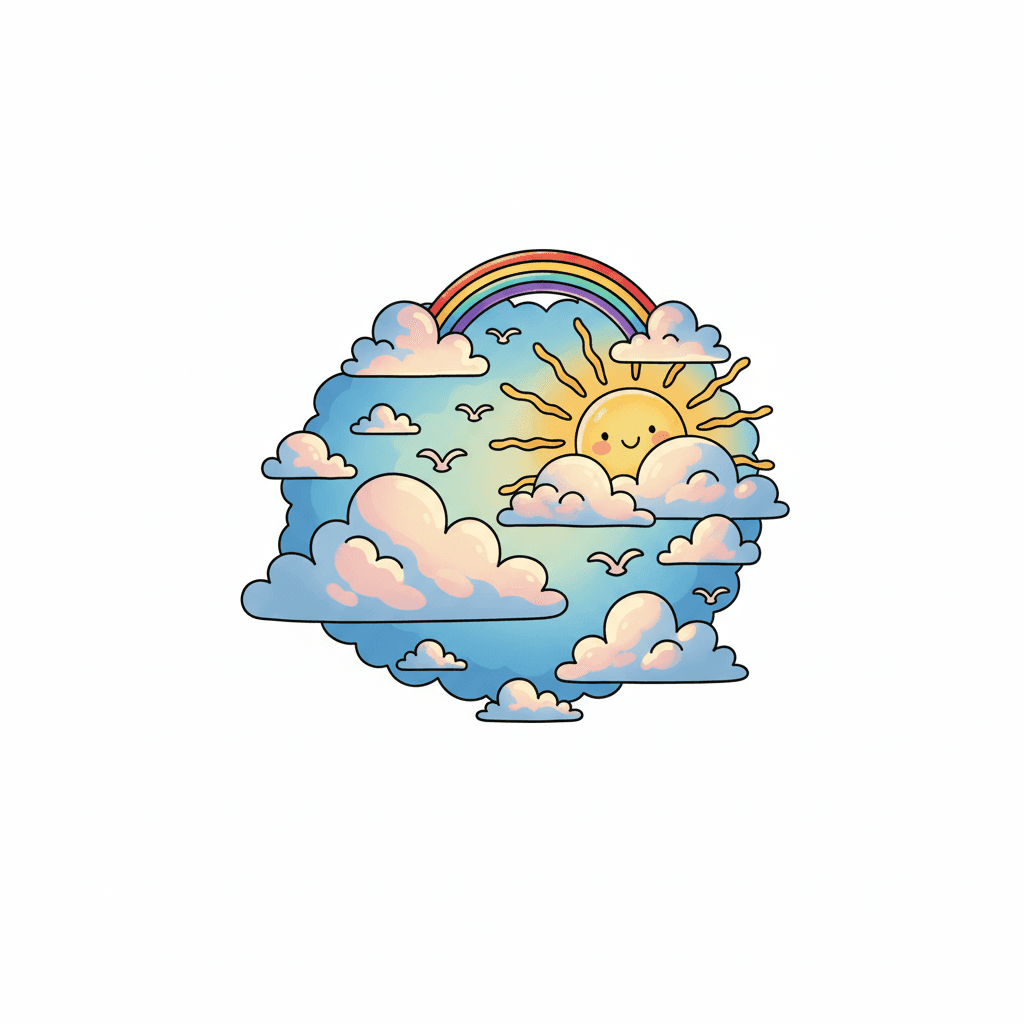

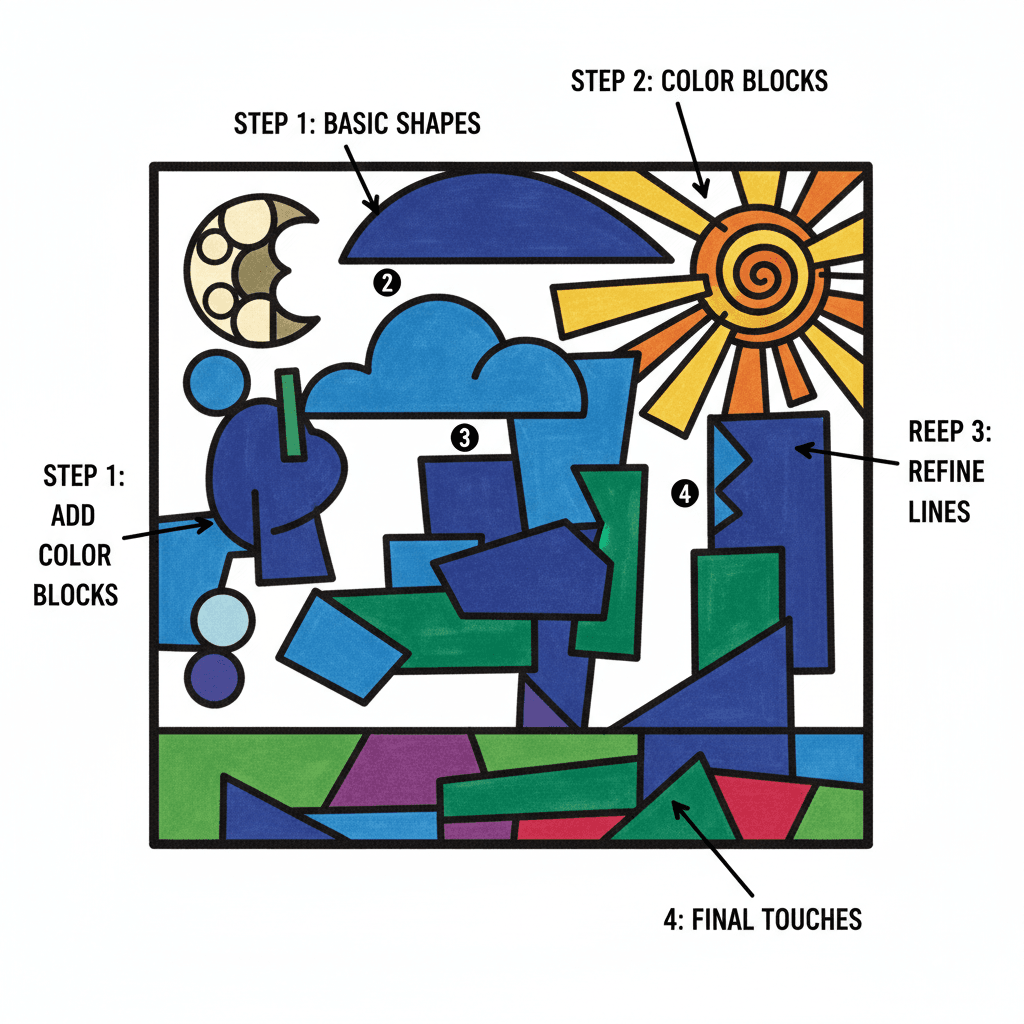
Step-by-step guide to draw a sky with gradients, clouds, sun, and horizon
How To Draw Earth (for young artists)
Step 1
Place your paper flat on the table in landscape (wide) position.
Step 2
Use your pencil to draw a light horizontal horizon line about one-third up from the bottom.
Step 3
Draw a small circle above the horizon where you want the sun to be.
Step 4
Sketch three or four fluffy cloud shapes higher than the horizon with light pencil lines.
Step 5
Apply a deep sky color across the top of your paper with even strokes.
Step 6
Apply a lighter sky color starting at the middle and moving down toward the horizon.
Step 7
Blend the spot where the top color and the middle color meet with gentle back-and-forth strokes or a blending tool until smooth.
Step 8
Apply a pale warm color right along the horizon to make the sky look lighter near the ground.
Step 9
Blend the pale horizon color softly upward into the lighter sky color.
Step 10
Darken the bottom edge of your paper slightly with a slightly darker tone to add depth.
Step 11
Blend the darker bottom edge upward a little so the change is smooth.
Step 12
Color the sun with a bright warm color like yellow or orange.
Step 13
Lightly blend a soft halo outward from the sun into the sky.
Step 14
Shade the bottoms of your clouds with a light gray or blue to give them puffy depth.
Step 15
Share your finished sky drawing on DIY.org.
Help!?
What can we use instead of a blending tool or the exact deep sky and lighter sky colors if we don't have them?
Use a clean tissue, cotton ball, or fingertip to blend the spot where the top color and the middle color meet, and substitute dark- and light-blue crayons or watered-down blue paint for the deep sky and lighter sky colors.
My sky looks muddy where I blended the deep sky and lighter sky—how do I fix that?
Work in light layers when you Apply a deep sky color across the top and Apply a lighter sky color from the middle down, wipe or change your blending tool between colors, and blend with gentle back-and-forth strokes to keep the transition smooth without muddying.
How can I adapt this activity for a 4-year-old compared to a 10-year-old?
For a 4-year-old, simplify by drawing the horizon with a pencil and using broad crayon or finger strokes for the sky and sun, while a 10-year-old can add multiple color layers, refine the halo around the sun, and Shade the bottoms of the clouds with light gray or blue for depth.
What are simple ways to enhance or personalize the finished sky before sharing it on DIY.org?
Add silhouetted trees or birds along the horizon, increase sunset drama by applying a pale warm color right along the horizon and lightly blending orange into the sun's halo, then share your finished sky drawing on DIY.org.
Watch videos on how to draw a sky with gradients, clouds, sun, and horizon
How To Draw An Airplane (For Young Artists)
4 Videos
How To Draw An Airplane (For Young Artists)

How To Draw A Kid Flying A Kite
How to draw Landscape Art for Beginners | Children Scenery Art
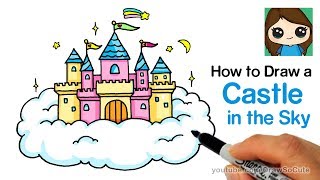
How to Draw a Castle in the Sky Easy
Facts about landscape drawing for kids
🌈 The sky looks blue because tiny air molecules scatter shorter (blue) wavelengths of sunlight — that’s called Rayleigh scattering.
☀️ At sunrise and sunset the sky turns red and orange because sunlight travels through more atmosphere, scattering the blue light away.
🎨 Artists use atmospheric perspective — making distant objects lighter, bluer, and less detailed — to show depth in skies and landscapes.
☁️ Clouds are made of tiny water droplets or ice crystals; a single large cloud can weigh hundreds of tons even though it floats.
✏️ When blending with pencils, crayons, or paint, artists usually build up light layers and use soft, small strokes to create smooth gradients.
How do I teach my child to draw a sky with gradients, clouds, sun, and horizon?
What materials do I need to draw a gradient sky with clouds, sun, and horizon?
What ages is this sky-drawing activity suitable for?
What are easy variations to try when drawing a sky with gradients and clouds?
