How to Draw a Pen
Draw a realistic pen using basic shapes, correct proportions, and simple shading. Practice step by step sketching, careful measurements, ink details, and steady linework.
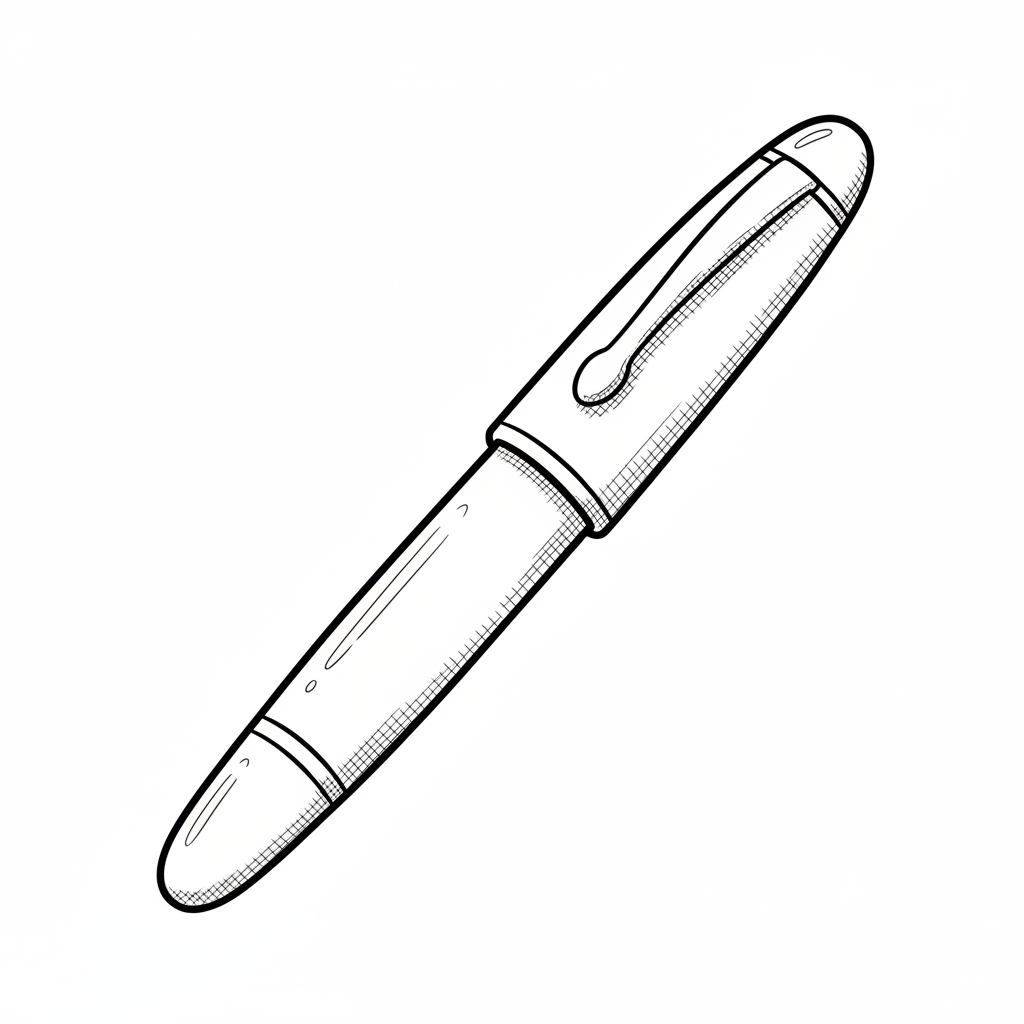
About this tutorial
Draw a realistic pen using basic shapes, correct proportions, and simple shading. Practice step by step sketching, careful measurements, ink details, and steady linework.
What you need
Instructions
- 1
Step 1
Gather your materials and sit at a clean table with good light.
- 2
Step 2
Decide how long you want your pen to be and use the ruler to lightly mark the two end points on the paper.
- 3
Step 3
Draw a light straight centerline between the two marks to guide the pen’s length.
- 4
Step 4
Draw two light parallel lines on either side of the centerline to set the barrel width.
- 5
Step 5
Connect the parallel lines at both ends with gentle rounded arcs to make the basic cylinder shape of the pen.
- 6
Step 6
At one end draw a slightly wider rounded cap shape that overlaps the barrel a little to show where the cap sits.
- 7
Step 7
Add a clip by drawing a thin curved rectangle attached to the cap and draw a thin seam line where the cap meets the barrel.
- 8
Step 8
At the other end taper the barrel into a small cone shape and draw a tiny rounded nib or ball tip to make the pen point.
- 9
Step 9
Draw small grip rings or a textured band near the tip and any thin decorative lines to suggest details.
- 10
Step 10
Erase extra construction marks you no longer need and gently refine the pen’s outline until you like the shape.
- 11
Step 11
Carefully trace over your final outline with the fine-tip pen using steady single strokes for clean linework.
- 12
Step 12
Wait until the ink is fully dry then gently erase the remaining pencil guidelines.
- 13
Step 13
Decide where the light is coming from and add light pencil shading on the side opposite the light; softly blend the shading with a tissue or stump and draw a faint cast shadow beneath the pen.
- 14
Step 14
Take a photo or scan your finished drawing and share your realistic pen on DIY.org.
Get inspired
Fun facts
How do I teach my child to draw a realistic pen step by step?
Start by drawing a light centerline and measure the pen’s overall length. Sketch two ellipses for the barrel’s ends and connect them with parallel lines to form a cylinder. Add the cap, clip, tip, and any ridges using simple rectangles and tapered shapes, checking proportions as you go. Refine contours, erase construction lines, then add shading: pick a light source, darken core shadows and cast shadow, add subtle highlights and fine ink details with a steady hand or a fine liner for crisp edges
What materials do we need to draw a realistic pen at home?
You’ll need drawing paper, a set of pencils (HB for sketching, 2B–4B for darker tones), a good eraser, and a sharpener. Include a ruler or straightedge and a compass or ellipse guides for accurate shapes. For shading and blending use a blending stump or tissue. For final ink details bring fine liners (0.3–0.5 mm) or a gel pen. Optional: white gel pen for highlights and kneaded eraser for lifting graphite.
What ages is drawing a realistic pen suitable for?
This activity suits children roughly aged 7 and up. Younger kids (7–9) can focus on basic shapes and simple outlines with teacher or parental guidance. Ages 10–13 can handle more accurate proportions and basic shading. Teens and older kids can work on fine details, realistic textures, and inking. Always adapt expectations: offer thicker pencils, wider grips, or tracing templates for younger or less confident children and give more technical challenges to older learners.
What are the benefits of practicing realistic pen drawing with my child?
Drawing a realistic pen builds observation skills, proportion understanding, and fine motor control. Step-by-step measuring and steady linework improve patience, hand-eye coordination, and attention to detail. Shading practice introduces light and form concepts useful for all drawing. It also boosts confidence as children see progress from simple shapes to a finished, believable object. Encourage reflection on mistakes and repetition—these help visual memory and transferable skills for writing a
Watch & Learn
Need help?
What can I use instead of a ruler, fine-tip pen, or blending stump if I don't have them?
Use a straight book edge or credit card as a ruler, trace your final outline with a sharpened pencil or thin marker instead of a fine-tip pen, and blend the shading with a tissue, cotton swab, or your fingertip in place of a stump.
My pen looks lopsided or the cap doesn't sit right—how can I fix it?
Redraw the light centerline and parallel barrel lines with your straight edge, reconnect the ends with gentle rounded arcs to reshape the cylinder and cap so the cap overlaps correctly, erase extra construction marks, and then ink with steady single strokes to avoid wobble.
How can I adapt this drawing activity for different ages or skill levels?
For younger kids, simplify by tracing a real pen or using a stencil and a thick marker while skipping detailed shading, and for older kids, add the textured grip rings, thin decorative lines, refined pencil shading blended with a stump or tissue, and precise inking with the fine-tip pen for realism.
What are some ways to extend or personalize the pen drawing once it's finished?
Personalize by adding colored accents or thin decorative lines with colored pencils or markers, draw the pen from different angles or with the cap off to show the nib, and photograph or scan each version to compare before sharing on DIY.org.