How to Draw a Mug
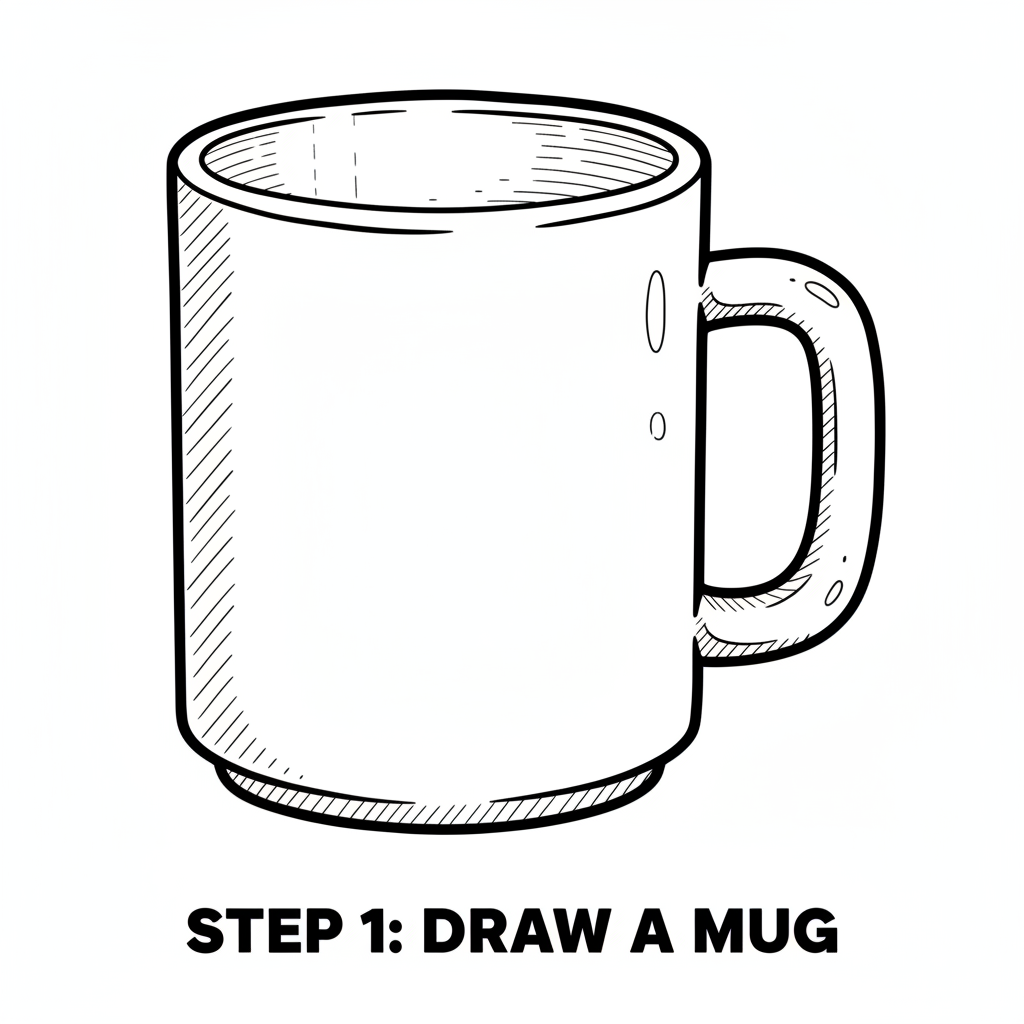
Draw a simple mug step by step using basic shapes, add a handle, shading, and decoration to learn proportions, perspective, and drawing skills.
About this tutorial
Draw a simple mug step by step using basic shapes, add a handle, shading, and decoration to learn proportions, perspective, and drawing skills.
What you need
Instructions
- 1
Step 1
Lightly draw a horizontal oval near the top third of your paper to make the mug's top rim.
- 2
Step 2
From each side of the oval draw a vertical line straight down about the same length to make the mug's sides.
- 3
Step 3
Connect the two vertical lines with a gentle curved line to form the mug's bottom.
- 4
Step 4
Draw a smaller oval just inside the top rim to show the inside edge of the mug.
- 5
Step 5
Sketch a large C shape on one side of the mug where the handle will go.
- 6
Step 6
Draw a smaller C inside the first C to make the handle look thick and sturdy.
- 7
Step 7
Pick a light direction by imagining a dot where the light comes from and keep it in mind.
- 8
Step 8
Shade the side opposite the light using short curved pencil strokes that follow the mug's round shape.
- 9
Step 9
Gently blend the shaded area with a cotton swab or tissue to smooth the tones.
- 10
Step 10
Erase a thin curved strip on the lit side to create a bright highlight.
- 11
Step 11
Add a soft flattened oval under the mug opposite the light to make a cast shadow.
- 12
Step 12
Decorate the mug with a simple pattern like stripes dots or a small drawing on the side.
- 13
Step 13
Trace your final outlines with a darker pencil or black pen and then color the mug keeping darker tones where you shaded.
- 14
Step 14
Share your finished mug drawing on DIY.org.
Get inspired
Fun facts
How do I teach my child to draw a simple mug step by step?
Start with a light pencil. Step 1: draw an oval for the mug’s rim. Step 2: draw two slightly curved vertical lines down from the oval and connect them with a gentle curve for the base. Step 3: add a C-shaped handle attached at the upper and lower thirds. Step 4: pick a light source and shade the side away from it, adding a thin inner rim line. Step 5: finish with decorations like stripes, dots, or a face.
What materials do I need to draw a mug with my child?
You’ll need plain paper, a soft pencil (HB or 2B), an eraser, and a sharpener. For color and finish use colored pencils, markers, or crayons. Optional items: a blending stump or tissue for smoother shading, a ruler for straighter sides, and a coin or lid to trace a consistent oval. Choose non-toxic, age-appropriate supplies and supervise any sharp tools.
What ages is this mug-drawing activity suitable for?
This activity suits children roughly 4–12 years old with adjustments. Ages 4–5: focus on simple ovals and a basic handle with adult help. Ages 6–8: practice proportions, smoother curves, and basic shading. Ages 9–12: introduce consistent light source, more refined shading, perspective hints, and detailed decoration. Simplify or add steps to match your child’s skill and attention span.
What are the benefits of drawing a mug with my child?
Drawing a mug improves observation, teaches proportions and basic perspective, and strengthens fine motor skills and hand-eye coordination. It builds planning and patience as children sketch, erase, and refine shapes. Practicing shading helps them understand light and volume, while adding decorations encourages creativity. Safety tip: use non-toxic materials and supervise sharpeners; focus on praise to boost confidence.
Watch & Learn
Need help?
I don't have a cotton swab, tissue, or black pen—what can we use instead?
If you don't have a cotton swab or tissue for blending (step 9), use a clean fingertip, a soft paintbrush, or a paper stump to smooth the shaded area from step 8, and if you lack a black pen for tracing (step 13) use a darker HB/2B pencil or a marker you have on hand.
My mug looks lopsided or the shading looks wrong—how can I fix it?
If the top oval or sides are off, lightly erase and redraw the horizontal rim (step 1) and vertical sides (step 2) using short construction lines so they match, and if shading is uneven, darken the side opposite your imagined light dot (step 7) with short curved strokes (step 8) then blend gently (step 9) and preserve the thin highlight (step 10).
How can I adapt this activity for different ages or skill levels?
For younger kids, provide a pre-drawn top oval and side lines for them to finish and decorate (steps 1–6, 12), elementary ages can complete all steps with guidance on shading (steps 7–11), and older kids can add perspective, detailed cross-hatching for shading (step 8), and advanced coloring techniques before inking (step 13).
What are simple ways to extend or personalize the mug drawing?
To extend and personalize the activity, add a custom pattern, logo, or name on the mug (step 12), experiment with ceramic textures and layered highlights in steps 10–13, create a series of color variations, and then photograph and share your favorites on DIY.org (step 14).