How to Draw a Money Bag
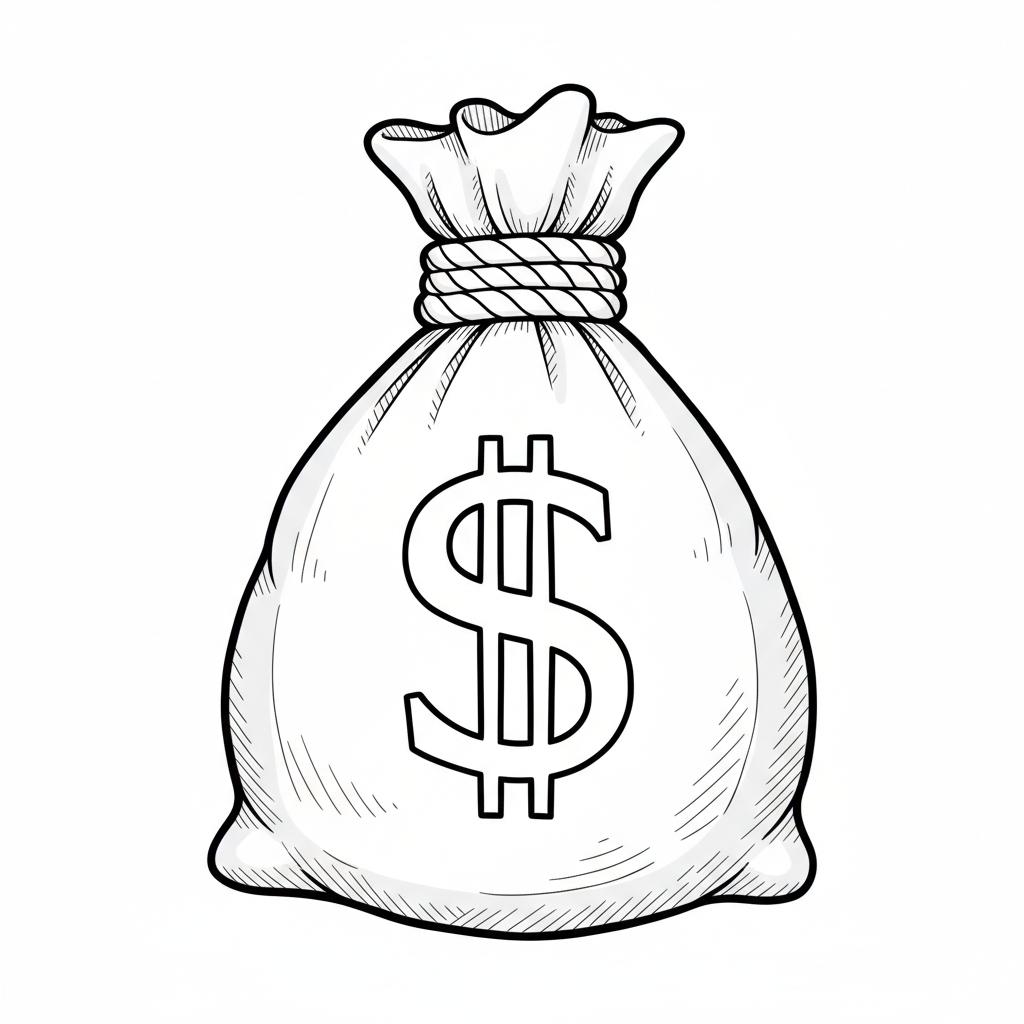
Draw a money bag using pencil, ink, and simple shading. Practice shape, proportions, folds, and highlights to create a realistic sketch.
About this tutorial
Draw a money bag using pencil, ink, and simple shading. Practice shape, proportions, folds, and highlights to create a realistic sketch.
What you need
Instructions
- 1
Step 1
Lightly sketch a large rounded sack shape with your pencil to make the basic bag body.
- 2
Step 2
Draw a horizontal band near the top of the sack to show where the bag will be tied.
- 3
Step 3
Add a tied knot on the band and draw two short ribbon tails to show the tie.
- 4
Step 4
Draw a few curved fold lines radiating down from the knot to show fabric wrinkles.
- 5
Step 5
Lightly mark a centered dollar sign or coin circle on the front of the bag for the money symbol.
- 6
Step 6
Refine the bag outline and adjust the proportions so the base looks wider and the top narrower.
- 7
Step 7
Carefully trace over your final pencil lines and main folds with the ink pen.
- 8
Step 8
Wait for the ink to dry completely before doing anything else.
- 9
Step 9
Gently erase the pencil guidelines so only the inked drawing remains.
- 10
Step 10
Decide where the light is coming from and shade the side opposite the light with soft pencil strokes to create volume.
- 11
Step 11
Darken shadows under folds and at the base and blend them smoothly with a blending stump or tissue.
- 12
Step 12
Use the eraser to lift tiny highlights on the side facing the light and on the top of folds for shiny spots.
- 13
Step 13
Share your finished creation on DIY.org.
Get inspired
Fun facts
How do I draw a realistic money bag step by step with pencil and ink?
To draw a realistic money bag, start with a light pencil outline of the basic sack shape: a rounded bottom and slightly tapered top. Mark the center and tie area, then sketch folds and a gathered neck. Block in major shadows using light hatching to show volume. Ink the final contours and darker folds, vary line weight, then erase pencil marks. Add layered shading with softer pencils or cross-hatching for depth, and lift highlights with a kneaded eraser or white pen.
What materials do I need to draw a money bag using pencil, ink, and shading?
You'll need HB and softer pencils (2B–4B), a sharpener, kneaded and vinyl erasers, blending stump or cotton swab, smooth drawing paper, fine ink pens (0.1–0.5 mm), a white gel pen or white gouache for highlights, and optional charcoal or graphite sticks for deeper shadows. A ruler and reference image help with proportions. Keep a scrap sheet for testing ink and pencil values.
What ages is drawing a money bag suitable for?
This activity suits ages 6–12 with modifications: ages 6–8 benefit from guided tracing or simplified shapes and focus on making a recognizable bag; ages 9–12 can practice proportional drawing, folds, and basic shading. Teens and adults can explore finer inks and advanced shading techniques. Always supervise younger children with sharp pencils or liquid ink; adapt time and complexity to each child's attention and skill level.
What are the benefits, variations, and safety tips for this money bag drawing activity?
Drawing a money bag builds fine motor control, observational skills, and understanding of light, shadow, and texture. It boosts patience and attention to proportion. Variations: make a cartoon-style bag, add a money symbol, draw it open with coins, or change perspective for a foreshortened view. Safety tip: use non-toxic inks, supervise younger children with sharp tools, and keep workspace ventilated if using spray fixative or ink washes.
Watch & Learn
Need help?
What can I use instead of a blending stump or an ink pen if I don’t have them?
If you don't have a blending stump, use a folded tissue, cotton swab, or your fingertip to softly blend the shading, and if you lack an ink pen, carefully trace your final pencil lines with a darker 2B pencil or a fine-tip marker during the 'trace over your final pencil lines' step.
My ink smudged and pencil lines won’t erase cleanly — how do I fix that?
Follow the instructions to wait until the ink is completely dry, then use a soft kneaded eraser gently to lift pencil guidelines and avoid smearing by touching the paper as little as possible.
How can I change this activity for different age groups?
For younger kids, skip the inking and detailed shading and have them draw the basic rounded sack and big dollar sign, while older kids can refine proportions so the base is wider and top narrower, add curved fold lines, blend shadows with a stump or tissue, and lift highlights with the eraser as described.
How can we make the money bag drawing more creative or challenging after finishing it?
Extend the activity by adding coins spilling out, drawing a patterned fabric or patch on the sack, coloring the dollar sign and bag with colored pencils or watercolor after the ink dries, or creating dramatic lighting and deeper shadows before sharing the result on DIY.org.