How to Draw a Map
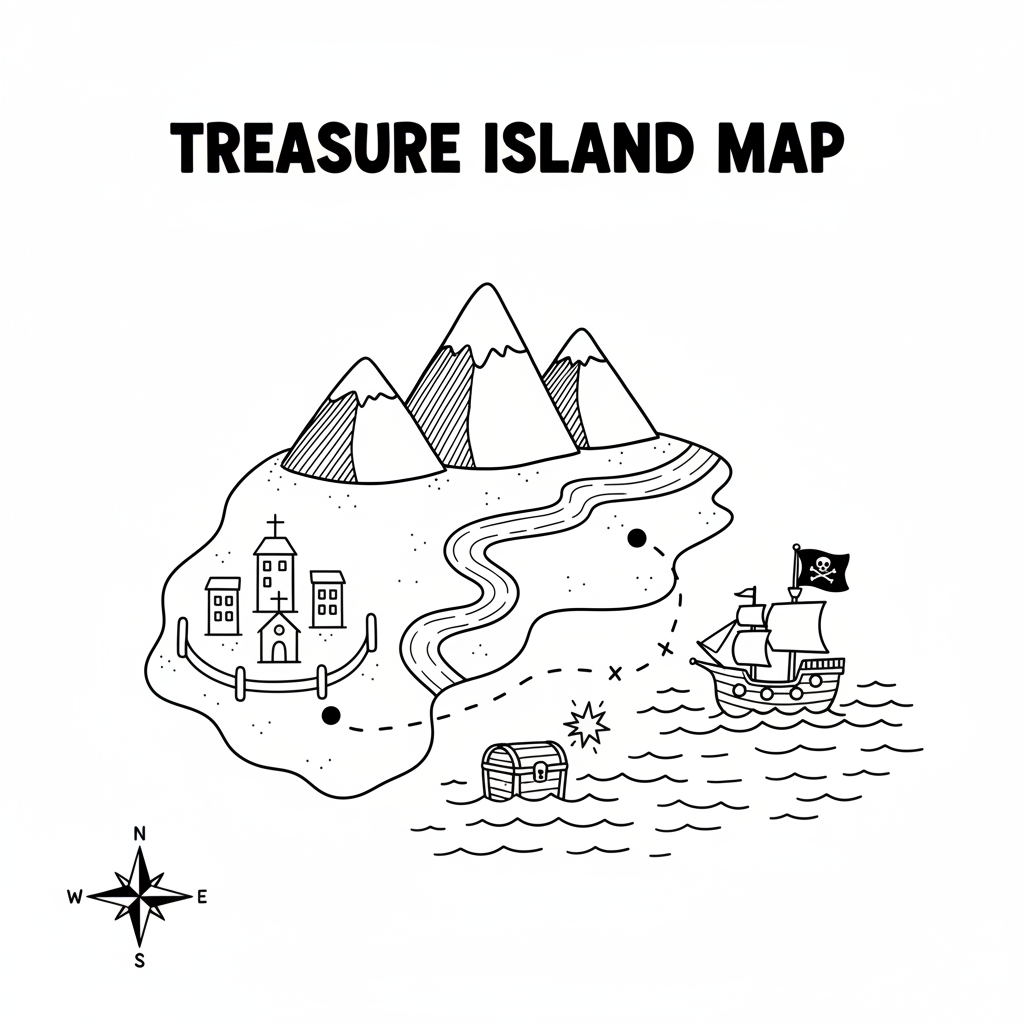
Draw a scaled map of your neighborhood or imaginary island using rulers, symbols, and a legend. Practice observation and spatial thinking.
About this tutorial
Draw a scaled map of your neighborhood or imaginary island using rulers, symbols, and a legend. Practice observation and spatial thinking.
What you need
Instructions
- 1
Step 1
Choose whether you will map your real neighborhood or create an imaginary island and pick the exact area you want to show.
- 2
Step 2
Lay out your paper and place your pencil ruler eraser measuring tape and colouring materials where you can reach them.
- 3
Step 3
Decide on a simple scale for your map for example 1 cm = 10 m.
- 4
Step 4
Write the scale clearly at the top of your paper.
- 5
Step 5
Use your ruler and pencil to draw a neat rectangle boundary on the paper to show the area your map will cover.
- 6
Step 6
Make a short list of the main places you want on the map for example home school park beach or a volcano.
- 7
Step 7
Measure or estimate the real distances between those places and write each distance in meters next to your list.
- 8
Step 8
Convert each real distance into map centimeters using your chosen scale and write the converted lengths beside the measurements.
- 9
Step 9
Use your ruler to mark those converted lengths lightly on the paper so each place has the correct spacing on your map.
- 10
Step 10
Draw roads paths buildings trees water and other features using simple symbols and straight lines for streets.
- 11
Step 11
Draw a legend box and inside draw each symbol with a short label so people can read your map.
- 12
Step 12
Colour the features using your colouring materials and make sure the colours match the legend.
- 13
Step 13
Add a north arrow and a title for your map so people know the direction and what the map shows.
- 14
Step 14
Share your finished map on DIY.org so everyone can see your scaled creation.
Get inspired
Fun facts
How do you draw a scaled map of your neighborhood or an imaginary island with a child?
Start by choosing the area and walking or observing key landmarks. Help the child sketch a rough outline, then decide a scale (for example 1 cm = 5 m). Use a ruler to measure and convert real distances to the map scale. Add buildings, paths, trees and a compass rose. Draw simple symbols for each feature, place them accurately, and finish with labels and a clear legend explaining the symbols and scale.
What materials do I need to draw a scaled map with a child?
You will need paper or a sketchbook, pencils, erasers, a ruler and a tape measure or smartphone measuring app. Colored pencils or markers help distinguish features, plus sticky notes for temporary labels. Optional: graph paper for easier scaling, a clipboard for outdoor sketching, and reference photos or a simple compass. Keep lightweight materials for kids and a printed scale example to make conversions easier.
What ages is map-drawing suitable for?
Map-drawing suits children aged about 5 to 14 with different expectations: ages 5–7 enjoy drawing simple landmarks and symbols with adult help; 8–10 can measure, use a basic scale and make a legend; 11–14 can handle more accurate measurements, scales, and spatial reasoning. Adapt complexity: younger kids focus on observation and symbols while older kids practice precise scaling, measurements and map conventions.
What are the benefits of having a child draw a scaled map?
Drawing scaled maps builds spatial thinking, measurement skills and attention to detail. It reinforces math (fractions, ratios), encourages observation, planning and storytelling when creating an imaginary island, and boosts vocabulary (compass directions, legend, scale). It also supports collaboration and problem solving if done as a group activity, and can increase outdoor awareness when mapping a real neighborhood.
Watch & Learn
Need help?
What can we use if we don't have a measuring tape, ruler, or specific colouring materials?
If you don't have a measuring tape use a piece of string and a meter stick or a smartphone distance app for the 'Measure or estimate...' step, use any straight edge like a hardcover book to draw the rectangle boundary instead of a ruler, and swap coloured pencils for crayons, markers, or collage paper for the colouring materials.
How do we fix mistakes when the converted distances or spacing look wrong on the paper?
If distances look wrong after you 'Convert each real distance', recheck the math with a calculator, erase the light pencil marks you made when you 'mark those converted lengths', and re-measure on the paper before drawing roads or colouring.
How can we adapt the map activity for younger children or older kids?
For younger kids simplify the main places list to 3–4 big features, use a larger scale (for example 1 cm = 5 m), stickers for symbols, and adult help measuring, while older kids can choose a finer scale, add a coordinate grid or compass bearings, and include more detailed buildings and legend entries.
What are some ways to extend or personalise our finished map?
To enhance your map add photos or small glued models at landmarks, draw contour lines or a scale bar for accuracy, use different textures or labels in the legend, and follow the instruction to add a north arrow, title, and then share it on DIY.org.