How to Draw a Gymnast
Draw a gymnast in motion using simple shapes and pose reference for correct proportions. Practice line, balance, and shading to capture realistic movement.
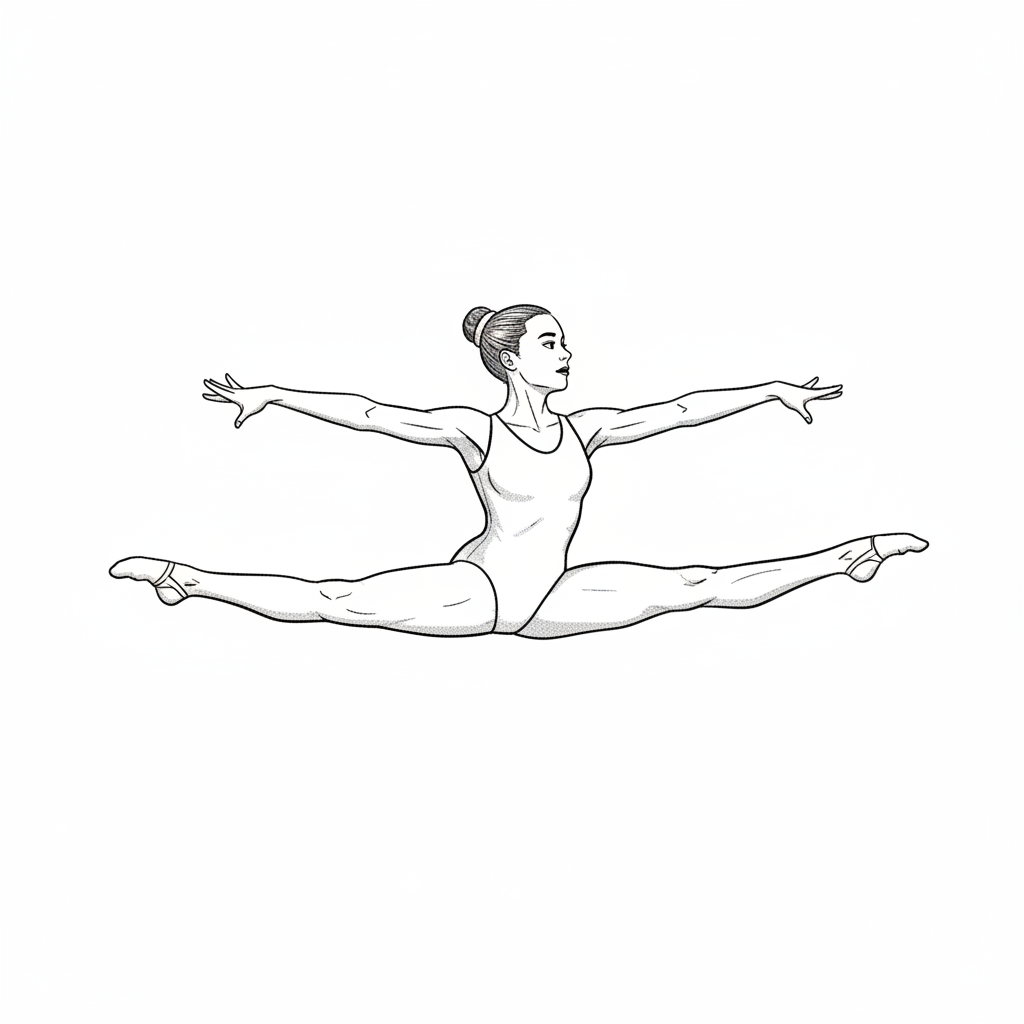
About this tutorial
Draw a gymnast in motion using simple shapes and pose reference for correct proportions. Practice line, balance, and shading to capture realistic movement.
What you need
Instructions
- 1
Step 1
Gather all your materials and place them on a clear workspace so you can reach everything easily.
- 2
Step 2
Look closely at your pose reference image for 30 seconds and notice the direction the gymnast is moving.
- 3
Step 3
Draw one light curved line to show the main flow or "line of action" of the gymnast's movement.
- 4
Step 4
Add a small circle for the head an oval for the chest and a smaller oval for the hips along the line of action.
- 5
Step 5
Sketch straight lines for the arms and legs and mark elbows and knees with tiny circles to show joint positions.
- 6
Step 6
Check balance and shift the hip or foot shapes so the body's center of mass sits over the supporting foot or between the feet.
- 7
Step 7
Connect the shapes with light smooth lines to form the torso arms and legs into a basic body outline.
- 8
Step 8
Use the head size to check and adjust proportions so the torso and legs look correctly sized compared to the head.
- 9
Step 9
Add simple details like a face hairstyle hands feet and basic clothing or leotard lines.
- 10
Step 10
Darken your final lines add varied line weight and gently shade the sides away from your imagined light source then blend a little with a stump or tissue to show form.
- 11
Step 11
Take a photo of your finished gymnast and share your creation on DIY.org
Get inspired
Fun facts
How do I draw a gymnast in motion step-by-step?
Start with a light gesture line to capture the pose and direction of movement. Block the body into simple shapes: oval for the torso, circles for the head and joints, cylinders for limbs. Use a pose reference to check proportions and balance: align the center of gravity over the feet or supporting hand. Refine contours, erase construction lines, add muscle shapes and costume details. Finish with shading to show volume and a clear light source, practicing confident line work throughout.
What materials do I need to draw a gymnast?
You only need a few basic supplies: drawing paper or a sketchbook, a range of pencils (HB for construction, 2B–4B for darker lines), a kneaded eraser, sharpener, and a blending stump or tissue for shading. Print or display pose reference photos and consider a mirror or simple mannequin for live reference. Optionally use colored pencils or fine liners to add color and crisp outlines once the sketch is finished.
What ages is drawing a gymnast suitable for?
This activity suits a wide range: ages 5–7 can practice stick figures and basic shapes to learn movement; ages 8–11 can focus on proportions, line quality, and simple shading; ages 12+ can work on realistic anatomy, dynamic foreshortening and nuanced shading. Younger children may need demonstrations and simpler poses. Adapt complexity to skill level and provide adult supervision for scissors or harder tools if used.
What are the benefits of drawing a gymnast in motion?
Drawing gymnasts improves observational skills, understanding of balance and weight distribution, and line confidence. It strengthens fine motor control and spatial reasoning through proportion practice and dynamic poses. Shading develops an eye for light and form, while repetitive sketching builds patience and problem-solving. This activity also encourages creativity, boosts self-esteem as skills improve, and connects visual art to physical movement for kinesthetic learners.
Watch & Learn
Need help?
What can we use if we don't have a blending stump, special pencils, or a printed pose reference?
Use a folded tissue, cotton swab, fingertip, or soft piece of toilet paper to blend instead of a stump, a regular HB pencil and eraser for sketching if you lack art pencils, and use a mirror, a toy in a pose, or a photo on a phone as your pose reference for the 30-second observation step.
My gymnast looks like it's going to fall over—how do I fix the balance?
Revisit the 'check balance' step and shift the hip oval or move the supporting foot shape so the body's center of mass sits over the supporting foot or between the feet before you connect the shapes with smooth lines.
How can I adapt this drawing activity for younger or older kids?
For younger kids simplify to drawing just the line of action plus the head, chest and hips shapes and basic straight limbs, while older kids can refine proportions using head size, add varied line weight, and gently shade and blend with a stump or tissue as in the final steps.
How can we make this gymnast drawing more interesting or personal?
Extend the activity by creating different poses from new line-of-action sketches, designing unique leotard patterns and hairstyles, darkening final lines with varied weight and blended shading, then take a photo of each finished gymnast to share on DIY.org as suggested.