How to Draw a Foot
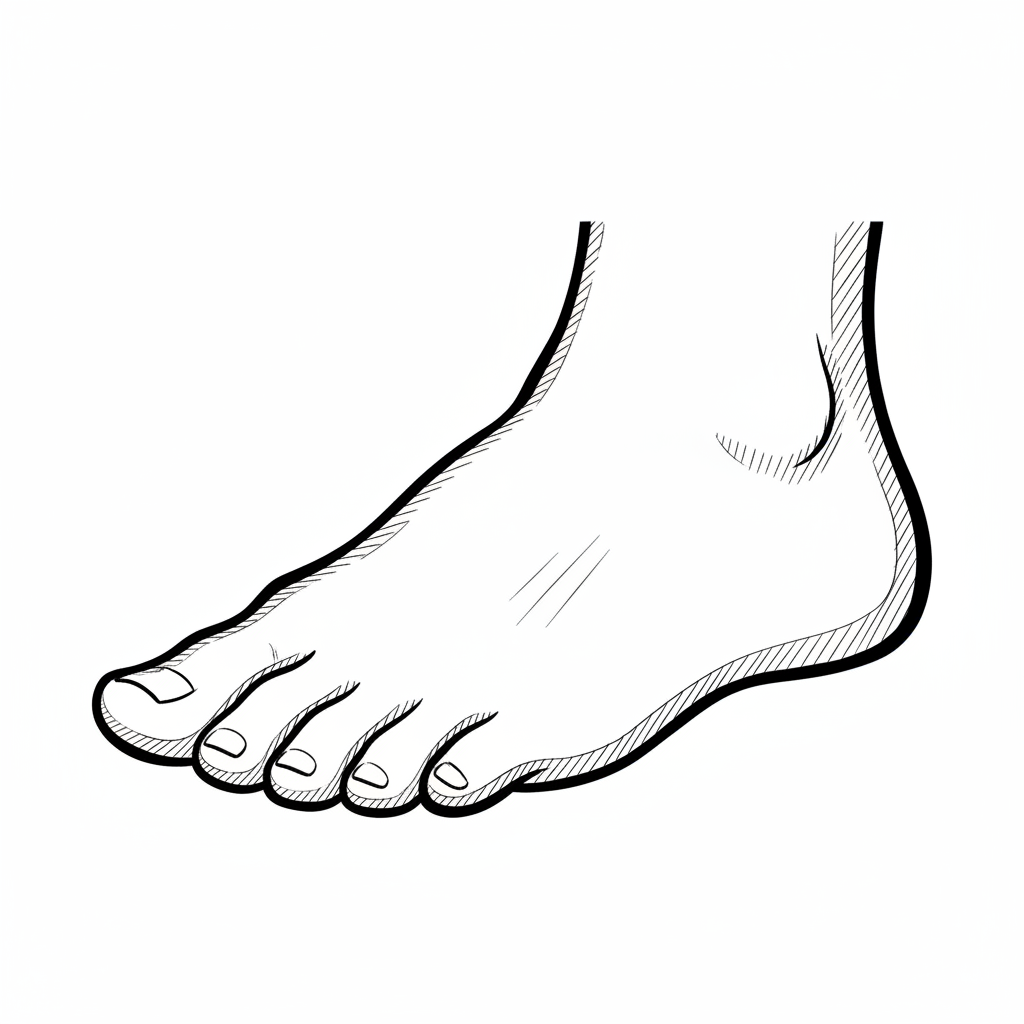
Draw a detailed foot step-by-step using pencil, measuring proportions and adding shading. Practice observation and proportion while refining lines and texture.
About this tutorial
Draw a detailed foot step-by-step using pencil, measuring proportions and adding shading. Practice observation and proportion while refining lines and texture.
What you need
Instructions
- 1
Step 1
Place your paper and your reference photo or your foot where you can see them clearly.
- 2
Step 2
Use a ruler to measure the length of the reference foot and mark the top and bottom points on your paper with light dots.
- 3
Step 3
Lightly draw an oval around the lower dot to show where the heel will be.
- 4
Step 4
Lightly draw a rounded shape around the top dot to show the toe box area.
- 5
Step 5
Draw two gentle curved lines connecting the heel and toe box to make the sides of the foot.
- 6
Step 6
Place small dots to mark the ankle and where each toe will sit.
- 7
Step 7
Refine the outer outline by smoothing the curves and adjusting sizes until the foot looks right.
- 8
Step 8
Lightly sketch simple toenail shapes on the tips of the toes.
- 9
Step 9
Lightly draw the crease lines where the toes meet the foot and across the instep.
- 10
Step 10
Erase extra construction lines so only the refined outline and light detail marks remain.
- 11
Step 11
Point to the spot on your page where the light hits the foot to decide your light source.
- 12
Step 12
Shade the opposite side of the foot from the light source using soft even pencil strokes.
- 13
Step 13
Use a tissue or blending tool to smooth the shaded areas into soft shadows.
- 14
Step 14
Use short pencil strokes to darken the deepest shadows and add small texture lines where you observed them.
- 15
Step 15
Share your finished foot drawing on DIY.org.
Get inspired
Fun facts
How do I teach my child to draw a detailed foot step-by-step?
Start by having your child observe a real foot or photo and lightly sketch basic shapes: an oval for the heel, a wedge for the instep, and circles for toes. Measure proportions with a pencil or ruler (heel-to-toe length, toe widths). Block in major planes and angles, then refine contours and muscle landmarks. Establish a light source, add shading: shadows, midtones, highlights, and blend gently. Finish with texture: nails, wrinkles, and subtle lines to make the foot look realistic.
What materials do I need to draw a realistic foot with shading?
Gather plain drawing paper or a sketchbook, a set of pencils (HB for layout, 2B and 4B for shading, 6B for deep shadows), a kneaded eraser and a vinyl eraser, pencil sharpener, ruler or a measuring stick, and a blending stump or tissue for smooth shading. Optional: a reference photo or live model, charcoal for bolder texture, and a white gel pen or white colored pencil for highlights.
What ages is drawing a detailed foot suitable for?
This activity works for children around 8 years and up for basic proportion and observation practice; ages 10–14 are well suited for more careful measuring and advanced shading. Younger children (5–7) can try simplified versions focusing on big shapes and lines with supervision. Tailor the steps to attention span: shorter sessions for younger kids and longer focused practice for older children who can handle finer detail.
What are the benefits of practicing drawing a foot for kids?
Drawing feet helps children improve observation, proportional measurement, and spatial reasoning. It develops fine motor control, shading techniques, and patience while reinforcing anatomy basics useful for full-figure drawing. Regular practice boosts confidence and visual memory. It’s also calming and can be adapted to short exercises. Ensure ergonomic posture and breaks to avoid strain during longer sessions.
Watch & Learn
Need help?
What can I use instead of a ruler or a blending tool if I don't have them?
Use a straight edge like a book spine or the long edge of a cereal box to measure in step 2, and replace a blending tool or tissue (step 14) with a clean cotton ball or folded paper towel.
My foot looks too long or the toes are in the wrong place—how can I fix the proportions?
Re-check the length with your straight edge and re-mark the top and bottom dots (step 2), then adjust the heel oval and toe-box rounded shape (steps 3–4), move the ankle and toe placement dots (step 5), and refine the outline (step 7) erasing extra construction lines until it looks right.
How can I adapt this activity for different age groups?
For preschoolers, trace a real foot from step 1 and use crayons for simple outlines and toe dots (step 5), for school-age kids keep the measuring and basic shading steps, and for teens add detailed crease lines (step 11), texture with short pencil strokes (step 15), and careful blending (step 14).
How can we make the finished foot drawing more creative or challenging?
Extend the project by drawing the foot from different angles using a live model or reference photo, add colored pencils or watercolor over your refined outline, push stronger cast shadows from a chosen light source (step 12), and share the results on DIY.org as the final step.