How to Draw a Factory
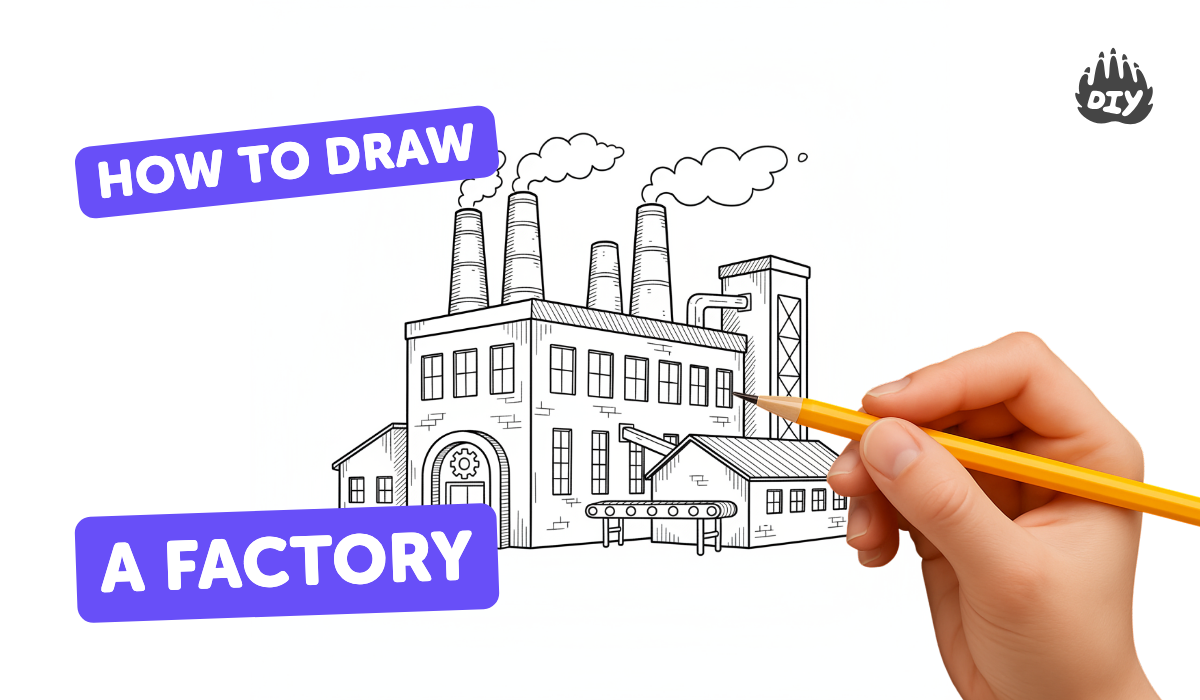
Draw a simple factory using shapes: sketch buildings, chimneys, windows, conveyor belts, add perspective, shading, and color to create a realistic industrial scene.
About this tutorial
Draw a simple factory using shapes: sketch buildings, chimneys, windows, conveyor belts, add perspective, shading, and color to create a realistic industrial scene.
What you need
Instructions
- 1
Step 1
Place your paper in landscape position so you have lots of room for buildings.
- 2
Step 2
Lightly draw a straight horizon line across the page to show where the sky meets the ground.
- 3
Step 3
Mark a single vanishing point with a small dot near the middle of the horizon line.
- 4
Step 4
Sketch simple rectangles and squares to make the front faces of the factory buildings.
- 5
Step 5
From the corners of each building draw straight lines back to the vanishing point to add depth.
- 6
Step 6
Add chimneys by drawing tall narrow rectangles or cylinders on top of the roofs.
- 7
Step 7
Draw rows of windows as small rectangles across the building faces.
- 8
Step 8
Create a conveyor belt by drawing two parallel lines leading into a building and add simple boxes on top.
- 9
Step 9
Add pipes vents and small machine shapes using simple lines circles and rectangles around the buildings.
- 10
Step 10
Draw a small sun or an arrow to show which direction the light is coming from.
- 11
Step 11
Shade the sides of buildings and chimneys that face away from the light using light pencil hatching.
- 12
Step 12
Trace the main lines of your drawing with a black pen to make the shapes pop.
- 13
Step 13
Color your factory scene with your colouring materials and make shaded areas slightly darker.
- 14
Step 14
Share your finished factory drawing on DIY.org.
Fun facts
How do I teach my child to draw a simple factory step-by-step?
Start with a light pencil sketch: draw a horizon line and a single vanishing point for simple one-point perspective. Block in buildings with rectangles and squares, add chimneys as tall rectangles or cylinders, and windows as repeating small rectangles. Sketch conveyor belts as parallel lines with small boxes. Indicate a light source, add basic shading and cast shadows, then outline and color with colored pencils or markers. Finish with texture, smoke, and highlights.
What materials do I need to draw a factory with my child?
You'll need drawing paper or a sketchbook, a pencil set (HB and 2B), a kneaded eraser, and a ruler for straight edges and perspective lines. Add fineliner pens for clean outlines, colored pencils or markers for color, and a blending stump or cotton swab for smooth shading. Optional: charcoal, watercolor, templates of industrial shapes, and reference photos of factories. Use non-toxic, age-appropriate supplies for younger children.
What ages is drawing a factory suitable for?
This project suits different ages with adjusted complexity. Ages five to seven can trace and glue simple shapes to form buildings with help. Ages eight to eleven can draw rectangles, basic perspective, and add windows and simple shading. Ages twelve and up can try one- or two-point perspective, detailed conveyors, realistic shading and textures. Always supervise young children with sharp tools and adapt to each child's skills and attention span.
What are the benefits of drawing an industrial scene like a factory for kids?
Drawing a factory teaches perspective, geometry, and spatial reasoning while improving fine motor control and hand-eye coordination. It encourages observation, planning, and attention to repeating patterns like windows and conveyor parts. Adding shading and color builds understanding of light and materials. The activity sparks storytelling about how things are made, can introduce age-appropriate industry or environmental discussions, and is calming while boosting confidence as skills grow.
Watch & Learn
Need help?
What can we use instead of a black pen, special colouring materials, or drawing paper if we don't have them?
Trace the main lines (step: trace the main lines of your drawing with a black pen) with a fine-tipped permanent marker or dark crayon, color with washable markers, crayons, or torn colored paper, and use a cut-open cereal box or the back of a poster as landscape paper.
My buildings look skewed—how do I fix the perspective so lines meet at the vanishing point?
Make sure the small vanishing point dot is placed on the horizon line (step: mark a single vanishing point), then use a ruler to redraw straight lines from each building corner back to that dot (step: draw straight lines back to the vanishing point) and lightly erase extra guide lines before inking (step: trace the main lines).
How can I adapt this drawing activity for different ages or skill levels?
For younger children, pre-draw the horizon and vanishing point and have them add simple rectangles, chimneys, windows, and color (steps: place your paper in landscape, mark a vanishing point, sketch rectangles, add chimneys, draw rows of windows, color), while older kids can add extra pipes, detailed machine shapes, realistic hatching shading (step: shade the sides using pencil hatching), or try two-point perspective and more precise inking.
What are some fun ways to enhance or personalize the factory drawing after finishing the basic steps?
Glue cotton for smoke on the chimneys (step: add chimneys), stick tiny folded paper boxes along the conveyor belt for 3D boxes (step: create a conveyor belt and add simple boxes), add a painted logo or corrugated cardboard for building texture before coloring, and then photograph the finished scene to share on DIY.org (step: share your finished factory drawing on DIY.org).