How to Draw a Cookie
Draw a realistic cookie with chocolate chips, shading, and a bite mark. Practice shapes, texture, shadows, and simple proportions to improve drawing skills.
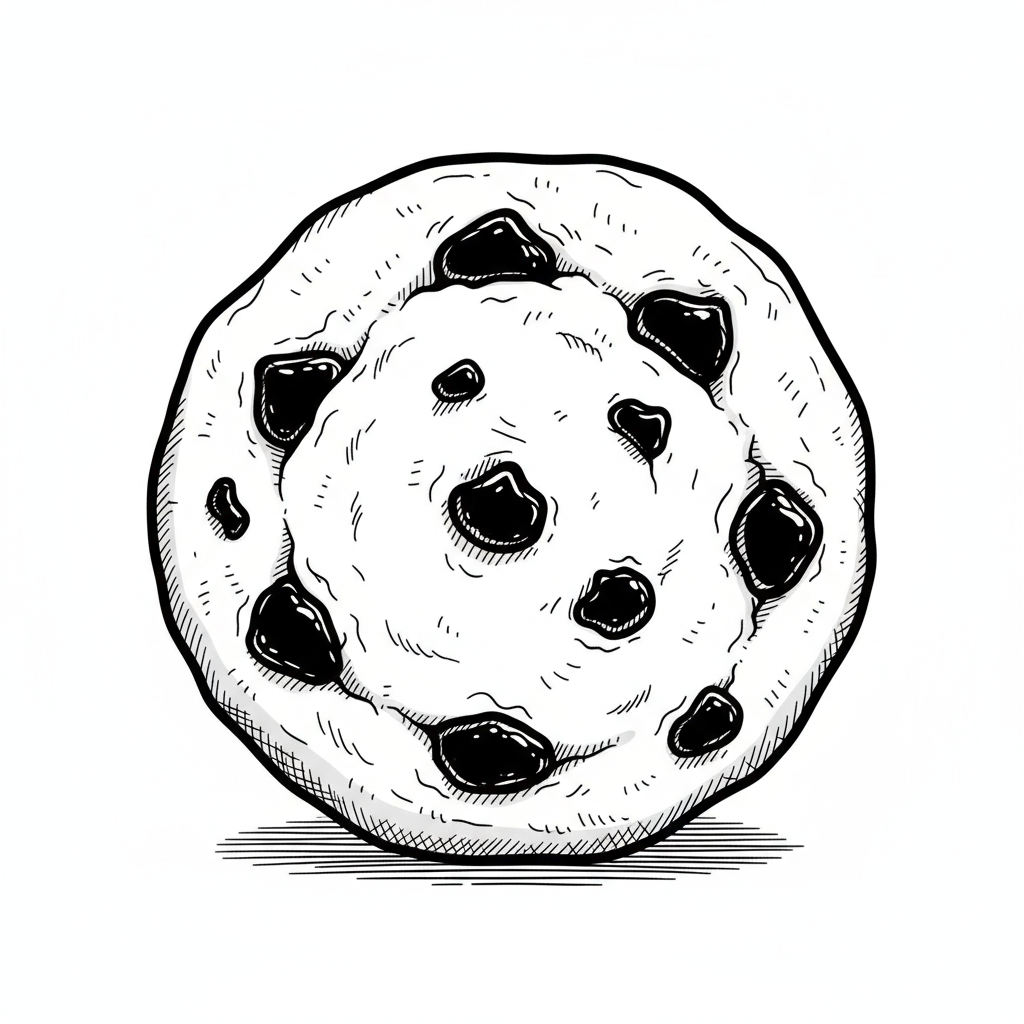
About this tutorial
Draw a realistic cookie with chocolate chips, shading, and a bite mark. Practice shapes, texture, shadows, and simple proportions to improve drawing skills.
What you need
Instructions
- 1
Step 1
Lightly draw a big circle for the cookie outline using your pencil.
- 2
Step 2
Draw a small semicircle notch on the edge of the circle to make a bite mark.
- 3
Step 3
Draw a jagged inner line along the bite notch to show torn cookie crumb edges.
- 4
Step 4
Lightly sketch several oval and round shapes across the cookie for chocolate chips.
- 5
Step 5
Add tiny uneven dots and short strokes on the cookie surface to show crumbly texture.
- 6
Step 6
Draw a small arrow outside the cookie to mark where the light is coming from.
- 7
Step 7
Shade the side of the cookie opposite the light with soft pencil strokes to create form.
- 8
Step 8
Shade a soft shadow beneath the cookie to show it sitting on a surface.
- 9
Step 9
Darken the areas near the bite edge and the bases of some chips to add depth.
- 10
Step 10
Gently blend the shaded areas with a tissue or cotton swab to smooth transitions.
- 11
Step 11
Use the eraser to lift tiny highlights on the chips and along the light edge of the cookie.
- 12
Step 12
Colour the cookie body and chocolate chips with coloured pencils or crayons to finish.
- 13
Step 13
Share your finished cookie drawing on DIY.org.
Get inspired
Fun facts
How do you draw a realistic chocolate chip cookie with a bite mark?
Start by lightly sketching a round cookie shape, then mark a curved bite out of the edge. Add irregular chocolate chip shapes, varying sizes and placement. Block in basic light and shadow areas: pick a light source, shade the side opposite the light, and add shadow inside the bite. Use short, curved strokes for texture. Blend gently to soften shadows and add darker accents for chip edges, finishing with small highlights on chips.
What materials do I need to draw a realistic cookie?
Materials you'll need include medium-weight drawing paper, a range of pencils (HB, 2B, 4B), a kneaded eraser and a regular eraser, a blending stump or cotton swab for smooth shading, colored pencils or light watercolor for warm cookie tones, a fine-tip black or dark brown pen for chip edges, and a reference photo. Optional: tortillon, ruler, and low-tack tape to keep paper steady.
What ages is this cookie drawing activity suitable for?
Suitable for ages 6–12 with adjustments: younger children (4–7) can focus on simple round shapes and dot chips using crayons and bold outlines. Ages 8–12 can work on shading, texture, and bite details with pencils and blending tools. Teens and adults can refine realism with layered shading and highlights. Always supervise younger children with sharp tools and choose age-appropriate, non-toxic materials.
What are the benefits of drawing a realistic cookie?
Drawing a realistic cookie builds observation skills, fine motor control, and understanding of light, shadow, and proportions. It teaches patience, planning, and layering techniques useful across art projects. Adding a bite mark encourages creative storytelling and focused detail work. For safety, use non-toxic supplies and supervise sharp pencils or blending tools. Try variations like different cookie types, colored shading, or turning the picture into a greeting card.
Watch & Learn
Need help?
What can we use instead of the tissue, cotton swab, or coloured pencils listed in the instructions?
If you don't have a tissue or cotton swab for blending, use a clean fingertip or folded paper towel, and if you don't have coloured pencils or crayons try light marker strokes or diluted watercolor to colour the cookie body and chocolate chips.
My bite mark looks weird or my shading is flat—how do I fix those parts?
If the bite notch looks stiff, lightly erase and redraw the jagged inner line with short varied pencil strokes for crumbly edges, then darken near the bite and bases of chips and gently blend with a tissue to build depth as shown in the steps.
How can I adapt this drawing for different ages and skill levels?
For preschoolers, simplify by tracing a big circle and using round stickers for chips after 'Lightly draw a big circle' while older kids can refine form by shading the side opposite the light and lifting tiny highlights with an eraser as instructed.
What are some ways to extend or personalise the cookie drawing once it's finished?
To enhance the drawing, add sprinkles or different coloured chips when you colour the cookie body and chocolate chips, draw a patterned napkin under the shadow from 'Shade a soft shadow beneath the cookie', and then share your version on DIY.org.