How to Draw a Chocolate Bar
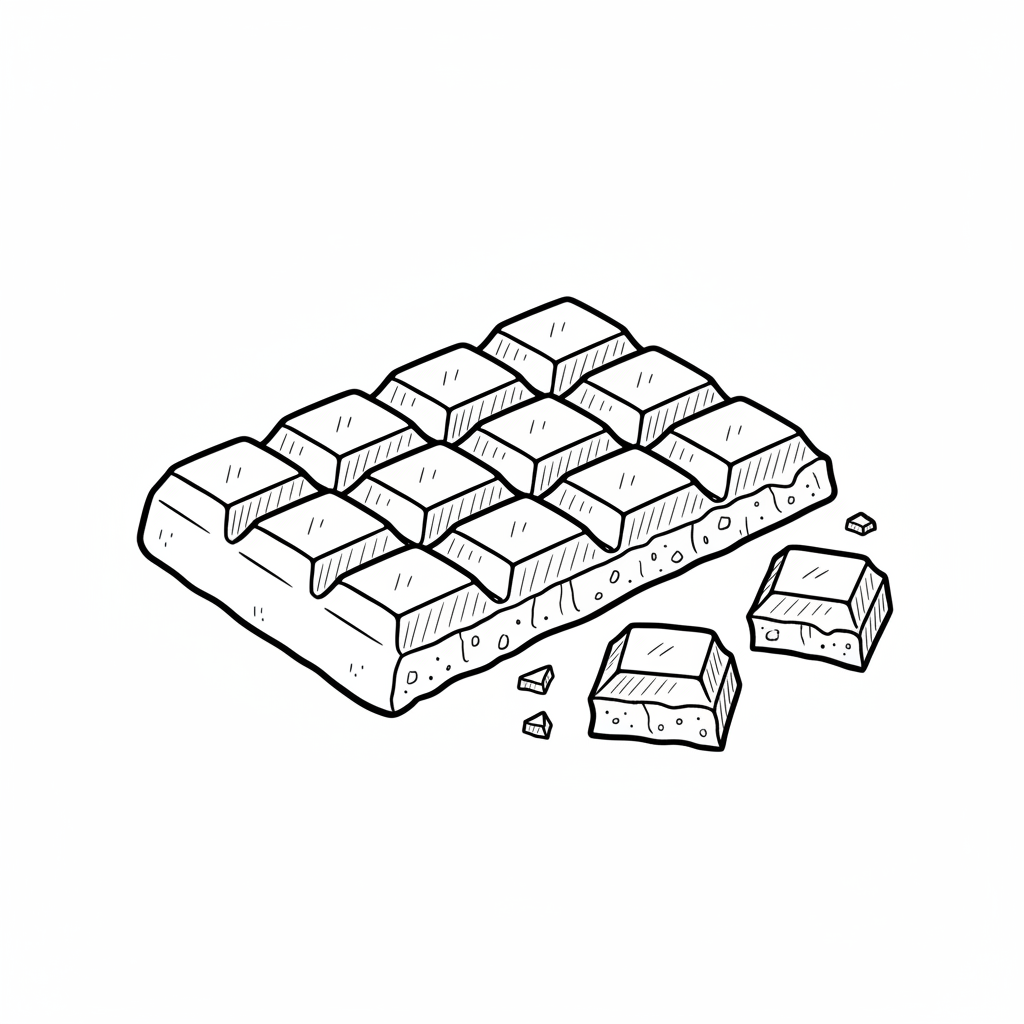
Draw a chocolate bar with foil wrapper, broken square, and realistic shading. Practice proportions, texture, perspective, and coloring techniques step by step.
About this tutorial
Draw a chocolate bar with foil wrapper, broken square, and realistic shading. Practice proportions, texture, perspective, and coloring techniques step by step.
What you need
Instructions
- 1
Step 1
Lay your paper flat on the table in landscape (wide) orientation.
- 2
Step 2
Lightly draw a rectangle in the center about twice as wide as it is tall using your pencil and ruler.
- 3
Step 3
Divide the rectangle into 3 columns and 4 rows by drawing faint evenly spaced lines to make 12 squares.
- 4
Step 4
Sketch a jagged missing chunk in one corner square to show a broken square or bite.
- 5
Step 5
Draw two curved foil flaps folding away from the broken corner to show the wrapper peeled back.
- 6
Step 6
Add thin inner lines around each square to show the raised edges of the chocolate pieces.
- 7
Step 7
Mark the direction of the light source with a small arrow so you know where highlights and shadows go.
- 8
Step 8
Shade the faces of the chocolate that are opposite the light by pressing slightly harder with your pencil.
- 9
Step 9
Add short curved strokes and tiny dots inside the broken area to show a crumbly rough interior and darken it more.
- 10
Step 10
Draw quick sharp lines on the foil flaps to indicate shiny creases while leaving some thin strips unshaded for highlights.
- 11
Step 11
Gently blend the shaded chocolate faces with a blending stump or a clean tissue to smooth tones.
- 12
Step 12
Erase any faint construction lines and tidy stray marks while keeping your shading and highlights.
- 13
Step 13
Colour the chocolate with brown tones and the foil with silver or grey, keeping highlight strips bright and clean.
- 14
Step 14
Share your finished chocolate bar drawing on DIY.org
Get inspired
Fun facts
How do I draw a realistic chocolate bar with a foil wrapper and a broken square step by step?
Start by lightly sketching a long rectangle and divide it into equal squares for the chocolate segments. Mark one square as broken and draw a jagged edge and inner texture. Add the foil wrapper by sketching overlapping folds and a peeled-back flap. Establish a light source, then shade the chocolate with darker tones near edges and the break. For foil, use quick reflective strokes, sharp highlights, and subtle value changes. Blend, refine edges, and add color or metallic highlights for realism.
What materials do I need to draw a chocolate bar with foil and realistic shading?
Materials: sketching paper or a drawing pad; HB and 2B pencils for construction and shading; kneaded and regular erasers; ruler for segment proportions; colored pencils or markers; a metallic silver or gold gel pen or colored pencil for foil highlights; blending stump or tissue for smooth shading; fine-tip pen for crisp edges; optional reference photo of a chocolate bar. For younger kids, swap sharp tools for blunt-tipped markers and supervised use.
What ages is drawing a realistic chocolate bar with foil and a broken square suitable for?
This activity suits multiple ages: 5–7 can draw the basic bar and color simple shapes with adult help on proportions and safe tools. Ages 8–11 can practice segment proportions, simple shading, and foil texture. Ages 12+ can focus on realistic shading, perspective, broken-square detail, and advanced blending or metallic accents. Always supervise younger children when they use sharp pencils, gel pens, or scissors.
What are the benefits, safety tips, or fun variations for this chocolate bar drawing activity?
Benefits include improved observation, proportion skills, texture rendering, and hand-eye coordination; it teaches light-source thinking and patience. Safety tips: supervise use of sharp pencils, gel pens, and scissors; use non-toxic supplies and keep small items away from toddlers. Variations: add watercolor washes under pencil detail, collage real aluminum foil for shine, draw a bitten bar, design a decorative wrapper, or practice different perspectives and lighting for more challenge.
Watch & Learn
Need help?
What can I use if I don't have a ruler or a blending stump for the chocolate bar drawing?
Use the straight edge of a book or a credit card to draw the rectangle and evenly space the 3 columns and 4 rows, and use a clean tissue or your fingertip to gently blend the shaded chocolate faces instead of a blending stump.
My 12 squares look uneven and my shading is blotchy—how do I fix those problems?
Lightly mark equal spacing along the rectangle edges with your ruler or book before drawing the faint grid lines, keep your pencil strokes light when shading the faces opposite the small arrow, then build up pressure gradually and blend with a tissue to smooth tones.
How can I adapt this activity for different ages or skill levels?
For younger kids skip dividing into 3 columns and 4 rows and draw a simpler 2x3 bar with one folded foil flap, while older kids can follow every step, refine the jagged broken square and crumbly interior, and practice sharper foil creases and layered shading.
What are some ways to make the drawing more interesting or personal?
Add a small logo or wrapper pattern on the foil, use a white gel pen or leave thin unshaded strips for brighter highlights, and try metallic paint or coloured pencils when you colour the foil silvery-grey and the chocolate brown.