How to Draw a Cherry
Learn to draw a realistic cherry step by step using simple shapes, shading, and color to practice observation, proportion, and light.
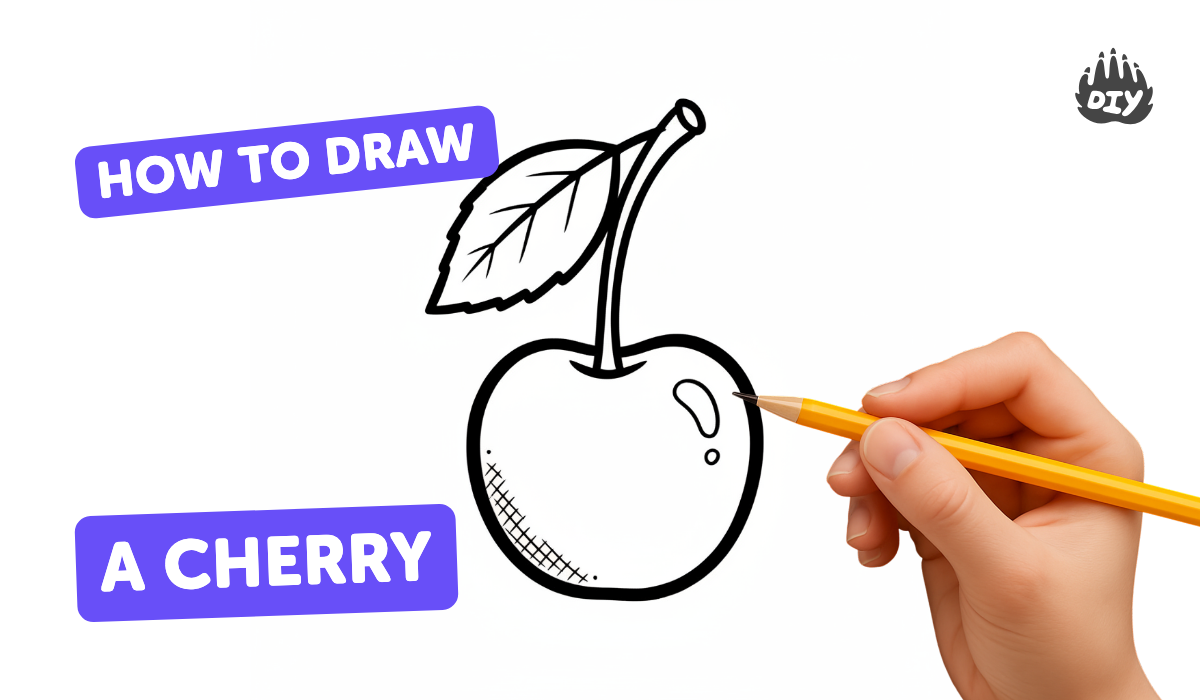
About this tutorial
Learn to draw a realistic cherry step by step using simple shapes, shading, and color to practice observation, proportion, and light.
What you need
Instructions
- 1
Step 1
Find a real cherry or a clear photo of a cherry to look at closely.
- 2
Step 2
Decide which side the light comes from and remember where the bright spot falls on the cherry.
- 3
Step 3
Lightly draw a round circle for the body of the cherry using gentle pencil lines.
- 4
Step 4
Add a small inward curve at the top of the circle to show the dimple where the stem connects.
- 5
Step 5
Draw the stem by sketching two thin parallel curved lines that meet and bend slightly at the top.
- 6
Step 6
Mark the highlight by drawing a small oval where the light hits and keep that area clean without shading.
- 7
Step 7
Shade the cherry’s side opposite the light using soft pencil strokes to make the edge darker.
- 8
Step 8
Smooth the pencil shading with a tissue or cotton swab to make the cherry look round and shiny.
- 9
Step 9
Draw a soft flattened oval shadow under the cherry and shade it darker near the fruit and lighter outward.
- 10
Step 10
Color the cherry with red colouring materials and layer a darker red or brown on the shadowed side.
- 11
Step 11
Colour the stem with green and add a little brown to the side away from the light for depth.
- 12
Step 12
Darken the outer edge of the cherry and stem gently with pencil or a darker colour to define their shapes.
- 13
Step 13
Lightly erase the highlight oval if needed to make it crisp and make any small cleanups of stray lines.
- 14
Step 14
Take a photo of your finished cherry and share your creation on DIY.org
Fun facts
How do I teach my child to draw a realistic cherry step by step?
Start by studying a real cherry or photo. Draw a light circle or slightly heart-shaped circle for the fruit, add a short curved stem and optional leaf. Block in basic shadow side and highlight placement based on a clear light source. Use smooth, curved shading from dark near the stem to lighter on the highlight; blend gently. Add a small white highlight and a cast shadow beneath. Finish with rich red tones and deeper maroon for contrast.
What materials do I need to draw a realistic cherry with my child?
You'll need sketch paper or drawing paper, a pencil set (HB and 2B or 4B), eraser, sharpener, colored pencils or watercolor paints and brushes, blending stump or cotton swab, reference photo, optional fine-liner for outline, and masking tape if using watercolor. For young children choose washable markers or crayons. Non-toxic, age-appropriate supplies and a smock are recommended.
What ages is learning to draw a realistic cherry suitable for?
Suitable for children roughly ages 5–12, with adaptations. Preschoolers (3–5) can practice drawing circles and coloring bold red shapes with help. Ages 5–8 can follow simple step-by-step shapes and add basic shading. Ages 9–12 can work on more refined proportions, layered color, and subtle highlights. Offer supervision and child-sized tools; adjust patience and expectations to each child's fine motor skills.
What are the benefits, safety tips, or variations for drawing cherries with kids?
Drawing realistic cherries builds observation, proportion awareness, and fine motor control. Shading and color mixing teach how light affects form and improve patience and focus. Variations: draw a cherry pair, a stem cluster, stylized cartoon cherries, or use watercolor/glossy gouache for shine. Safety: use non-toxic materials, supervise sharp tools and small parts, and use washable paints for younger children. Encourage experimentation with colors and textures to keep the activity engaging.
Watch & Learn
Need help?
What can we use if we don't have a real cherry, red colouring pencils, or cotton swabs?
Use a clear printed photo or a small red toy as your reference instead of a real cherry, swap red colouring materials for crayons or markers, and smooth shading with a tissue corner or your fingertip in place of a cotton swab.
My highlight isn't crisp and my shading looks muddy — how can I fix it?
Gently lift graphite from the small oval highlight with a kneaded eraser to sharpen it, re-smooth the shaded side with a tissue or cotton swab, and reapply soft pencil strokes on the opposite side to regain the darker edge as described in the shading and smoothing steps.
How can I adapt this drawing activity for younger or older children?
For younger kids, draw a larger circle and use chunky crayons to block in the red and flattened shadow, while older kids can refine the stem with two thin parallel curved lines, add reflected light, and layer darker red or brown for deeper shading.
How can we extend or personalize the finished cherry drawing?
Turn it into two cherries with joined stems, darken the outer edge and add a soft background wash or patterned paper, then take a photo of your finished cherry to share on DIY.org as suggested in the final step.