How to Draw a Cell
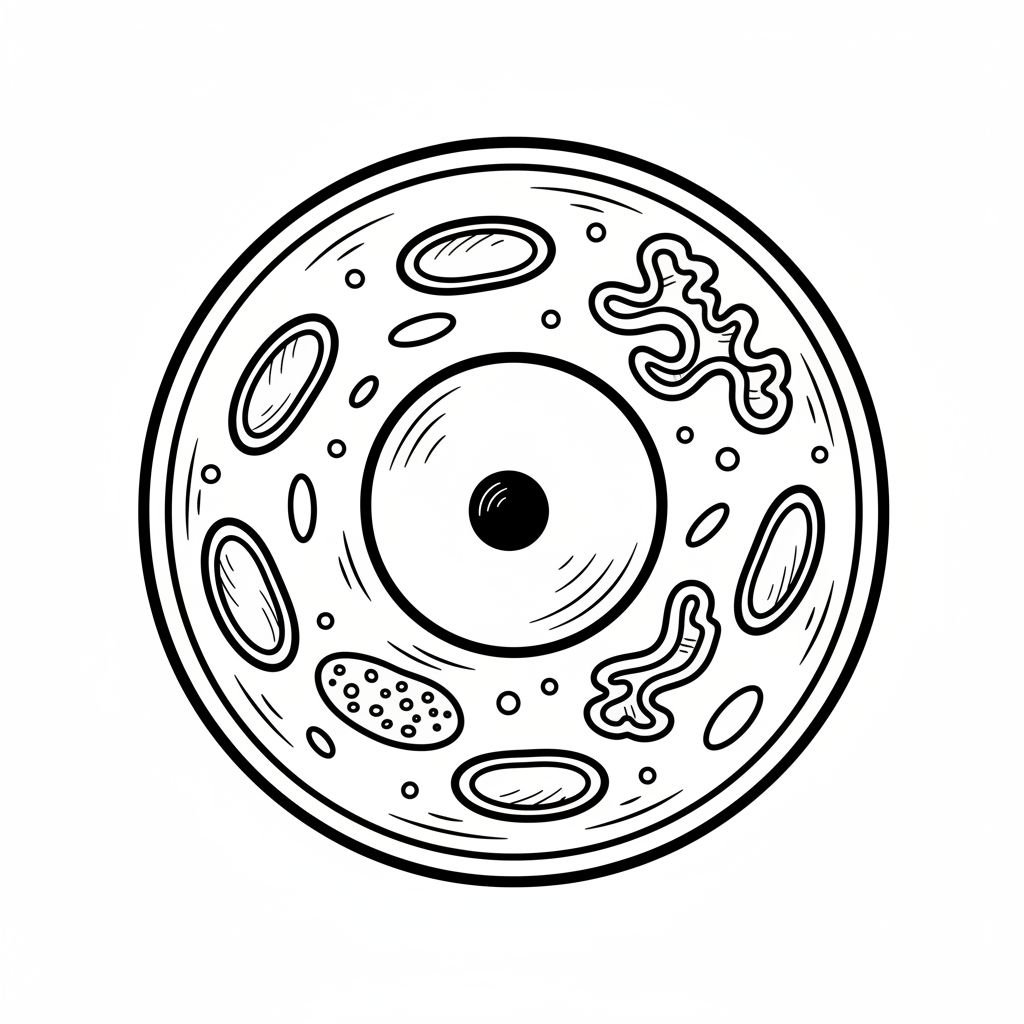
Draw and label a detailed plant or animal cell using paper, pencils, and colors, identifying nucleus, membrane, cytoplasm, chloroplasts, and mitochondria.
About this tutorial
Draw and label a detailed plant or animal cell using paper, pencils, and colors, identifying nucleus, membrane, cytoplasm, chloroplasts, and mitochondria.
What you need
Instructions
- 1
Step 1
Decide whether you will draw a plant cell or an animal cell.
- 2
Step 2
Write the name of your chosen cell as the title at the top of the page.
- 3
Step 3
Lightly sketch the outer shape with your pencil: a rounded rectangle for a plant cell or an oval for an animal cell.
- 4
Step 4
Draw the cell membrane as a thin line just inside the outer shape.
- 5
Step 5
Lightly shade or dot the space inside the membrane to show the cytoplasm.
- 6
Step 6
Draw a large circle for the nucleus and add a smaller circle inside for the nucleolus.
- 7
Step 7
Draw three to six bean-shaped mitochondria and add squiggly lines inside each one.
- 8
Step 8
If you chose a plant cell draw several small oval chloroplasts with tiny stacks inside them; if you chose an animal cell write “No chloroplasts in animal cells” near your drawing.
- 9
Step 9
If you chose a plant cell draw a big central vacuole as a large oval; if you chose an animal cell draw a few small scattered vacuoles.
- 10
Step 10
Color each organelle a different color so they stand out from each other.
- 11
Step 11
Draw straight lines from each organelle to a clear spot for its label.
- 12
Step 12
Write the name beside each label for at least: nucleus; cell membrane; cytoplasm; mitochondria; chloroplasts (or note that chloroplasts are absent if you drew an animal cell).
- 13
Step 13
Take a photo of your finished cell and share your creation on DIY.org.
Get inspired
Fun facts
How do I guide my child to draw and label a detailed plant or animal cell?
Start by choosing plant or animal. Lightly sketch the outer shape—rounded oval for animal, rectangular/oval with a cell wall for plant—then add internal regions. Draw a large nucleus with nucleolus, surround it with cytoplasm, sketch mitochondria as bean shapes and chloroplasts as green ovals for plant cells. Color each organelle differently, draw arrows from labels to parts, and ask your child to write one short function for each organelle to reinforce learning.
What materials do I need to draw and label a detailed cell with my child?
You’ll need plain paper or cardstock, pencils for sketching, a good eraser, and fine-tip pens or markers for outlines. Colored pencils, markers, or crayons help fill organelles, plus a ruler or compass for neat shapes. Use a reference diagram or textbook image, sticky labels or small paper strips for names, and optional scissors/glue for collage or a magnified printed microscope image to compare real cells.
What ages is drawing and labeling a detailed cell suitable for?
This activity fits many ages when adapted: ages 4–6 can color simple labeled shapes with adult help; 7–10 can draw and label nucleus, membrane, cytoplasm and mitochondria with basic descriptions; 11–14 can add chloroplasts for plant cells, write short functions and compare types; teens can produce detailed, scaled diagrams or cross-sections. Provide supervision and simpler instructions for younger children.
What are some fun variations to try when drawing a plant or animal cell?
Try a 3D model with clay or playdough to feel organelle shapes, make a collage from cut colored paper, or build a flipbook showing processes like photosynthesis or respiration. Use a digital drawing app for layered labels, or turn it into a quiz game where family members identify functions. Variations boost engagement, support different learning styles, and make revisiting cell parts more memorable.
Watch & Learn
Need help?
What can we use if we don't have colored pencils or a camera to finish and share the cell drawing?
If you don't have colored pencils, use crayons, markers, or watercolor paints to color each organelle differently, and if you don't have a camera use a smartphone or flatbed scanner to take a photo of your finished cell to upload to DIY.org.
My outer shape or label lines look messy—how can I fix common drawing problems in the steps?
If your rounded rectangle or oval from Step 3 is too dark, gently erase and redraw it lightly with your pencil, and use a ruler or pencil-first guideline to make straight label lines before inking and coloring.
How can I change this activity for different age groups?
For younger kids, use a printed plant or animal cell template and stickers for organelles and only label nucleus and membrane, while older kids can add extra organelles, draw the suggested 3–6 mitochondria and multiple chloroplasts, and write one-sentence functions beside each label.
What are some ways to enhance or personalize the finished cell before sharing it on DIY.org?
Make a mixed-media or 3D version by using colored clay or felt for organelles and glitter or tiny stacks for chloroplasts, photograph the finished piece, and add a short caption describing each labeled organelle's role when you post to DIY.org.