How to Draw a Campfire
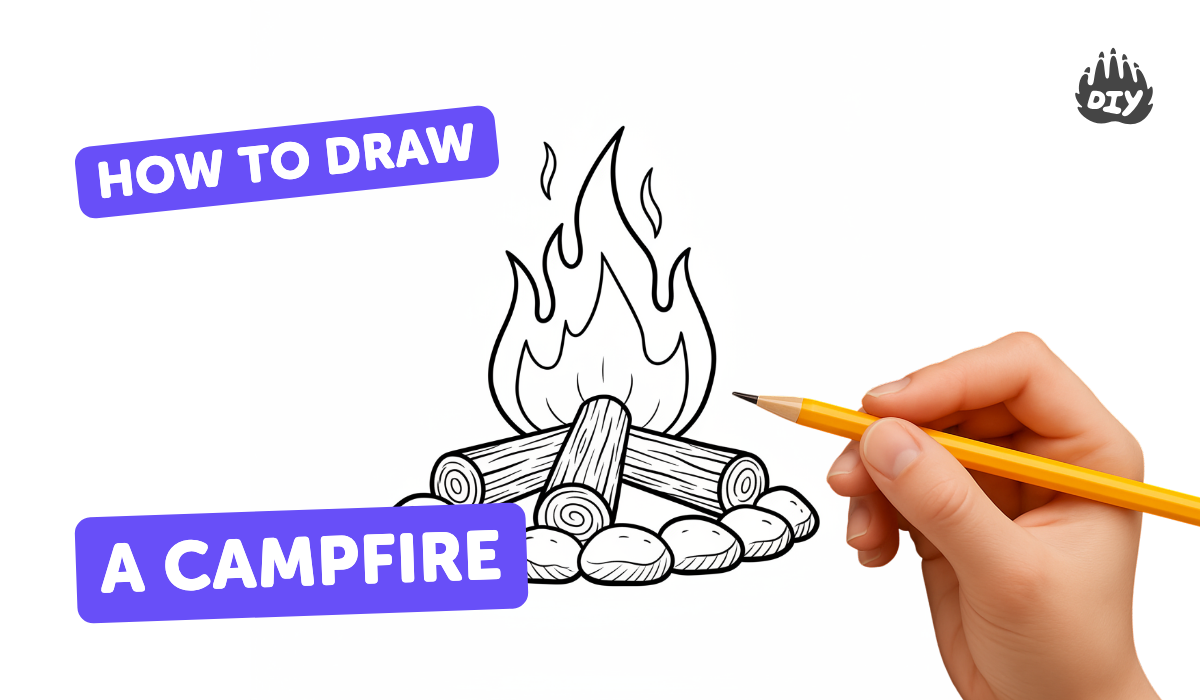
Draw a simple campfire using pencil, eraser, colored pencils, and paper; practice sketching logs, flames, shading, and adding background details for realism.
About this tutorial
Draw a simple campfire using pencil, eraser, colored pencils, and paper; practice sketching logs, flames, shading, and adding background details for realism.
What you need
Instructions
- 1
Step 1
Gather your pencil eraser colored pencils and a clean sheet of paper and place them on your workspace.
- 2
Step 2
Put your paper in landscape (horizontal) position so you have room for the logs and flames.
- 3
Step 3
Lightly sketch two or three overlapping log shapes near the bottom center of the paper.
- 4
Step 4
Draw short curved lines at the ends of each log and add parallel lines along the logs to show bark and rings.
- 5
Step 5
Gently erase any heavy construction lines so the logs look neat and clear.
- 6
Step 6
Above the logs lightly draw a large teardrop or oval flame shape that sits on the center of the logs.
- 7
Step 7
Inside the big flame draw two smaller flame shapes that follow the outer flame form to make layers.
- 8
Step 8
Add a few tiny spark dots above the flames and one or two wavy smoke lines rising up.
- 9
Step 9
Shade the underside and ends of each log with your pencil to make them look rounded and three-dimensional.
- 10
Step 10
Color the flames by layering yellow in the innermost part then orange around that then red at the outer edges to create a glowing effect.
- 11
Step 11
Color the logs with brown tones and add darker pencil strokes for wood texture and shadow.
- 12
Step 12
Lightly add background details like small stones grass or a night sky with stars using soft strokes so the campfire stands out.
- 13
Step 13
Clean up your picture by gently erasing any remaining sketch lines and add your name in a corner.
- 14
Step 14
Share your finished campfire drawing on DIY.org
Fun facts
How do I teach my child to draw a simple campfire step by step?
Start by lightly sketching two or three short logs in a triangle or teepee arrangement. Add a curved outline of flames above, layering smaller flame shapes inside larger ones. Erase extra lines, refine edges, and add wood grain and shadows under logs for depth. Use colored pencils to blend yellows, oranges, reds, and a little blue or gray for hotspots and smoke. Finish with background details like rocks, stars, or a tent.
What materials do we need to draw a campfire with colored pencils?
You'll need a pencil (HB or 2B), a good eraser, sharpened colored pencils in yellow, orange, red, brown, gray, and black, and a sheet of drawing paper. An optional blending stump or cotton swab helps smooth colors; a ruler can keep logs proportional. A scrap paper for sketching ideas and a small sharpener are handy. Keep materials organized and washable wipes nearby for quick cleanups.
What ages is drawing a campfire suitable for and how should I adapt it?
This activity suits children aged about 5–12 with adult guidance for younger kids. Ages 5–7 benefit from simple shapes and big crayons; ages 8–10 can work on flame layering, shading, and color blending; ages 11–12 can try realistic textures and backgrounds. Adjust complexity, time, and supervision to match the child’s attention and fine-motor skills. Offer encouragement and demonstrate steps for beginners.
What are the benefits of drawing a campfire for kids?
Drawing a campfire builds fine motor skills, hand–eye coordination, and observation—kids learn how light and shadow shape objects. It encourages creativity, color theory practice, patience, and focus while offering a calming, storytelling prompt (campfire scenes). Practicing shading and texture also boosts confidence and prepares children for more advanced drawing projects. Praise effort and discuss elements like flame colors to deepen learning.
Watch & Learn
Need help?
What can I use if I don't have colored pencils or a pencil eraser for this campfire drawing?
Use crayons or water-soluble markers to layer yellow, orange, and red for the flame coloring and use a kneaded or regular rubber eraser to gently lift sketch lines on your clean sheet of paper as in the instructions.
My logs look flat—how do I fix that part of the drawing?
Follow the instruction to shade the underside and ends of each log with your pencil and add darker pencil strokes along the parallel bark lines to create the rounded, three-dimensional look.
How can I adapt this activity for different ages?
For younger children, simplify by sketching one big log and a single flame layer from the steps, while older kids can add detailed wood rings, layered flame coloring (yellow→orange→red), and a night sky with stars for extra challenge.
How can we enhance or personalize the finished campfire drawing?
Add a soft yellow halo around the layered flames for glow, use the eraser to create reflected highlights on the log ends, include small stones or grass in the background, and sign your name in a corner before sharing on DIY.org.