How to Draw a Bumblebee
Draw a simple bumblebee using basic shapes, stripes, wings, and antennae step by step. Practice shading and coloring to add texture and depth.
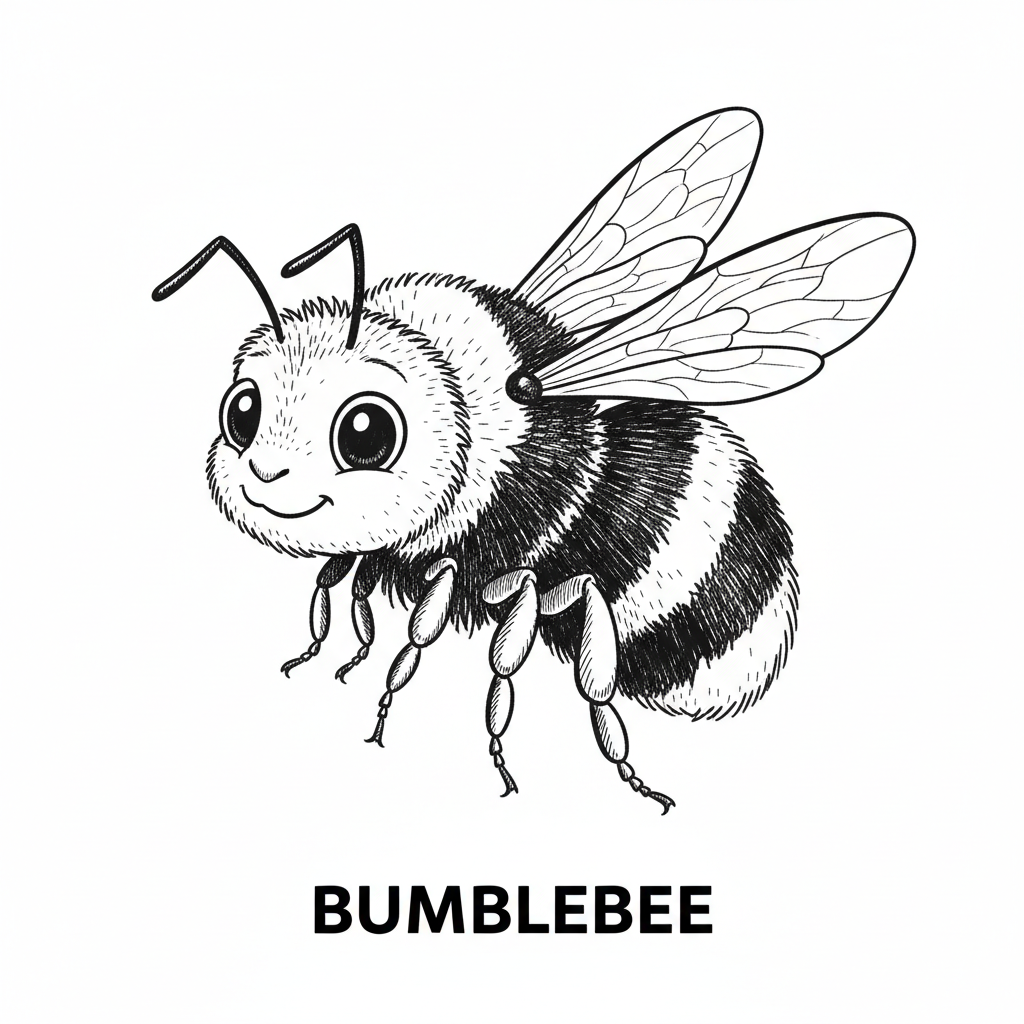
About this tutorial
Draw a simple bumblebee using basic shapes, stripes, wings, and antennae step by step. Practice shading and coloring to add texture and depth.
What you need
Instructions
- 1
Step 1
Draw a medium horizontal oval near the center of your paper for the bumblebee's body.
- 2
Step 2
Draw a smaller circle overlapping the front of the oval for the bumblebee's head.
- 3
Step 3
Draw two small circles on the head for the eyes.
- 4
Step 4
Draw a tiny curved line under the eyes for a smiling mouth.
- 5
Step 5
Draw two curved antennae on top of the head with little oval tips.
- 6
Step 6
Draw two teardrop shaped wings on the top sides of the body.
- 7
Step 7
Draw three curved lines across the body to divide it into stripes.
- 8
Step 8
Draw a small pointy stinger at the back of the body.
- 9
Step 9
Trace over your main outlines with a black marker or pen to make the bumblebee bold.
- 10
Step 10
Gently erase extra pencil lines to clean up the drawing.
- 11
Step 11
Use your pencil to add light shading along the bottom and edges of the body and wings to make them look round.
- 12
Step 12
Color the bumblebee with your coloring materials making the stripes yellow and black and the wings a pale blue or gray.
- 13
Step 13
Share your finished bumblebee on DIY.org.
Get inspired
Fun facts
How do I draw a simple bumblebee step by step?
To draw a simple bumblebee, start with a round body and a smaller round head attached. Sketch two ovals for wings and add two short curved antennae on the head. Draw three or four curved stripes across the body, then add tiny legs under the body. Use a darker outline, erase extra pencil lines, and practice shading along one side of the body and wings for depth. Finish by coloring with yellows, blacks, and soft blues, blending gently.
What materials do I need to draw a bumblebee?
You'll need a few basic supplies: plain drawing paper or a sketchbook, a set of pencils (HB and 2B), a good eraser, a sharpener, and a fine black pen for outlines. For color and texture use colored pencils, crayons, markers, or watercolors and a small blending stump or cotton swab for smooth shading. Optional items: ruler for symmetry, white gel pen for highlights, and washable markers for younger children.
What ages is drawing a simple bumblebee suitable for?
This activity suits ages 4–12 with simple adjustments. Ages 4–6 enjoy basic shapes and bold coloring with adult supervision to handle small tools. Ages 7–9 can follow step-by-step outlines, add stripes, and try basic shading. Ages 10–12 can practice more detailed textures, layering colors, and experimenting with light source and depth. Adjust complexity and provide help with scissors, paints, or fine-tip pens as needed.
What are the benefits and fun variations of drawing a bumblebee?
Drawing bumblebees builds fine motor skills, hand–eye coordination, and observation of shapes and patterns. It encourages creativity, planning, and a basic understanding of shading, color blending, and texture. For variations, try a cartoon bumblebee with big eyes, a realistic bumblebee with fuzzy strokes, or a collage using tissue paper and glitter. Safety tip: supervise young children with small craft materials and use non-toxic, washable supplies.
Watch & Learn
Need help?
What can we use if we don't have a black marker or the exact coloring materials listed?
If you don't have a black marker, use a dark ink pen or a black crayon to trace the main outlines before you gently erase extra pencil lines, and substitute colored pencils, washable paint, or crayons for the yellow and black stripes and pale blue wings.
My head circle doesn't overlap the oval neatly—how do we fix that so the bumblebee looks right?
If the smaller circle for the head doesn't overlap the medium horizontal oval cleanly, lightly redraw one shape with your pencil until the overlap looks natural, then trace with the black marker and gently erase extra pencil lines to tidy the join.
How can I adapt this drawing for different age groups?
For younger children, simplify by drawing a single oval body, two big stripes, and skipping the light shading step while using chunky crayons, and for older kids add extra curved stripes, wing veins, and stronger pencil shading along the bottom and edges to make the bumblebee more detailed.
How can we extend or personalize the bumblebee drawing after finishing the basic steps?
Extend the activity by drawing flowers or a garden around the bumblebee's body, adding unique patterns to the stripes, applying pale blue watercolor or glitter glue to the wings, and then share your finished bumblebee on DIY.org.