How to Draw a Boot
Draw a detailed boot by sketching basic shapes, adding seams and laces, then shade and color to create realistic texture. Practice proportions.
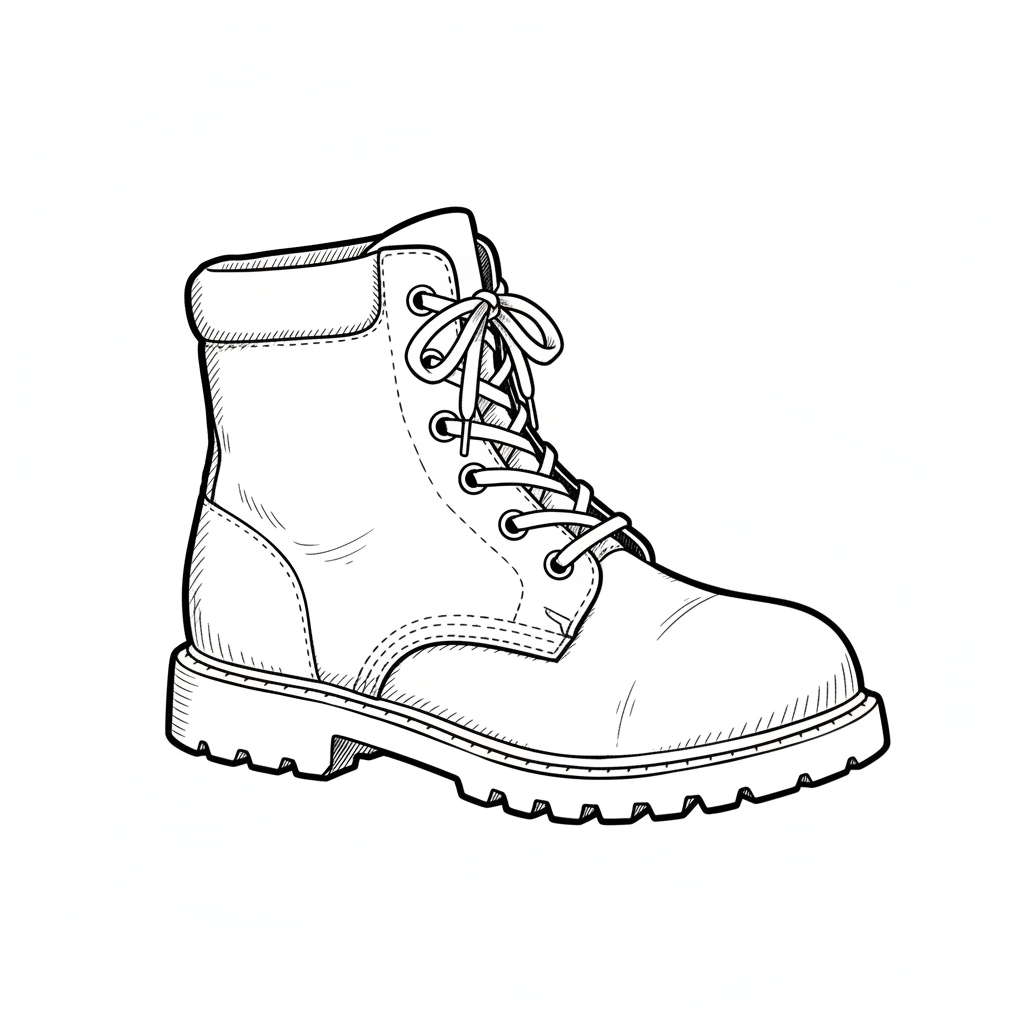
About this tutorial
Draw a detailed boot by sketching basic shapes, adding seams and laces, then shade and color to create realistic texture. Practice proportions.
What you need
Instructions
- 1
Step 1
Set up your workspace by placing your paper on a flat surface and keeping all materials within reach.
- 2
Step 2
Lightly draw a vertical center line down the paper to help keep your boot symmetrical.
- 3
Step 3
Lightly draw a horizontal baseline where the bottom of the sole will sit so the boot looks grounded.
- 4
Step 4
Sketch the basic shapes to block in the boot: a long oval for the sole a rounded box for the foot and a taller rectangle for the shaft.
- 5
Step 5
Check proportions by comparing the height of the shaft to the length of the sole and adjust the shapes until they look balanced.
- 6
Step 6
Refine the outer outline by connecting the basic shapes into a single smooth boot silhouette.
- 7
Step 7
Draw the sole and heel details by adding a layered line for the sole and a thicker block for the heel.
- 8
Step 8
Add seam and panel lines to the boot to show where leather pieces meet and to create structure.
- 9
Step 9
Sketch eyelets and laces by drawing small circles or holes and then drawing the lace crossing pattern up the front.
- 10
Step 10
Add small texture marks like stitch dashes creases and scuffs to make the boot look real.
- 11
Step 11
Decide where the light comes from and shade darker areas with your pencil then blend gently with a tissue or blending stump.
- 12
Step 12
Color your boot with colouring materials and add highlights by erasing tiny lines or leaving areas lighter to show shine.
- 13
Step 13
Take a picture of your finished boot drawing and share it on DIY.org
Get inspired
Fun facts
How do I draw a realistic boot step by step?
Start with a reference photo and lightly sketch simple shapes: an oval for the toe, a long rectangle for the sole, and a rounded rectangle or cylinder for the shaft. Mark the centerline and proportions, then refine panels, seams, tongue and heel. Add laces and eyelets. Erase construction lines, indicate stitching and creases for texture, then shade using a consistent light source. Finish by adding highlights and color to create realistic material.
What materials do I need to draw a detailed boot?
You’ll need good drawing paper, a range of pencils (HB for sketching, 2B–4B for darker lines and shading), a kneaded eraser, and a sharpener. Optional helpful items: blending stump or cotton bud for smooth shading, ruler for straight edges, white gel pen for highlights, colored pencils or markers for coloring, and a reference photo of a boot for accuracy. Comfortable lighting completes the setup.
What ages is drawing a detailed boot suitable for?
Children aged about 6–8 can try simplified boot shapes with adult guidance; ages 9–12 are ready for step-by-step instruction on seams, laces, and basic shading. Teens and older children can practice advanced proportion, texture and realistic shading. Adjust complexity to the child’s skill and attention span, and supervise younger kids when using sharpeners or ink pens.
What are the benefits of practicing detailed boot drawings?
Drawing boots teaches proportion, observation, and spatial reasoning while improving fine motor skills and hand–eye coordination. Shading and texturing build understanding of light, material and depth. Repeating the exercise boosts patience, attention to detail and visual memory—useful for art, design or fashion projects. It’s also a fun way to express creativity; try different boot styles or materials to vary the challenge.
Watch & Learn
Need help?
What can we use if we don't have a blending stump or tissue for step 12 (blending shading)?
If you don't have a blending stump or tissue to blend your pencil shading in step 12, gently smudge with a clean fingertip, cotton swab, or a folded paper towel to soften the pencil marks.
My boot looks lopsided after refining the outline—how can I fix it?
If the silhouette looks uneven after connecting shapes in step 6, recheck and redraw the light vertical center line (step 2) and compare the shaft height to the sole length (step 5), then lightly erase and adjust the outer outline until it balances.
How can I modify the activity for different age groups?
For preschoolers, have them trace the basic oval and box shapes from step 4 with chunky crayons and skip laces; for elementary kids, practice adding seam lines and simple shading (steps 7–12); and for teens, focus on detailed paneling, advanced shading with a blending stump, and realistic texture before colouring (steps 8–13).
How can we extend or personalize the boot drawing once the basic steps are done?
Personalize the boot by changing the shaft height or sole shape in your initial blocked shapes (steps 4–5), add decorative panels, logos, or patterns with seam and stitch lines (steps 7–10), experiment with mixed-media colouring and highlights using an eraser (step 13), and finish by photographing your final piece to share on DIY.org (step 14).