Get Creative With the Centipede and Millipede Pose
Practice and invent variations of the centipede and millipede yoga poses, moving slowly, counting "legs," and creating safe, playful balances and stretches.
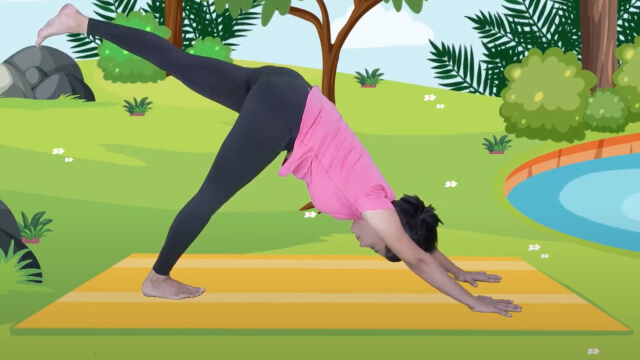
About this activity
Practice and invent variations of the centipede and millipede yoga poses, moving slowly, counting "legs," and creating safe, playful balances and stretches.
What you need
Step by step
- 1
Step 1
Clear a small space and lay down your soft mat or towel so you have room to move.
- 2
Step 2
Put on comfy clothes so you can bend and wiggle easily.
- 3
Step 3
Take three deep breaths to calm your body and get ready to move.
- 4
Step 4
Lie down on your belly on the mat with your forehead relaxed.
- 5
Step 5
Slide your hands under your shoulders so your palms are ready to press.
- 6
Step 6
Press into your hands and lift your chest a little to make a gentle cobra lift.
- 7
Step 7
Lift your right arm a little and your left leg a little at the same time like a crawling centipede.
- 8
Step 8
Switch and lift your left arm and right leg at the same time to keep crawling slowly.
- 9
Step 9
Repeat the alternating lifts slowly five times while counting each "leg" out loud.
- 10
Step 10
Sit up with your legs straight in front of you and place your hands behind you on the mat.
- 11
Step 11
Press into your hands and lift your hips a little so your weight rests on your palms and feet.
- 12
Step 12
Wiggle both feet quickly like many tiny legs while counting to twenty to make your millipede move.
- 13
Step 13
Think of one new safe change like moving slower faster raising one arm or lifting one leg.
- 14
Step 14
Try your new variation slowly one time while counting the “legs” to see how it feels.
- 15
Step 15
Take a photo or video and share your finished centipede and millipede creations on DIY.org
Fun facts
How do I guide my child through centipede and millipede yoga poses?
Start with a short warm-up of gentle stretches and deep breaths. Demonstrate the centipede and millipede shapes—low, playful crawls or seated leg/arm wiggles—and invite your child to copy slowly. Have them count “legs” aloud while moving one limb at a time, then invent variations like reaching high, balancing on elbows, or using a pillow for support. Keep movements slow, praise experiments, and stop if anything feels painful.
What materials do I need for centipede and millipede pose play?
You don't need fancy gear. A non-slip yoga mat or soft carpet creates a safe space. Comfortable clothing that allows movement, a small cushion or block for support, and a timer for short practice rounds help. Optional props: stuffed animals or number cards for counting “legs,” non-slip socks for slippery floors, and a mirror or phone for your child to watch their movements. Keep the area clear of sharp objects.
What ages are centipede and millipede pose activities suitable for?
This activity suits toddlers through school-age kids with adjustments. Ages 2–3: simple, very short guided wiggles and crawling with close supervision. Ages 4–6: introduce counting legs, basic variations, and gentle balances with support. Ages 7–12: encourage creative inventions, longer flow sequences, partner games, and safe challenges. Always consider each child's coordination, offer modifications, and supervise younger children to prevent falls or overexertion.
What are the benefits and safety tips for centipede and millipede pose play?
Playing with centipede and millipede poses builds balance, coordination, body awareness, counting skills, and creative thinking. It's a low-impact way to strengthen core and limbs while practicing slow control. For safety, clear floor space, use a mat, supervise especially under age five, and avoid forcing stretches. Encourage slow, pain-free movement and regular breaks. If a child has injuries or joint issues, consult a pediatrician before trying new balance or stretching activities.
Watch & Learn
Need help?
What can we use if we don't have a soft mat or towel?
Use a folded blanket, yoga mat, carpeted area, or a couch cushion as a substitute for the soft mat or towel and be sure to wear comfy clothes so you can bend and wiggle easily.
My child can't lift their chest or balance when doing the alternating arm/leg lifts — how can we fix that?
Have them keep their palms directly under their shoulders, press gently into their hands to do a small cobra lift, and perform much smaller arm-and-leg lifts while breathing and repeating the alternating lifts five times.
How can I adapt this activity for younger or older kids?
For younger children, make the movements smaller and reduce counts (try one alternating lift at a time and wiggle feet to a count of 5), while older kids can hold each cobra lift for 2–3 seconds or increase wiggle speed and count to twenty.
How can we make the activity more creative or personal?
Have the child pick one new safe change from the instructions like moving slower, raising one arm, or lifting one leg, add a costume or music during the millipede wiggle, then take a photo or video to share on DIY.org.