Fold eggs into an omelette
Make a folded omelette by whisking eggs, adding fillings, cooking gently in a pan, then folding with a spatula under adult supervision.
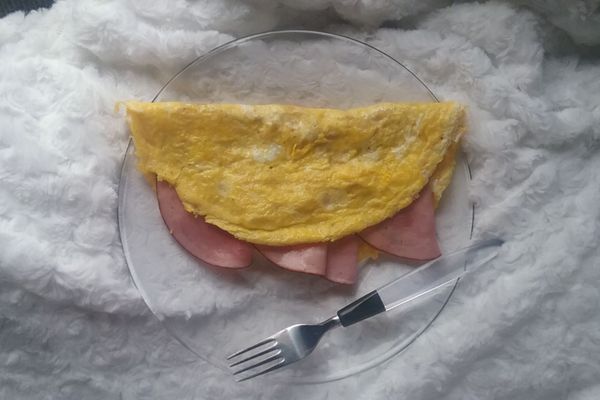
About this activity
Make a folded omelette by whisking eggs, adding fillings, cooking gently in a pan, then folding with a spatula under adult supervision.
What you need
Step by step
- 1
Step 1
Wash your hands with soap and water until they are clean.
- 2
Step 2
Gather all the materials listed on the table and put them on the counter.
- 3
Step 3
Crack two or three eggs into the bowl.
- 4
Step 4
Add a splash of milk or water and a pinch of salt and pepper to the eggs.
- 5
Step 5
Whisk the eggs with the fork or whisk until the mixture looks smooth and a little frothy.
- 6
Step 6
Ask an adult to cut any raw fillings into small bite sized pieces if needed.
- 7
Step 7
With an adult, heat a nonstick frying pan over medium heat.
- 8
Step 8
Put a small bit of butter or a teaspoon of oil into the pan and let it melt or warm.
- 9
Step 9
Pour the whisked eggs into the warm pan and tilt the pan to spread the eggs evenly.
- 10
Step 10
Sprinkle your chosen fillings evenly over one half of the cooking eggs.
- 11
Step 11
Let the omelette cook until the edges are set and the top is mostly firm but slightly soft.
- 12
Step 12
Use the spatula to lift the empty side of the omelette and fold it over the fillings to make a half moon.
- 13
Step 13
Cook for another 20 to 30 seconds so the cheese melts and the fillings warm through.
- 14
Step 14
Slide the folded omelette carefully onto a plate and let it cool for about one minute.
- 15
Step 15
Share your finished omelette on DIY.org.
Fun facts
How do you make a folded omelette?
Whisk two eggs with a pinch of salt and pepper in a bowl. Heat a nonstick pan over medium-low and melt a little butter or oil. Pour the eggs in, tilt the pan to spread them, and gently lift the edges with a spatula as the uncooked egg flows underneath. When mostly set, add fillings to one side, fold the other half over with the spatula, cook 20–30 seconds more, then slide onto a plate. Always cook under adult supervision.
What materials do I need to make a folded omelette?
You’ll need eggs (about 2 per omelette), a bowl, whisk or fork, nonstick frying pan, spatula, cooking oil or butter, plate and utensils, and a cutting board and knife for fillings. Typical fillings: grated cheese, diced ham, chopped cooked vegetables or herbs. Also have oven mitts and a damp cloth nearby, and ensure an adult supervises stove use and handles hot pans for safety.
What ages is making a folded omelette suitable for?
Young children (3–5) can help wash or stir fillings and choose ingredients. Ages 6–8 can whisk eggs, add fillings, and spoon into the pan with close adult help. Ages 9–12 may handle more of the cooking steps with direct supervision, including using the stove on low heat. Teens can often cook independently after guidance. Always monitor handling of hot pans and knives, and adjust tasks to each child’s skills.
What are the benefits, safety tips, and simple variations for this omelette activity?
Making an omelette builds motor skills, cooking confidence, and basic nutrition knowledge. Safety tips: keep handles turned in, use low heat, pre-cut fillings, and ensure an adult manages the pan. Variations: try spinach and feta, tomato and basil, or mild salsa and cheese. For picky eaters, offer separate small bowls of fillings so children can customize their omelette while learning measuring and tasting.
Watch & Learn
Need help?
What can we use if we don't have a nonstick pan, butter, or a whisk?
Use a well‑seasoned cast‑iron or stainless pan heated to medium and add an extra teaspoon of oil in place of butter, and use a fork to whisk the eggs as instructed in the whisking step.
My omelette keeps sticking or tearing when I fold it — what should I try?
Make sure the pan is hot but on medium (step 7), put the butter or oil from step 8 so the surface is slick, wait until the edges are set and the top is mostly firm in step 11, then gently slide the spatula under the empty side before folding in step 12.
How can I adapt the steps for younger children or older kids?
For younger kids give them safe tasks like cracking eggs into a bowl, whisking in step 5, and choosing fillings while an adult handles chopping and the stove (steps 6 and 7), and for older kids let them run steps 3–14 with guidance on heat control and filling choices.
How can we personalize or extend the omelette activity?
Create an omelette bar with several fillings prepared per step 6 (different cheeses, veggies, herbs), let kids design their own combos, plate and photograph the result to share on DIY.org in step 15.