Flip-a-Clip Tutorial with DIY Star @Prairie
Make a Flip-a-Clip animated flipbook and a DIY star clip decoration, practicing drawing sequential frames, cutting, and assembling to create moving art.



Step-by-step guide to Flip-a-Clip Tutorial with DIY Star @Prairie
Step 1
Choose a simple animation idea like a bouncing ball a waving hand or a star twinkling.
Step 2
Draw three quick stick figure key poses on scrap paper to plan how your animation will move.
Step 3
Cut or trim a stack of small papers or index cards so they are all the same size.
Step 4
Lightly number the backs of the papers in order with a pencil so you know the sequence.
Step 5
Draw the first frame of your animation on the first paper using your pencil.
Step 6
Place the previous paper behind the next paper so you can see the drawing through it for guidance.
Step 7
Draw the next frame with a small change from the previous frame so the motion is gradual.
Step 8
Repeat the place and draw trick until every paper has one frame of the animation.
Step 9
Color each frame keeping colors and details consistent so the motion looks smooth.
Step 10
Stack the papers in number order and align their edges neatly.
Step 11
Secure the top or side edge of the stack with a stapler or binder clip to make your flipbook.
Step 12
Cut a star shape from cardboard or thick paper to make your clip decoration.
Step 13
Decorate the star with your colouring materials to make it bright and fun.
Step 14
Attach the star to a clothespin or large paperclip with glue or tape and let it dry.
Step 15
Share a photo or video of your finished Flip a Clip flipbook and DIY star clip on DIY.org
Help!?
What can we use instead of index cards or a stapler if those aren't available?
If you don't have index cards, trim printer paper or cereal-box cardboard to the same size for pages and use strong tape or a rubber band to secure the stack instead of a stapler or binder clip.
My next frame is not lining up with the previous one—how do I fix that?
To keep frames aligned when you 'place the previous paper behind the next paper,' tape the edge of the stack to the table and hold it up to a window or use a smartphone flashlight as a makeshift lightbox so you can see the drawing through the paper.
How can I change this activity for younger kids or older kids?
For younger children limit the project to 6–8 large frames and simple shapes like a bouncing ball, while older kids can draw more frames (20+) with finer details, color each frame, and add a decorated star attached to a clothespin as in the instructions.
What are some fun ways to personalize or extend the flipbook and DIY star clip?
Make a continuous background across the papers by lightly drawing a horizon before you start, add sequins or stickers to the star decoration, and film a slow flip video to share on DIY.org as suggested.
Watch videos on how to Flip-a-Clip Tutorial with DIY Star @Prairie
Simple FlipaClip Tutorial
4 Videos
Simple FlipaClip Tutorial
How To Make A Cartoon Using Video - FlipaClip Tutorial for Beginners
FlipaClip Ultimate Beginner Guide | App Walkthrough and Tutorial |
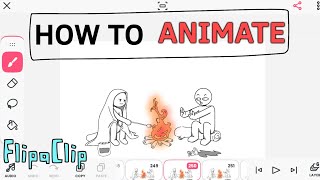
HOW TO ANIMATE ON flipaclip (FlipaClip beginning Tutorial)
Facts about animation and paper crafts
🎞️ Flip books were popularized in the 1860s and are one of the oldest forms of portable animation.
✏️ You only need about 12 small drawings to make a one-second flipbook animation at 12 frames per second!
👀 Persistence of vision is why your eyes blend quick images into smooth motion — the trick behind flipbooks and movies.
📎 Simple clips like clothespins or paper clips can turn a paper star into a wearable or hanging decoration.
🌟 Kids and crafters often decorate dozens of tiny paper stars for party garlands — they’re fast, sparkly, and addictive to make!
How do I make a Flip-a-Clip animated flipbook and DIY star clip?
What materials do I need for a Flip-a-Clip flipbook and star clip?
What ages is this Flip-a-Clip and star clip activity suitable for?
What are the benefits, safety tips, and variations for Flip-a-Clip crafts?
