Find your Atomic Symbol!
Discover which chemical element matches your initials, create a personalized element card with its symbol, atomic number, and fun facts, then share it.


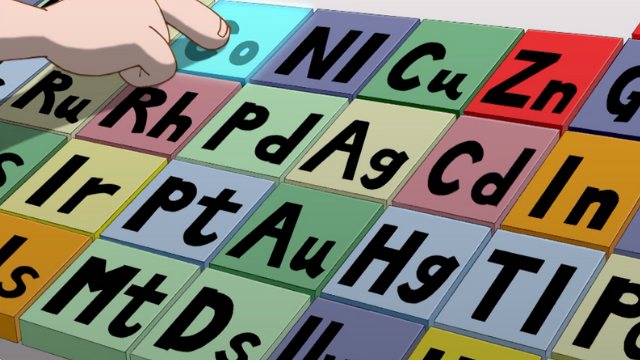

Step-by-step guide to Find your Atomic Symbol
Step 1
Write your full name on the paper and clearly write your two initials in big letters.
Step 2
Turn your initials into an element-style symbol by capitalizing the first letter and making the second letter lowercase.
Step 3
Use a periodic table book or an online periodic table to look for an element with that exact two-letter symbol.
Step 4
If you do not find a two-letter match try the first initial alone as a single-letter element symbol.
Step 5
If that still does not work try the second initial alone as a single-letter element symbol.
Step 6
If none of those match choose an element whose name starts with one of your initials and write which one you picked.
Step 7
Draw a rectangle on your paper to make the front of your personalized element card.
Step 8
Use your ruler to divide the rectangle into three sections: a small top-left box for the atomic number a large center area for the symbol and a bottom box for facts.
Step 9
Write the element’s atomic number in the top-left box in clear big numbers.
Step 10
Write the element symbol in the center area using the correct capitalization very large and bold.
Step 11
Write three short fun facts about the element in the bottom box using simple sentences.
Step 12
Draw a small picture next to the facts showing one use or property of the element.
Step 13
Color and decorate your card with colouring materials and stickers to make it bright and personal.
Step 14
Cut out your finished card carefully and glue or tape any loose bits (ask an adult for help if you need it).
Step 15
Take a photo or upload your finished element card and share your creation on DIY.org.
Help!?
What can we use if we don't have a periodic table book, ruler, or stickers?
If you don't have a periodic table book use a reliable online periodic table, replace a ruler with a straight-edged book or folded paper to draw and divide the rectangle, and swap stickers for any colouring materials like crayons or markers while using a phone camera to take the photo for uploading.
I can't find an element matching my two-letter initials or my card looks messy—what should I do?
Follow the instructions to try your first initial alone, then your second as single-letter symbols and finally pick an element whose name starts with one of your initials if none match, and if your rectangle or boxes are uneven use a ruler (or folded paper) to redraw straight lines and ask an adult to help cut or glue loose bits before photographing.
How can this activity be adapted for different age groups?
For younger children, have an adult pre-print or point to a simple periodic table, pre-draw the divided rectangle, and let them color and stick pictures while dictating two short facts, whereas older kids can research and add atomic mass, electron configuration, and extra facts or design a back side before cutting and uploading.
How can we extend or personalize the finished element card beyond the basic steps?
Enhance your card by color-coding the element's family with your colouring materials, adding the atomic mass or a QR link to the online periodic table in the facts box, laminating it with clear tape or contact paper, and creating a set of personalized cards to trade or photograph for DIY.org.
Watch videos on how to Find your Atomic Symbol
What Are The Chemical Symbols On The Periodic Table? - Science Through Time
3 Videos
What Are The Chemical Symbols On The Periodic Table? - Science Through Time
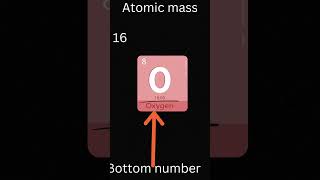
How To Identify The Atomic Mass, Atomic Number And Chemical Symbol Of An Element #educational #easy

Chemistry - Atomic Structure - EXPLAINED!
Facts about chemical elements and the periodic table
🔬 There are 118 confirmed chemical elements in the periodic table.
🔢 An element's atomic number equals the number of protons in its nucleus — that number makes each element unique.
🧪 Many chemical symbols come from Latin or old names (for example, gold = Au from 'Aurum', sodium = Na from 'Natrium').
✨ Hydrogen (H), with atomic number 1, is the most abundant element in the universe.
🌍 About 90–94 elements occur naturally on Earth; the rest have been created in labs.
How do I do the "Find your Atomic Symbol" activity?
What materials do I need for Find your Atomic Symbol?
What ages is this activity suitable for?
What are the benefits of doing Find your Atomic Symbol with my child?
