Find wild animal signs
Go outdoors to search for wild animal signs like tracks, scat, nests, and feathers; record observations by drawing, photographing, and staying on trails.


Step-by-step guide to find wild animal signs
Meet the Wild Animals: Must-Watch for Kids! (part 1)
Step 1
Put on weather-appropriate clothes and sturdy shoes.
Step 2
Gather your notebook pencil colouring materials magnifying glass and ruler.
Step 3
Choose a safe trail with your adult and agree how long you will explore.
Step 4
Write the date time and the trail name at the top of a new page in your notebook.
Step 5
Walk slowly and quietly on the trail while watching the ground trees and bushes for animal signs.
Step 6
When you spot a possible sign stop and stay at least a few feet away.
Step 7
Write the kind of sign you think it is (track scat nest feather) in your notebook.
Step 8
Measure or estimate the size of the sign with your ruler and write the measurement in your notebook.
Step 9
Draw the sign in your notebook and use your colouring materials to add details.
Step 10
Take a clear photo of the sign from a safe distance to keep a record.
Step 11
Write a few words about the spot where you found it (near water under a bush on the trail) in your notebook.
Step 12
Use the magnifying glass to look closely at safe details like feather patterns or track shapes without touching the sign.
Step 13
Check yourself and your clothes for ticks burrs or sticky seeds with your adult before leaving the trail.
Step 14
Ask an adult to help you share your drawings photos and notes about the animal signs on DIY.org.
Help!?
What can we use instead of a magnifying glass or ruler if we don't have one?
If you don't have a magnifying glass or ruler, use your phone's camera zoom or a reading glass to check details and a coin or credit card as a size reference and write that estimate in your notebook.
What should we do if pictures are blurry or we can't get close to a sign?
If photos are blurry or you must stay back, stop as the instructions say, stabilize your phone or use zoom from a few feet away, and place a coin or ruler-sized object next to the sign for scale before taking the picture.
How can I change the activity to suit a 4-year-old versus a 12-year-old?
For a 4-year-old, have an adult write the date/time and measure with the ruler while the child points, colors, and draws the sign nearby, and for a 12-year-old have them record exact measurements, use the magnifying glass for patterns, and write descriptive notes to upload to DIY.org.
How can we make the notebook project more special or use it after the hike?
Turn your notebook and photos into a personalized field guide by adding labeled drawings, ruler measurements, location notes like 'near water' or 'under a bush', date stamps, and then share the compiled pages on DIY.org or in a scrapbook.
Watch videos on how to find wild animal signs
Wild Animals Names and Sounds for Kids to Learn | Learning Wild Animal Names and Sounds for Children
4 Videos

Wild Animals Names and Sounds for Kids to Learn | Learning Wild Animal Names and Sounds for Children

Wild Animals for Kids | Learn 50 Wild Animals Names Lion, Tiger, Elephant & More | Educational Video
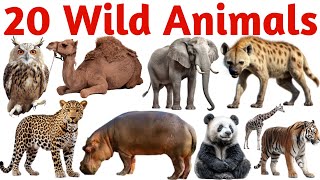
Learn 20 Wild Animals Names for Kids | Fun Animal Learning Video with Pictures & English Words 🐘

300 Wild Animals for Kids | Learn Animal Names | Types of Animals for Kids | Wild Animals Name
Facts about wildlife tracking for kids
🐾 Animal tracks can show an animal's size, gait, and whether it was walking, trotting, or running — track patterns are like a fingerprint.
💩 Scat can reveal an animal's diet, age, and health; scientists even extract DNA from droppings to identify species without seeing the animal.
🪶 A single feather can tell you a bird's species and whether it was from a wing, tail, or body — feather structure also helps with flight and insulation.
🕵️ Fresh tracks often have sharper edges and deeper impressions; rain, sun, and wind can make tracks disappear in hours or days.
🚶 Staying on trails protects tiny plants, nests, and habitats — off-trail trampling is one of the biggest threats to ground-nesting animals.
How do we search for wild animal signs outdoors with a child?
What materials do we need to find and record wild animal signs?
What ages is this wild animal signs activity suitable for?
What safety tips should parents follow when searching for wild animal signs?
