Feed Your Horse
Create a model horse stable and design healthy feed portions using paper, cardboard, and measuring cups. Learn about horse nutrition and care.


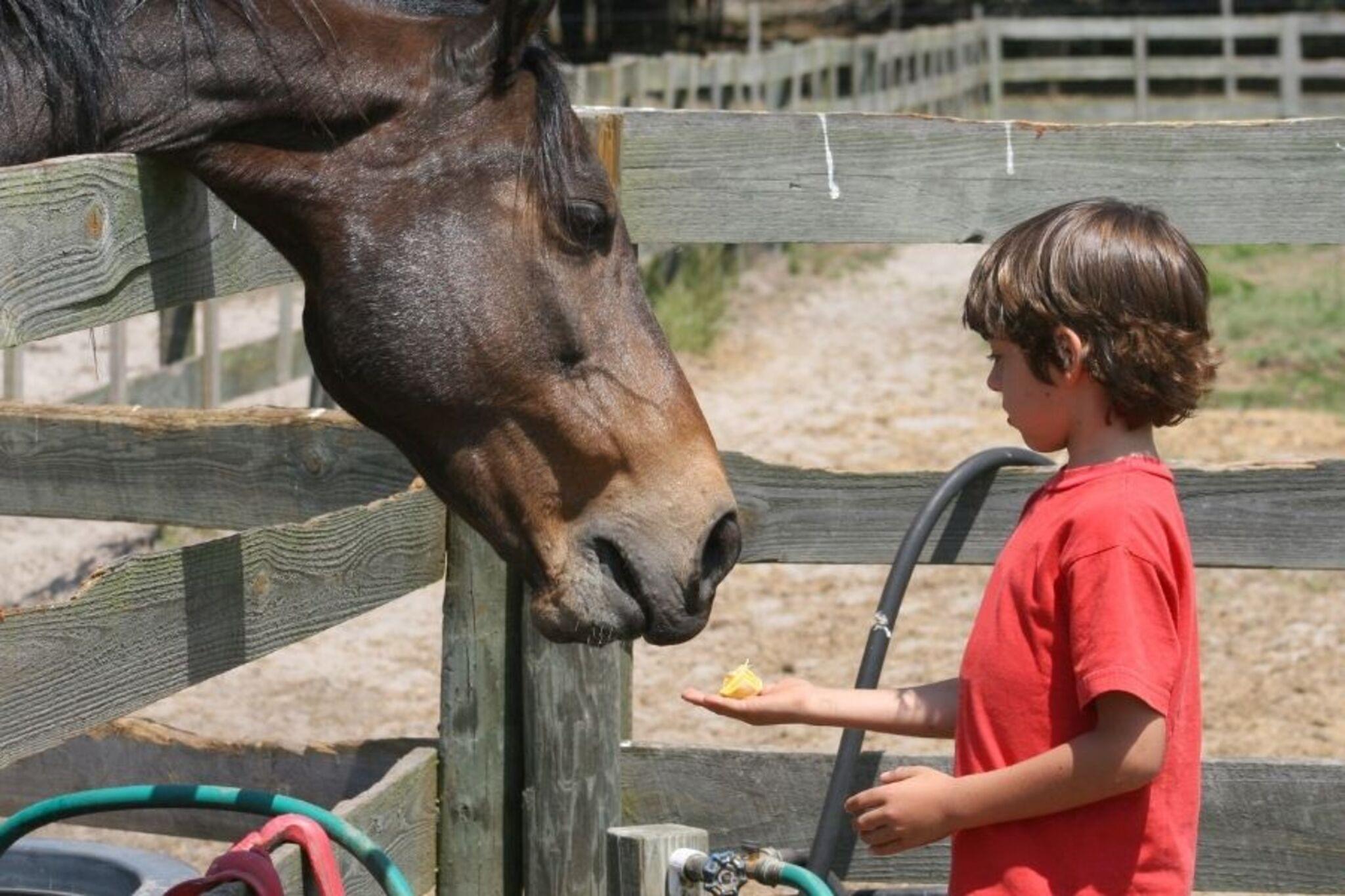

Step-by-step guide to Feed Your Horse
All About Feeding Your Horse! Beginners Series AD | This Esme
Step 1
Gather all materials on a clear table so your workspace is ready.
Step 2
Draw a rectangle on cardboard to make the stable floor using your ruler and pencil.
Step 3
Cut out the cardboard rectangle carefully with scissors.
Step 4
Cut two long strips of cardboard to use as stall walls.
Step 5
Tape the two cardboard strips upright onto the floor to make two or three stalls.
Step 6
Decorate the stable walls and floor with colouring materials to make it look cozy.
Step 7
Draw a horse shape on paper and cut it out to make your model horse.
Step 8
Put a small bowl into each stall to act as a feed bin.
Step 9
Decide which three feed types you will represent (for example hay substitute grain and a treat) and choose how much of each to show.
Step 10
Use measuring cups to add the chosen amounts of your feed substitutes into each stall bowl.
Step 11
Write the feed type and the measured amount on sticky notes and stick them to each bowl.
Step 12
Place your paper horse in a stall and check that the feed portions match your plan.
Step 13
Take a photo and share your finished stable and feed plan on DIY.org
Help!?
I don't have cardboard, small bowls, or sticky notes—what can I use instead?
Use a flattened cereal or shipping box for the stable floor and strips, bottle caps or muffin tin cups as the small feed bowls, and write labels on masking tape or folded paper while still taping walls upright and measuring feed amounts.
My stall walls keep falling over when I tape them upright—how can I fix that?
Make small folded tabs at the base of each cardboard strip and secure them to the floor rectangle with extra tape or glue so the stalls stay upright when you add bowls and decorate.
How can I adapt the activity for a 4-year-old versus a 10-year-old?
For a 4-year-old, have an adult pre-draw and cut the cardboard rectangle and strips and use large, simple feed substitutes and crayons, while a 10-year-old can use measuring cups to add precise amounts, write feed type and amounts on sticky notes, and plan different feed combinations.
How can we extend or personalize the finished stable beyond taking a photo?
Create multiple paper horses with different diets, use the measuring cups to vary feed amounts in the small bowls, label each bowl with sticky notes, and compare outcomes as a mini feeding experiment before sharing your photos.
Watch videos on how to Feed Your Horse
HORSE BASICS #1: What Should Horses Eat???
3 Videos
HORSE BASICS #1: What Should Horses Eat???
What Do Horses Eat- A Nutrition Guide for Beginners
Feeding A Horse The Simple Way
Facts about horse nutrition and care
🐴 An adult horse eats about 1.5–2% of its bodyweight each day — a 500 kg horse eats roughly 7.5–10 kg of food!
🌾 Horses are natural grazers, so hay or grass (fiber) should make up most of their diet to keep their gut healthy.
🥕 Carrots and apples are classic horse treats, but cut them into small pieces and offer sparingly to avoid choking or sugar overload.
🛏️ Horses can sleep standing thanks to a special "stay apparatus," but they still need to lie down briefly for deep REM sleep.
🥣 Using measuring cups and scales is a great way to teach kids about portions, fractions, and why consistent feed amounts matter.
How do I set up the Feed Your Horse activity?
What materials do I need for Feed Your Horse?
What ages is the Feed Your Horse activity suitable for?
What are the benefits of the Feed Your Horse activity?
