Draw and Watercolor a Bee
Draw a bee with pencil, outline with pen, then watercolor it to practice mixing colors, wet on wet techniques, and careful brush control.
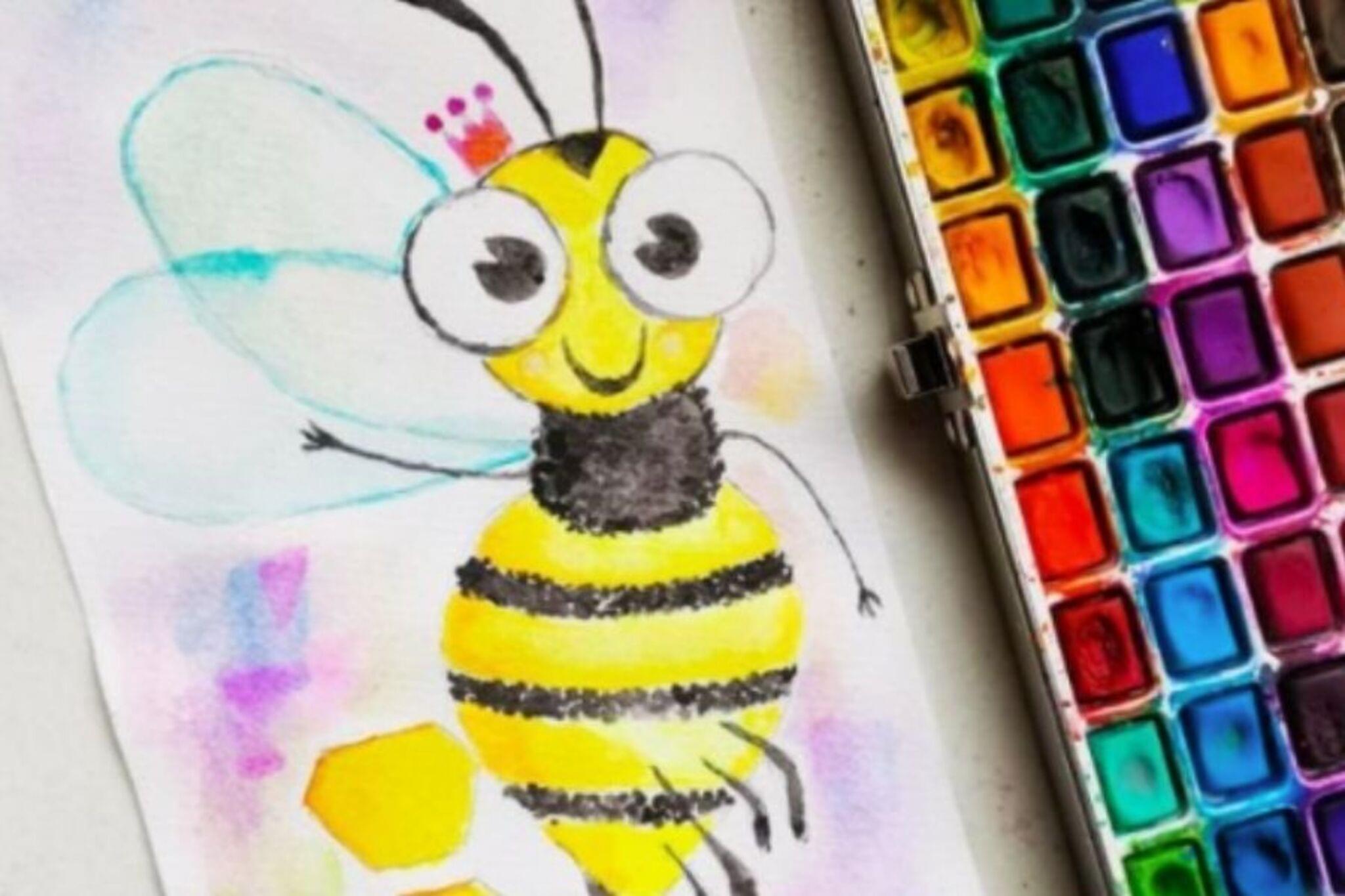
About this activity
Draw a bee with pencil, outline with pen, then watercolor it to practice mixing colors, wet on wet techniques, and careful brush control.
What you need
Step by step
- 1
Step 1
Gather all your materials and set them on a flat clean workspace.
- 2
Step 2
Lightly sketch a big oval for the bee’s body and a smaller circle touching the front for the head with your pencil.
- 3
Step 3
Lightly sketch two curved wings on each side of the body and a small pointy stinger at the back.
- 4
Step 4
Add simple details like two round eyes two antennae three little legs and two or three curved stripes on the body.
- 5
Step 5
Gently erase any extra sketch lines so your drawing looks neat.
- 6
Step 6
Carefully trace over your pencil lines with the black waterproof pen to make the bee bold.
- 7
Step 7
Wait until the ink is completely dry before you start painting.
- 8
Step 8
Put a puddle of yellow and a tiny drop of brown on your palette and mix two paints: bright yellow and a slightly darker yellow.
- 9
Step 9
Use the medium brush to paint the bee’s body with the bright yellow staying inside the pen lines using steady strokes.
- 10
Step 10
Use the small brush and the darker yellow to paint the stripes carefully with small steady strokes.
- 11
Step 11
Lightly wet the wing areas with a clean brush and plain water so the paper is damp.
- 12
Step 12
Drop a pale blue wash onto the damp wings so the color spreads softly for a wet-on-wet look.
- 13
Step 13
Let your whole painting dry completely by leaving it flat and undisturbed.
- 14
Step 14
Take a photo of your finished bee and share your creation on DIY.org.
Fun facts
How do I teach my child to draw and watercolor a bee step by step?
Start with a light pencil sketch: an oval body, smaller head, wings and antennae. Add stripes and simple legs. Use a waterproof fine-liner to outline once happy with the sketch, let ink dry, then erase pencil marks. For watercolor, begin with a light wash for body and wings. Try wet-on-wet for soft wing blends, and let layers dry before adding details. Finish with small brushwork for stripes and highlights.
What materials do I need to draw and watercolor a bee?
You’ll need watercolor paper (140 lb/300 gsm recommended), an HB pencil and eraser, a waterproof fine-liner pen, a basic set of watercolor paints, a few round brushes (sizes 0–6), a palette or mixing tray, a cup of water, and paper towels. Use non-toxic, child-safe paints and consider masking fluid for highlights. Optional: a reference photo of a bee and a smock to protect clothes.
What ages is drawing and watercoloring a bee suitable for?
This activity suits a wide range: preschoolers (3–5) can paint simple bee shapes with adult help; ages 5–8 can practice basic brush control and wet-on-wet techniques with supervision; ages 9+ can work on finer details, color mixing, and layering. Adjust expectations and tools—larger brushes and thicker lines for young children, finer brushes and more complex mixing for older kids.
What are the benefits of drawing and watercoloring a bee for children?
Drawing and watercoloring a bee builds fine motor skills, hand–eye coordination, and brush control while teaching color mixing and wet-on-wet techniques. It encourages observation, creativity, patience, and confidence as kids plan and complete a piece. The project also supports emotional expression and focus. Pairing it with a short nature talk about bees can add learning value and curiosity about the natural world.
Watch & Learn
Need help?
What can I use instead of the black waterproof pen or watercolor paints if I can't find them?
If you don’t have a black waterproof pen, use a waterproof pigment liner (for example Sakura Pigma Micron) or a tested permanent fine-tip marker and if you don’t have watercolor paints, substitute diluted washable poster paint or watercolor pencils activated with a wet brush.
My ink smears or the paint keeps bleeding outside the pen lines—how do I fix that?
Follow the instruction to wait until the ink is completely dry before painting, test pens and paints on scrap paper first, use less water and blot excess with a paper towel, and use the small brush for the stripes to keep paint inside the pen lines.
How can I adapt this Draw and Watercolor a Bee activity for different ages?
For younger children pre-sketch the big oval and head and give a large flat brush and washable paints to fill color, while older kids can mix the two yellow tones with the palette, practice wet-on-wet wing washes, and add finer details with the small brush and waterproof pen.
What are some ways to enhance or personalize the finished bee painting?
Extend the activity by adding a simple floral or sky background with leftover washes, layering colored-pencil details over dry watercolor, adding a tiny dab of metallic paint or glitter on the stinger for sparkle, and then take a photo to share on DIY.org as suggested.