Draw a food web
Draw a food web of a local habitat using pictures, labels, and arrows to show who eats whom, then explain energy flow.


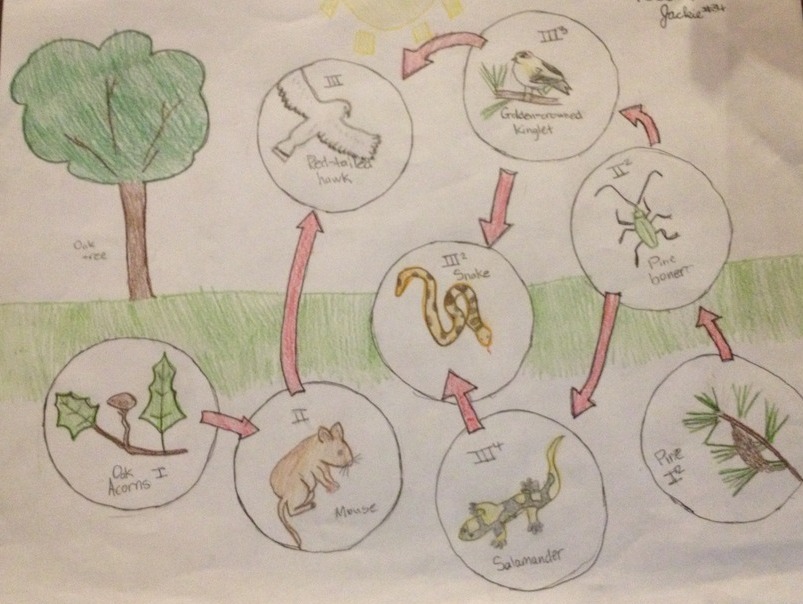

Step-by-step guide to draw a food web of a local habitat
SUPERMARKET FOODS - Compilation Video - Food Vocabulary for Kids
Step 1
Choose one local habitat to study such as your backyard a nearby park or a pond.
Step 2
Go outside with an adult and quietly observe the habitat for about five minutes.
Step 3
Write down at least six living things you saw or think live in that habitat.
Step 4
On a fresh sheet of paper write the category headings Producers Primary Consumers Secondary Consumers Decomposers.
Step 5
Draw a simple picture of each organism you listed on your paper.
Step 6
Write the name of each organism next to its drawing.
Step 7
Arrange the drawings on the paper so producers are at the bottom primary consumers above them higher-level consumers above and decomposers to one side.
Step 8
Use a pencil to draw arrows from each prey to the animal that eats it to show the direction of energy flow.
Step 9
Next to at least three arrows write a short note that explains how energy decreases as it moves up the web and give one example from your drawings.
Step 10
Color your drawings and arrows to make the food web clear and easy to read.
Step 11
Add your name the date and the habitat title to the page.
Step 12
Check your labels and energy notes with an adult or a field guide and make any corrections.
Step 13
Share your finished food web on DIY.org with an adult's help.
Help!?
What can we use if we don't have a fresh sheet of paper, colored pencils, or markers?
Use the blank side of recycled cardboard or the back of an old poster for your sheet and substitute crayons, regular pencils, stickers, or a tablet drawing app to complete the coloring and arrows steps.
What should we do if our food web becomes messy or we can't find six living things during the five-minute observation?
Plan positions in pencil first with producers at the bottom and decomposers to one side as instructed, use different colored pencils or labels for overlapping arrows, and if you can't spot six organisms, include likely residents (like soil worms or nearby plants) identified with an adult or a field guide before drawing them.
How can we change the activity for younger children or make it more challenging for older kids?
For younger kids, simplify by choosing one habitat, drawing three clear organisms and placing them in broad categories with adult help, while older kids can research each species with a field guide, add numerical energy-loss notes next to at least three arrows, and upload the finished, labeled web to DIY.org.
What are some ways to extend or personalize our finished food web project?
Enhance the page by pasting photos taken during the observation next to your drawings, adding estimated population sizes or percent energy transfer by at least three arrows, signing with your name and date, and checking labels with an adult before sharing on DIY.org.
Watch videos on how to draw a food web of a local habitat
Nutrition (Food ) Table Video for Kids-Food Pyramid -Heathy Diet
4 Videos
Nutrition (Food ) Table Video for Kids-Food Pyramid -Heathy Diet
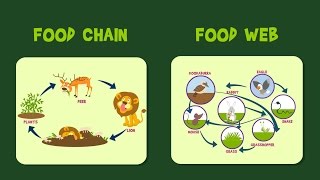
Food Chain | Food Web | Video for Kids
Food Chains| Science For Kids Year 2 | STEM Home Learning
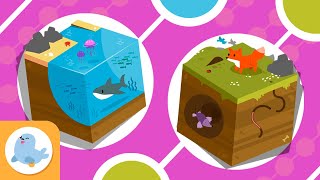
FOOD CHAINS for Kids 🌱⬅🐝⬅🐦⬅🐺 Definition and classification 🌼 Compilation
Facts about ecosystems and food webs
🌞 Plants turn sunlight into food with photosynthesis — they’re the energy starters for almost every food web!
🔟 Only about 10% of energy passes from one trophic level to the next, so energy gets smaller as you go up the web.
🪱 Decomposers like fungi and worms are nature’s recyclers — they break down dead stuff and return nutrients to the soil.
🐯 Apex predators help keep ecosystems balanced — remove one and you can get a surprising ‘domino effect’ called a trophic cascade.
🔗 Real food webs are full of connections because most animals eat more than one thing, so arrows can crisscross a lot!
How do I draw a food web of a local habitat using pictures, labels, and arrows and explain energy flow?
What materials do I need to make a food web project?
What ages is drawing a food web suitable for?
What are the benefits of drawing a food web with children?
