Draw a character exploration sheet
Draw a character exploration sheet by sketching appearance, expressions, poses, outfits, and a short backstory to practice creative drawing and storytelling.


Drawing Apps
Step-by-step guide to draw a character exploration sheet
Step 1
Pick a fun character idea like a brave hero a silly monster or a space robot.
Step 2
Write the character's name at the top of the paper.
Step 3
Divide the paper into five boxes for appearance expressions poses outfits and backstory.
Step 4
In the first box sketch a full body showing the character's shape height and one or two unique features.
Step 5
In the second box draw five small head sketches that show different expressions like happy sad angry surprised and sleepy.
Step 6
In the third box sketch three quick full body poses to show how your character moves or stands.
Step 7
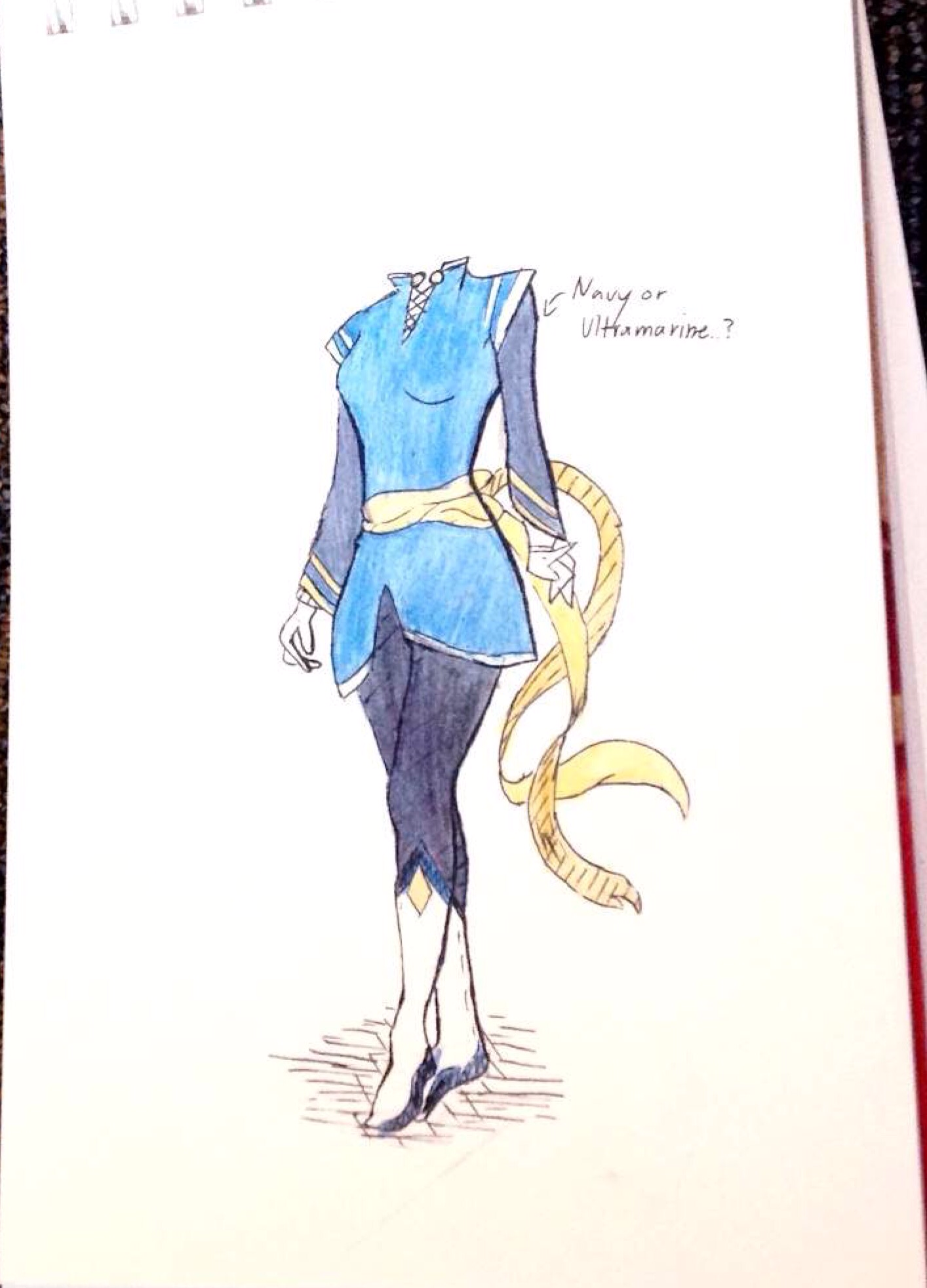
In the fourth box draw three different outfit ideas for your character.
Step 8
Write a one or two word label under each outfit to name it.
Step 9
In the fifth box write a short backstory of three to five sentences that explains who your character is and what they want.
Step 10
Trace over the sketches you like best with the black pen to make clean lines.
Step 11
Color your cleaned drawings using your coloring materials.
Step 12
Share your finished character exploration sheet on DIY.org
Help!?
What can I use if I don't have a black pen or certain coloring supplies?
If you don't have a black pen, use a fine-tip marker or dark graphite pencil to trace over the sketches in the tracing step, and replace coloring materials with crayons, colored pencils, or washable markers to color your cleaned drawings.
My five head sketches in the second box all look the same—how do I fix that?
To make the five small head sketches in the second box read as happy, sad, angry, surprised, and sleepy, exaggerate eyebrow and mouth shapes, change head tilts between sketches, and pencil lightly before you trace with the black pen for cleaner expression lines.
How can I adapt this character exploration sheet for different ages?
For preschoolers, reduce to three large boxes (appearance, two expressions, and one outfit) and use a thick marker for tracing and crayons for coloring, while older kids can add extra pose thumbnails in the third box, more detailed outfit designs with the labeled fourth box, and a longer backstory in the fifth box.
How can we extend or personalize the activity after finishing the basic sheet?
Enhance your sheet by adding a color-swatches strip next to the fourth box, sketching a favorite prop or background behind the poses in the third box, and then scan or photograph the traced-and-colored final sheet to share on DIY.org.
Watch videos on how to draw a character exploration sheet
How To Create A Model Sheet For Your Character
4 Videos
How To Create A Model Sheet For Your Character
How to Make a Character Reference Sheet - Different Styles
Step-by-Step Character Sheet Tutorial for Beginners || IbisPaint X || GiveAway Announcement 📢
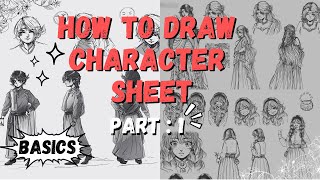
How to Draw Character Sheet | Basics You Need to Know | Part 1
Facts about character design for kids
🎨 Character designers often sketch dozens of tiny thumbnail ideas before choosing one strong direction.
😄 Exaggerated facial expressions help readers instantly understand an emotion, even in simple drawings.
🧍♀️ A single pose can tell you a character’s mood, age, or job without any words.
👗 Costume details like color, wear, and accessories quickly hint at a character’s history and personality.
✏️ Professional animators and artists use model sheets (character exploration sheets) to keep drawings consistent across scenes.
How do I create a character exploration sheet with my child?
What materials do I need for a character exploration sheet?
What ages is a character exploration sheet suitable for?
What are the benefits of doing character exploration sheets with children?
