Draw a Calming Mandala
Draw a calming mandala using radial patterns, simple shapes, and coloring. Practice symmetry, focus, and mindful breathing while creating your own relaxed design.
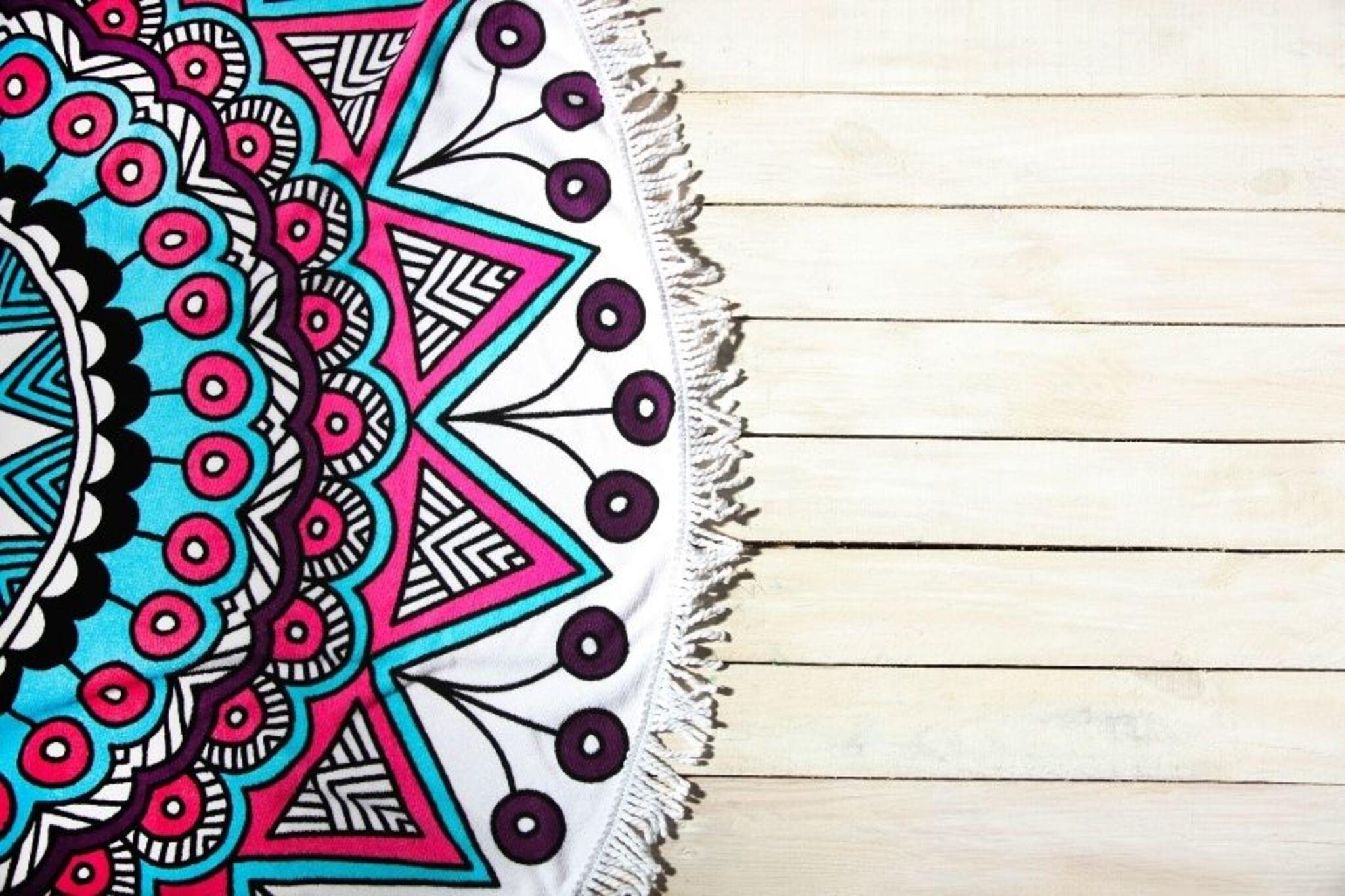
About this activity
Draw a calming mandala using radial patterns, simple shapes, and coloring. Practice symmetry, focus, and mindful breathing while creating your own relaxed design.
What you need
Step by step
- 1
Step 1
Gather your materials and find a comfy well-lit spot to work.
- 2
Step 2
Lightly mark the exact center of the paper with a small pencil dot.
- 3
Step 3
Place a round object centered on the dot and trace it to make the inner circle.
- 4
Step 4
Trace one or two larger circles around the first circle using bigger round objects to create rings.
- 5
Step 5
Use the ruler to draw straight lines through the center like spokes to divide the circles into equal slices.
- 6
Step 6
Draw a simple shape in one slice of the innermost ring and copy that same shape into every slice of that ring.
- 7
Step 7
Add a different simple shape in each outer ring and repeat it around every slice to build radial patterns.
- 8
Step 8
Erase any extra guide marks so your patterns look neat.
- 9
Step 9
Take three slow deep breaths while looking at your design to relax and focus.
- 10
Step 10
Choose calm colors and color each repeated shape the same way around the circle to keep symmetry.
- 11
Step 11
Add tiny finishing details like dots or lines and write your name on the back or corner.
- 12
Step 12
Share your finished calming mandala on DIY.org.
Fun facts
How do you draw a calming mandala?
Start by drawing a light circle on paper. Mark the center and divide the circle into equal sections with faint guidelines (use a ruler or a cup as a template). Draw simple, repeating shapes outward from the center—dots, petals, lines—keeping each section mirrored for radial symmetry. Breathe slowly and deliberately as you draw, focusing on each shape. When the pattern is complete, color gently, using soft strokes and calming color choices. Take breaks if needed.
What materials do I need for a calming mandala?
You’ll need plain paper or a sketchbook, a pencil and eraser, a compass or a round object to trace, and a ruler or protractor for guidelines. For finishing, use fine liners or colored pencils, markers, or crayons. Optional items: stencils for shapes, a blending tool, and a comfortable mat or chair. Create a calm space with soft music or a timer to encourage mindful breathing while drawing.
What ages is this activity suitable for?
This activity is adaptable: preschoolers (3–5) can join with very simple shapes and adult help for drawing circles; children 6–9 can practice symmetry and finer details with supervision; ages 10+ can work on more intricate patterns and mindful breathing techniques independently. Adjust the complexity of shapes, the length of the session, and the level of assistance to match a child’s fine motor skills and attention span.
What are the benefits of drawing a calming mandala?
Drawing mandalas promotes focus, pattern recognition, and fine motor control while encouraging mindful breathing and stress reduction. The repetitive, symmetric design helps quiet the mind, improves concentration, and can act as a calming break during a busy day. It also boosts creativity and self-expression; children gain confidence as they complete a balanced design and can use mandala drawing as a simple coping tool for emotions.
Watch & Learn
Need help?
If I don't have different-sized round objects or a ruler, what can I use instead for tracing circles and drawing spokes?
Use cups, jar lids or tape-sealed bottle caps centered on your pencil dot to trace the inner and outer circles, and use the straight edge of a book, a piece of cardboard, or folded paper as a substitute for the ruler to draw your spokes while tracing and erasing guide marks later.
My slices or repeated shapes look uneven—what step could fix this during drawing?
Redraw or lightly re-mark the center dot, re-center your tracing object before tracing each ring, use a straight edge to carefully draw the spokes and count slices, then pencil the shape once in a slice and copy it around before inking or coloring to keep symmetry and erase extra guide marks at the end.
How can I adapt the mandala activity for different ages or skill levels?
For younger kids, simplify by tracing only one or two larger circles and using big shapes and chunky crayons with adult help holding objects, for elementary kids follow all steps with a ruler and multiple rings, and for older kids add more rings, finer patterns, and tiny finishing details like dots or lines.
What are some ways to extend or personalize the mandala once the main design is done?
Personalize by choosing a calming color palette and coloring each repeated shape the same way, add tiny finishing details like dots, lines, or glued-on sequins, write your name on the back or corner, and photograph the finished calming mandala to share on DIY.org.