Doodle A Flowery Bulb
Draw and decorate a flowery bulb doodle using pencil, markers, and colored paper. Practice shapes, symmetry, shading, and creative design.
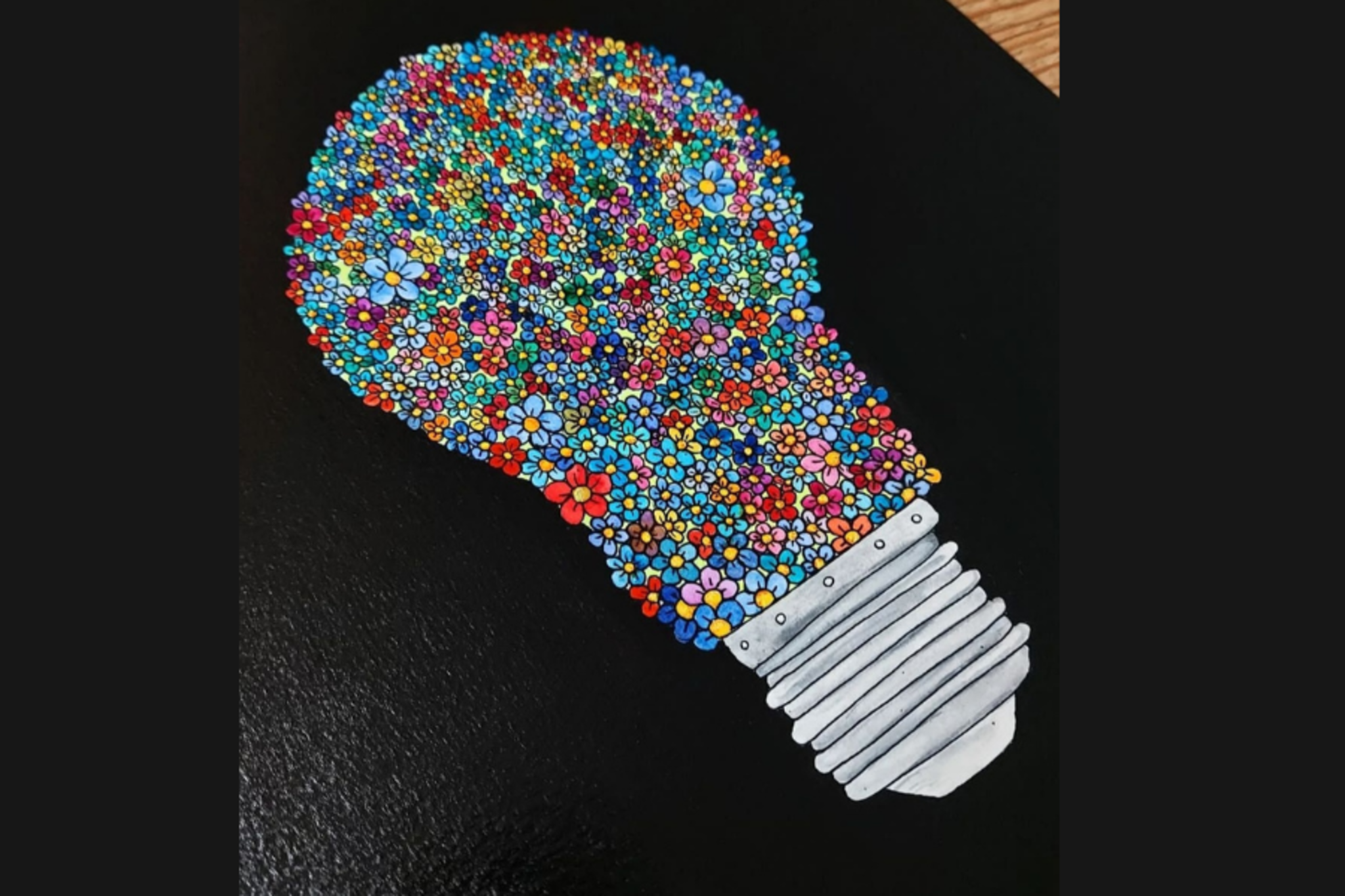
About this activity
Draw and decorate a flowery bulb doodle using pencil, markers, and colored paper. Practice shapes, symmetry, shading, and creative design.
What you need
Step by step
- 1
Step 1
Place your white drawing paper on a flat surface and decide whether you want it portrait or landscape.
- 2
Step 2
Lightly draw a rounded bulb shape near the bottom center of the paper with your pencil.
- 3
Step 3
Draw a straight or slightly curvy stem rising from the top center of the bulb toward the top of the page.
- 4
Step 4
Lightly draw a circle or oval at the top of the stem to mark the flower head.
- 5
Step 5
Lightly draw a vertical center line and a horizontal guide line across the flower head to help make it symmetric.
- 6
Step 6
Draw matching petals around the flower head using the guide lines so both sides look balanced.
- 7
Step 7
Draw leaves on the stem and add simple decorative shapes on the bulb like dots lines or little hearts.
- 8
Step 8
Add pencil shading on one side of the bulb petals and leaves to make parts look rounded and deeper.
- 9
Step 9
Carefully trace over all your pencil lines with the fine-tip black marker and wait a moment for the ink to dry.
- 10
Step 10
Color the petals stem and bulb using your coloring materials, keeping colors inside the marker outlines.
- 11
Step 11
Cut fun shapes from the colored paper like small hearts circles or petal cutouts using scissors.
- 12
Step 12
Glue the colored-paper shapes onto your drawing to add layers and extra decoration.
- 13
Step 13
Take a photo of your finished flowery bulb and share your creation on DIY.org
Fun facts
How do you draw and decorate a flowery bulb doodle step by step?
Start by lightly sketching a bulb shape and a stem with a pencil. Add petals or layered floral shapes around the top, keeping symmetry by mirroring shapes on each side. Refine lines, erase guide marks, then outline with a fine liner. Use markers for bold colors and colored paper cutouts to add texture—glue small shapes for leaves or petal accents. Finish with pencil shading for depth and white highlights for contrast. Let glue and ink dry before handling.
What materials do I need to draw a flowery bulb doodle?
You’ll need a pencil and eraser for sketching, a fine liner or black pen for outlining, and a selection of markers or colored pencils for coloring. Include colored paper for collage accents, child-safe glue and scissors for cutting shapes, and a blending stump or cotton bud for shading. Optional extras: ruler for symmetry guides, stickers, glitter glue, or a white gel pen for highlights.
What ages is the flowery bulb doodle activity suitable for?
This activity suits a wide age range: preschoolers (3–5) can trace basic shapes and glue colored-paper petals with supervision; early elementary kids (6–8) can practice symmetry and simple shading; older children (9–12+) can refine detail, experiment with mixed media and advanced shading. Adjust complexity, provide safety scissors for younger kids, and offer step-by-step demonstration for beginners.
What are the benefits of drawing and decorating flowery bulb doodles?
Doodling a flowery bulb supports fine motor skills, shape recognition, and hand–eye coordination while teaching symmetry and basic shading techniques. It encourages creativity, pattern planning and color mixing, and can be calming and confidence-building. The collage element improves scissor use and spatial awareness. Use the activity to introduce simple botanical concepts or to practice mindful drawing and focus.
Watch & Learn
Need help?
If I don't have colored paper or a fine-tip black marker, what can I use instead?
Use torn magazine pages or painted printer paper for the cutouts and trace over your pencil lines with a thin black gel pen, ballpoint pen, or a deeply sharpened dark colored pencil instead of the fine-tip marker.
My marker smudged or the ink bled when tracing—how can I fix or avoid this?
To avoid smudging, follow the instruction to wait for the ink to dry, blot excess ink gently with scrap paper if needed, and if lines fade or smear, lightly redraw the pencil guides before carefully retracing with the marker.
How can I adapt the activity for a toddler versus an older child?
For toddlers, pre-draw the rounded bulb, stem, and flower head and let them color with crayons and glue pre-cut shapes using safety scissors, while older kids can add the vertical/horizontal guide lines, detailed pencil shading, precise marker tracing, and layered colored-paper decorations.
What are simple ways to extend or personalize the finished flowery bulb?
Personalize it by gluing on textured fabric scraps or glitter to the colored-paper shapes, add extra decorative marks on the bulb as in the instructions, arrange several bulbs into a scene, and then take a photo to share on DIY.org.