Does an Asmr Video Work? Let's See for Ourselves!
Make simple ASMR-style audio or video clips, test them on volunteers, record reactions and compare which sounds produce pleasant tingles safely.


Step-by-step guide to make and test simple ASMR-style audio or video clips
What is ASMR? Here's how the popular videos work | JUST CURIOUS
Step 1
Gather all the materials on a table so your sounds are ready.
Step 2
Pick four different safe sounds to test like brushing tapping crinkling and gentle shaking.
Step 3
Find a quiet room and ask an adult to help make it calm for listening.
Step 4
Draw a simple chart in your notebook with rows for each sound and columns for "Tingles 0–5" and "Feel: pleasant neutral unpleasant."
Step 5
Record a short 20–30 second clip of each chosen sound using a device at a comfortable low volume.
Step 6
Give each clip a clear name and write that name on your chart.
Step 7
Ask an adult to help you find one or two volunteers and explain they can stop anytime if a sound is uncomfortable.
Step 8
Ask the volunteer to sit comfortably and relax with their eyes closed if they want.
Step 9
Play the first clip once for the volunteer at a comfortable volume.
Step 10
Ask the volunteer to tell you a number from 0 to 5 for how strong any tingles felt and whether the sound was pleasant neutral or unpleasant.
Step 11
Write the volunteer’s number and their pleasant neutral or unpleasant answer in your chart.
Step 12
Repeat playing each remaining clip once and record each volunteer’s responses in the chart.
Step 13
Look at all the ratings and circle the sound that got the most pleasant high-tingle scores.
Step 14
Write one short sentence in your notebook explaining which sound worked best and why you think that happened.
Step 15
Share your finished ASMR test clips results and your notebook summary on DIY.org.
Help!?
What can I use if I don't have a special recorder or can't find the suggested items like a brush or crinkly paper?
Use a smartphone as your recording device to "Record a short 20–30 second clip of each chosen sound" and substitute a hairbrush or toothbrush for brushing, a wooden spoon for tapping, a plastic bag or aluminum foil for crinkling, and a small sealed container of rice or beads for gentle shaking.
My clips sound noisy or the volunteer says they can't relax—what should I try during the activity?
Follow the "Find a quiet room" step and re-record the 20–30 second clips at a lower volume, check that each clip has a clear name before testing, and remind the volunteer to sit comfortably with eyes closed as the instructions say so background noise and comfort improve.
How can I change this experiment for younger or older kids?
For ages 4–6, cut the task to two easy sounds and have an adult draw and fill the simple chart, for ages 7–9 use the full chart with stickers for "Tingles 0–5," and for 10+ follow every step, add more volunteers, and compare averages from multiple runs.
What are simple ways to make the experiment more interesting or get better results?
After you circle the sound with the most pleasant high-tingle scores and write your one-sentence explanation, try retesting with headphones, vary playback volume or speed, add more safe sound types, and then share the improved clips and notebook summary on DIY.org as the final step.
Watch videos on how to make and test simple ASMR-style audio or video clips
ASMR for KIDS 💜 (and whoever needs to sleep)
4 Videos
ASMR for KIDS 💜 (and whoever needs to sleep)
ASMR Kids Spa | Gentle Face Massage for 7-Year-Old Girl | No Talking, Soothing Sounds & Smile
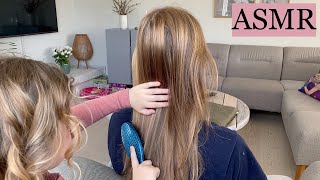
My 6 year old sister tries ASMR 💕 (relaxing hair play, hair brushing, spraying, styling, whispering)
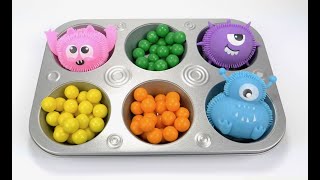
ASMR best satisfying and relaxing sounds for kids. Colorful and fun!
Facts about ASMR and safe audio experiments for kids
🎧 ASMR stands for Autonomous Sensory Meridian Response and describes the pleasant 'tingles' some people feel from gentle sounds or visuals.
🎙️ Binaural recordings use two microphones placed like ears to make sound feel 3D and very close — perfect for ASMR effects.
🧠 Psychoacoustics is the science of how we perceive sound and helps explain why certain noises can feel calming or exciting.
📺 ASMR content has exploded on YouTube, with billions of views and many creators making videos to help people relax or sleep.
✅ Not everyone experiences ASMR — triggers like whispering, tapping, or crunching work differently for each person, so testing helps discover favorites.
How do you run a simple ASMR experiment with kids?
What materials do I need to try a kid-friendly ASMR video experiment?
What ages is a child-friendly ASMR experiment suitable for?
What safety tips and benefits should I know before making ASMR clips with kids?
