Design an Entirely New Planet
Design and build a model or detailed drawing of a brand new planet, choosing climate, surface features, atmosphere, orbit, and possible life forms.



Step-by-step guide to Design an Entirely New Planet
How to Make Paper Mache Planets - 3D Solar System Crafts for Kids
Step 1
Pick a fun planet name and decide that it will be called this from now on.
Step 2
Decide whether your planet is mostly rocky or mostly gaseous.
Step 3
Decide how big your planet is compared to Earth (smaller same size or larger).
Step 4
Decide how close your planet orbits its star (very close medium or far).
Step 5
Decide what its atmosphere is made of and what color the sky will look like.
Step 6
Decide the major climate zones your planet will have (for example hot deserts icy poles or floating seas).
Step 7
Draw a large circle on paper to be your planet’s map.
Step 8
Divide the circle into the climate zones you decided and draw the borders.
Step 9
Add surface features in each zone like mountains oceans volcanoes or ice fields.
Step 10
Invent two kinds of plants or animals that could survive there and sketch each one.
Step 11
Build a simple 3D model or add texture to your drawing using cardboard or clay.
Step 12
Color and decorate your model or drawing so it matches your atmosphere and life forms.
Step 13
Make a one page fact sheet that lists your planet’s name size orbit atmosphere climates and examples of life.
Step 14
Share your finished creation on DIY.org
Help!?
What can we use instead of cardboard or clay if those materials are hard to find?
If you don't have cardboard or clay for the step 'Build a simple 3D model or add texture to your drawing', use aluminum foil, crumpled recycled paper, playdough, or glued fabric/sand on the paper to create raised terrain.
My 3D model keeps collapsing or the borders on my map look messy—how do we fix that?
To stop a model collapsing and make climate borders neater, reinforce cardboard with tape or toothpicks, let air-dry clay build up in thin layers, and sketch zone lines lightly in pencil before darkening and coloring.
How can we change the activity for different ages or skill levels?
For preschoolers use pre-cut circles, stickers and playdough to create big zones and skip the fact sheet; for elementary kids follow all drawing and model steps; and for older kids add size/orbit measurements and a detailed one-page fact sheet with ecosystem notes.
How can we make the planet project more creative or more impressive for sharing on DIY.org?
Enhance your project by adding textures like sand or cotton for deserts and ice, install a small LED to simulate day/night inside your cardboard model, write a short 'day in the life' paragraph for each invented creature on the fact sheet, and record a photo/video to upload to DIY.org.
Watch videos on how to Design an Entirely New Planet
How to make a 3D Solar System model for Kids | Planets' School Project | Time 4 Kids TV
4 Videos
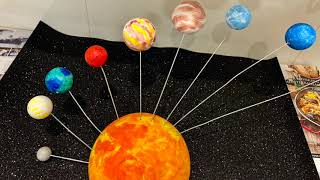
How to make a 3D Solar System model for Kids | Planets' School Project | Time 4 Kids TV
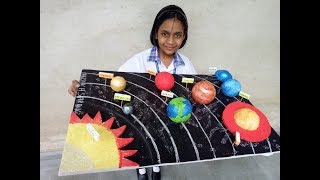
My 3D Solar System Model || Solar System Project for Kids || School Science Project
Solar System Planets From BIGGEST To SMALLEST! | Planet Sizes For Kids | KLT
Everything You Need To Know About Dwarf Planets! | Space Songs For Kids | KLT
Facts about astronomy and planetary science for kids
🌌 Astronomers have discovered over 5,000 exoplanets—plenty of inspiration for new worlds!
⏱️ Some exoplanets orbit so fast that their 'year' is less than a single Earth day.
🌡️ A thick atmosphere can trap heat: Venus is hotter than Mercury because of a runaway greenhouse effect.
🌕 A large moon can stabilize a planet's tilt, helping keep seasons steady like Earth's Moon does.
🧬 Life on Earth is carbon- and water-based, but imaginative alien life could use very different chemistry.
How do you design and build an entirely new planet with a child?
What materials do I need to design a new planet model or drawing?
What ages is the "Design a New Planet" activity suitable for?
What are the benefits of designing a new planet?
