Dance for Joy!
Groove to the beats of "Can't stop the feeling" by Justin Timberlake and show off to your friends! Don’t forget that your posts need to have team stickers to win Camp DIY'21 points.


Instructions
Basic & Easy Kids Dance Steps | MGS Dance Studio | Beginner dance steps
Step 1
Put on comfortable clothes and non-slip shoes.
Step 2
Clear a small open space so you have room to move safely.
Step 3
Choose your favorite upbeat song and get it ready to play.
Step 4
Warm up by marching in place for eight counts to wake up your body.
Step 5
Practice counting out loud "1 2 3 4 5 6 7 8" while clapping two times to feel the beat.
Step 6
Pick four joyful moves you like (for example: an arm reach a spin a jump a clap).
Step 7
Assign each move to four counts so your routine becomes a 16-count sequence.
Step 8
Practice the 16-count routine slowly while counting the beats aloud.
Step 9
Add big facial expressions and fun energy to each move.
Step 10
Run the full routine to your song three times at music speed.
Step 11
Perform your joyful dance for your family with confidence and a big smile.
Step 12
Share your finished dance routine on DIY.org.
Help!?
What can we use if we don't have non-slip shoes or a speaker for our favorite upbeat song?
If you don't have non-slip shoes, wear clean sneakers or grip socks or practice barefoot on carpet, and if you don't have a speaker play your favorite upbeat song from a phone, tablet, or computer or simply clap the beat aloud as in Step 3.
What should we do if we keep losing the beat when trying the "1 2 3 4 5 6 7 8" clapping or the 16-count routine?
Slow the music and follow the instruction to practice the 16-count routine slowly while counting the beats aloud, and mark each move's first beat with a louder clap or a tap so you can feel the timing.
How can we adapt the dance for younger children or for older kids who want a challenge?
For younger children choose two simple moves and assign each to four counts to make an 8-count loop, while older kids can add spins, jumps, extra counts per move, or run the full routine three times at music speed as in the final steps.
How can we personalize or extend our joyful dance before sharing it on DIY.org?
Add a costume or handheld prop, create a short intro or finale with big facial expressions and fun energy, record all three full runs to pick the best take, and then share that video on DIY.org as suggested.
Related videos
Easy Jive Dance Tutorial For Kids: Easy Dance Moves For Kids - Dance Along For Kids | Little Movers
4 Videos
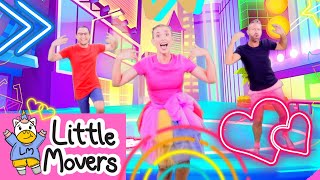
Easy Jive Dance Tutorial For Kids: Easy Dance Moves For Kids - Dance Along For Kids | Little Movers
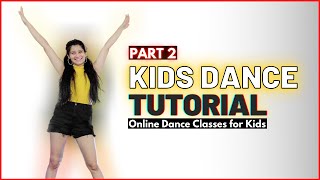
Kids Dance Tutorial | Part 2 | Dance Classes for Kids | Easy Dance Steps for Kids | Choreo N Concept
Learning to dance | Educational Videos For kids | Dance moves for begginers
Magic In The Air Dance: Zumba Dance For Kids! Dance Moves For Beginners, Kids Fitness | Move Monkeys
Fun Facts
🎵 Babies bob to beats — infants can sense musical rhythms within months after birth.
💃 Dance is ancient — cave paintings and carvings show people dancing thousands of years ago.
🧠 Choreography trains your brain — learning and remembering steps boosts memory and coordination.
👯 Most pop songs are in 4/4 time, so counting "1-2-3-4" or an 8-count helps groups stay together.
🎉 Performing for family builds confidence — practicing short home shows can reduce stage fright.
How do I do the Dance for Joy activity with my child?
What materials do I need for Dance for Joy?
What ages is Dance for Joy suitable for?
What are the benefits of doing Dance for Joy with my child?
