Create a mind map of your character
Create a mind map of a character from a story or one you invent, showing traits, goals, relationships, and favorite things using paper and pens.


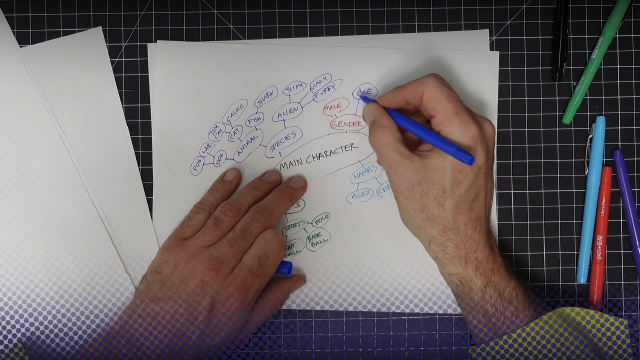

Step-by-step guide to create a mind map of your character
Step 1
Collect your materials and bring them to a flat workspace.
Step 2
Decide which character you will map from a story or invent a new character.
Step 3
Write the character’s name in the center of the paper.
Step 4
Draw a circle around the name to make the center of your mind map.
Step 5
Draw four thick lines radiating out from the circle to make branches.
Step 6
Label each branch Traits; Goals; Relationships; Favorites.
Step 7
Write 3 to 5 words that describe your character on the Traits branch.
Step 8
Write 2 to 3 goals your character wants to reach on the Goals branch.
Step 9
Write the names of people or characters who are important to your character on the Relationships branch.
Step 10
Write 4 favorite things your character likes on the Favorites branch.
Step 11
Add a small drawing or symbol next to each word to show what it means.
Step 12
Color each branch in a different color to make the mind map bright and clear.
Step 13
Share your finished mind map on DIY.org
Help!?
What can we use if we don't have the exact materials listed for this mind map activity?
If you don't have thick art paper or markers, use printer paper or a flattened cereal-box cardboard as your base and color with crayons, colored pencils, or pens while keeping a flat workspace.
What should we do if we get stuck writing 3–5 traits or the small drawings next to words look messy?
If the Traits branch is hard or symbols look messy, pencil in short words first, brainstorm with simple prompts (How does the character act?), and make each symbol a single simple shape before inking and coloring each branch.
How can this activity be adapted for different ages?
For younger children use larger paper, 1–2 big pictures per branch and stickers instead of words, elementary kids can follow the 3–5 traits and 2–3 goals steps with simple symbols, and older kids can add sub-branches, backstory details, and refined coloring before sharing on DIY.org.
How can we extend or personalize the character mind map once it's finished?
Extend the map by adding sub-branches like 'Fears' or 'Skills', gluing photos or fabric onto the Favorites branch, creating a digital version, or linking several characters' maps into a story web, then color each branch and share your finished mind map on DIY.org.
Watch videos on how to create a mind map of your character
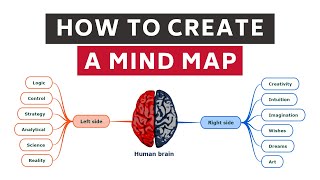
How to create a mind map (Tutorial)
4 Videos
How to create a mind map (Tutorial)
How to Make a Mind Map - The Basics
Create A Perfect Mind Map - Follow These 5 Steps
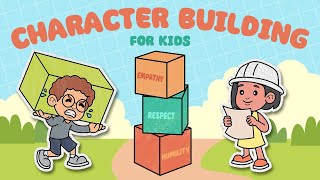
Character Building For Kids-Character Education-Building Good Character | Social-Emotional Learning
Facts about character development and storytelling
🧠 Mind maps were popularized by Tony Buzan in the 1970s to help people organize ideas radiantly and colorfully.
🎭 Readers often remember memorable characters long after they forget exact plot details — characters stick with us!
✍️ Teachers use character maps and visual organizers because they help kids understand motives and improve reading comprehension.
🗺️ Mind maps usually radiate branches from a single central idea, while concept maps focus on labeled relationships between ideas.
🎨 Giving a character one quirky favorite thing (like a lucky hat) can make them feel instantly more real to readers.
How do I create a mind map of a character from a story with my child?
What materials do I need to make a character mind map using paper and pens?
What ages is a character mind map activity suitable for?
What are the benefits of making a character mind map?
