Craft a Hopping Hopscotch
Create a colorful hopscotch mat using cardboard, tape, markers, and beanbags. Design lanes, number squares, and practice hopping balance and counting.
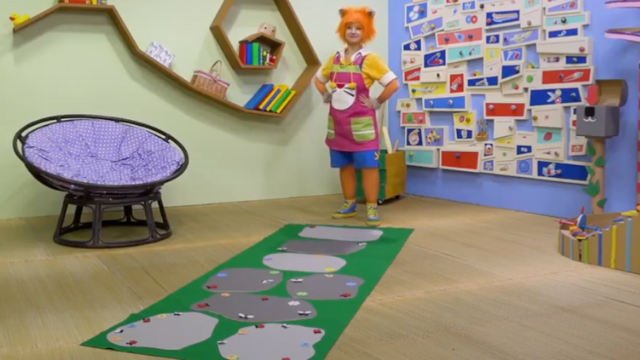
About this activity
Create a colorful hopscotch mat using cardboard, tape, markers, and beanbags. Design lanes, number squares, and practice hopping balance and counting.
What you need
Step by step
- 1
Step 1
Gather all your materials and bring them to a clear workspace.
- 2
Step 2
Use the ruler and a marker to draw a hopscotch layout of 8 to 10 squares on the cardboard.
- 3
Step 3
Cut out each square carefully along your drawn lines.
- 4
Step 4
Arrange the cut squares on the floor in the hopscotch order you drew with any single or side-by-side double lanes.
- 5
Step 5
Tape the edges underneath the squares so they form one flat hopscotch mat.
- 6
Step 6
Color each square with bright markers to make your mat fun and easy to see.
- 7
Step 7
Write a big number inside each square in order so you can count as you hop.
- 8
Step 8
Mark a clear starting line with a strip of tape or a drawn line a little away from the first square.
- 9
Step 9
Hold a beanbag behind the starting line and get ready to play.
- 10
Step 10
Toss the beanbag gently so it lands on one of the numbered squares.
- 11
Step 11
Hop through the mat using one foot on single squares and two feet on double squares while counting each square out loud.
- 12
Step 12
Pick up the beanbag from the square it landed in after you finish hopping.
- 13
Step 13
Walk back to the starting line and try the course again to practice your balance and counting.
- 14
Step 14
Share a photo or video of your finished hopping hopscotch mat and your hopping skills on DIY.org.
Fun facts
How do I make a hopping hopscotch mat step-by-step?
Start by sketching your hopscotch layout (single or double lanes). Cut cardboard into numbered squares or rectangles and arrange them on a flat surface. Tape the pieces together on the underside to form a flexible mat. Use markers, paints, or stickers to decorate and label each square with numbers. Make beanbags as throw markers. Show rules: toss a beanbag, hop to the square, pick it up on the way back, and count each hop while supervising young children.
What materials do I need to make a colorful hopscotch mat at home?
You’ll need sturdy cardboard (large sheet or several boxes), scissors or a craft knife (adult use), strong tape or glue, washable markers or paints, a ruler and pencil for layout, and stickers for decoration. Also prepare small beanbags or soft toys to use as markers. Optional extras: clear contact paper to protect the mat, non-slip shelf liner for outdoor use, and different colored tapes to create lanes.
What ages is a cardboard hopscotch mat suitable for?
This activity suits preschoolers through elementary-aged children. Ages 3–4 enjoy simplified single-square hopping with adult supervision and larger squares. Ages 5–8 gain counting, balance, and coordination practice using numbered sequences. Older children (9–10+) can play challenging variations and team races. Adjust square size, distance, and rules to match each child’s motor skills and attention level; always supervise toddlers and provide soft landing surfaces.
What are some fun variations to try with hopping hopscotch?
Try themed mats (letters, shapes, animals) to practice literacy or science facts: call out an item to hop to. Add challenges like one-foot hops, backward hops, or hopping on tiptoe for balance. Turn it into a math game by asking children to add or subtract the numbers they land on. For teamwork, create relay races with partners passing a beanbag. These variations boost creativity, math and motor skills while keeping play fresh.
Watch & Learn
Need help?
What can we use if we don't have cardboard for the hopscotch squares?
If you don't have cardboard, tape together several cereal boxes or use a large poster board or foam board to draw, cut, color, and tape the hopscotch squares as described.
My squares keep lifting or the mat moves when we hop — how can we fix that?
Press and smooth strong packing tape or use liquid glue underneath each square and weigh edges with heavy books while it dries so the taped edges form one flat hopscotch mat that won't lift during hopping.
How can we adapt the activity for younger or older kids?
For younger children make fewer, larger squares and pre-cut cardboard and draw big numbers and single lanes, while older kids can make 10 squares, add side-by-side double lanes, timer challenges, or write math problems inside squares to increase difficulty.
How can we extend or personalize the hopping hopscotch?
Personalize the mat by coloring each square with different themes or adding stickers, write sight words or math problems instead of numbers, and laminate or cover with clear tape before sharing a photo or video on DIY.org.