Compose 3 Original Drum Beats
Compose three original drum beats using hands, body percussion, or simple household drums; learn rhythms, practice counting beats, and record each variation.


Step-by-step guide to compose 3 original drum beats
Step 1
Gather your materials and put them where you can reach them easily.
Step 2
Find a quiet comfortable spot to sit or stand so you can hear your beats.
Step 3
Warm up your hands by gently tapping your knees or a drum for 30 seconds.
Step 4
Tap a steady beat on your thigh or a drum once per second for eight counts to feel the pulse.
Step 5
Create Beat 1 by making a simple 4-beat pattern using your hands or a household drum.
Step 6
Practice Beat 1 by playing that pattern slowly for four measures.
Step 7
Record yourself playing Beat 1 using any recording device you have.
Step 8
Create Beat 2 by changing one thing from Beat 1 like adding a hit a rest or an accent.
Step 9
Practice Beat 2 by playing that new pattern for four measures.
Step 10
Record yourself playing Beat 2.
Step 11
Create Beat 3 by making a contrasting pattern using a different speed or body percussion.
Step 12
Practice Beat 3 by playing that third pattern for four measures.
Step 13
Record yourself playing Beat 3.
Step 14
Share your three recorded drum-beat creations on DIY.org.
Help!?
What can we use if we don't have a drum or a recording device?
Use a large pot, plastic bowl, or cushion as a household drum and record using a smartphone, tablet, or voice‑memo app as suggested in the 'Record yourself' step with the device placed nearby.
My beat keeps speeding up or slowing down during Practice; how can we keep a steady tempo?
Repeat the 'Tap a steady beat on your thigh or a drum once per second for eight counts to feel the pulse' step before each Practice and/or use a metronome app while playing the four measures to hold a steady tempo.
How can I adapt the activity for different ages?
For younger kids simplify Create Beat 1 to a two‑hit hand pattern and use body percussion for Practice, while older kids can add accents or rests in Create Beat 2 and experiment with faster or slower speeds in Create Beat 3 before recording.
How can we extend or personalize the three drum beats after recording them?
After you Record each beat, layer them with a free looping app, add different household instruments or dynamics, and then Share your longer personalized composition on DIY.org as the final outcome.
Watch videos on how to compose 3 original drum beats
Easy First Drum Set Lesson for Kids | Beginner Drum Beat
4 Videos
Easy First Drum Set Lesson for Kids | Beginner Drum Beat
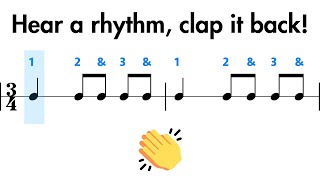
Rhythm Clap Along - 3/4 Time | Level 1 to 3 | For Beginners/Kids 🎵👏
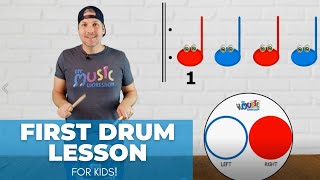
Easy First Drum Lesson - For Kids!
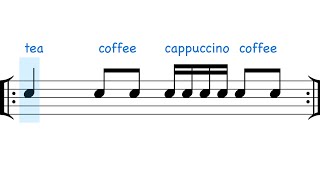
3 Basic Musical Rhythms with Drinks! ☕ | For Beginners/Kids 🎶
Facts about rhythm and percussion for kids
🥁 Drums are among the world’s oldest instruments—archaeologists have found drum-like objects dating back thousands of years.
👐 Hand drumming can produce three distinct sounds on a djembe: bass, tone, and slap—each made by a different hand position.
👣 Body percussion (claps, stomps, snaps) is a global teaching tool that helps people feel rhythm without any instruments.
⏱️ Most pop and beginner-friendly beats use 4/4 time, which musicians count as “1-2-3-4” to keep steady time.
🎧 A pro recording trick: try recording three simple variations and layer or switch them to create richer drum grooves.
How do I help my child compose three original drum beats?
What materials do I need to compose drum beats with kids?
What ages is composing three drum beats suitable for?
What are the benefits of composing drum beats for children?
