Build a swing
Build a simple backyard swing using a sturdy rope and wooden seat, measure and test weight limits with adult supervision.


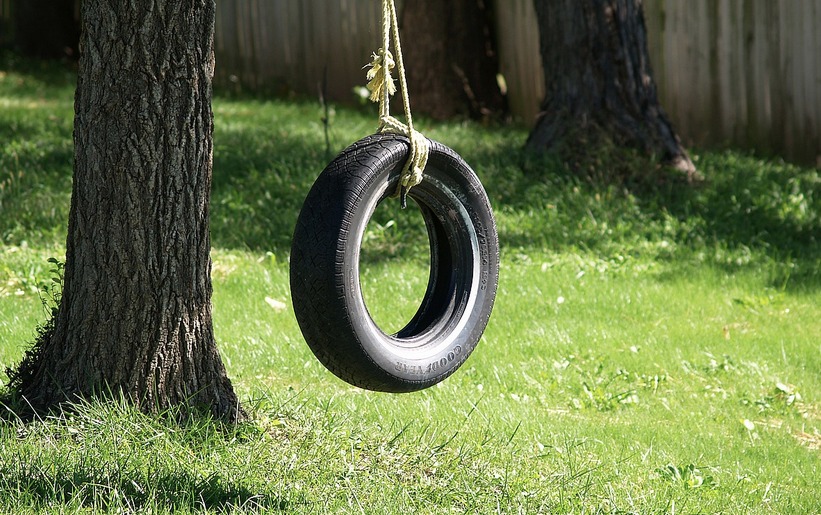

Step-by-step guide to build a backyard swing
How to Build a Simple Tree Swing - Kids Will Play for Hours!
Step 1
Pick a sturdy wooden plank about 12 inches long and 6 inches wide and check it has no big cracks.
Step 2
Sand the plank edges and top until they are smooth and splinter-free.
Step 3
Use the measuring tape and pencil to mark two hole spots 2 inches in from each end and centered across the width.
Step 4
With an adult, drill two holes at the marked spots sized to fit the eye bolts.
Step 5
Screw the eye bolts into the plank holes and tighten them with the wrench until they are snug.
Step 6
Measure and cut two equal lengths of rope long enough to reach your chosen branch plus extra for knots.
Step 7
Thread one rope through the left eye bolt and tie a very tight knot under the bolt to secure it.
Step 8
Thread the other rope through the right eye bolt and tie a very tight knot under that bolt.
Step 9
With an adult, loop both rope ends over a strong branch or beam that can hold weight.
Step 10
With an adult, tie secure knots or use a strong connector to attach the rope ends to the branch so they will not slip.
Step 11
Measure the seat height from the ground and adjust the ropes so the seat is about 18 to 24 inches above the ground.
Step 12
With an adult, press down hard on the seat to check for slippage and to make sure the knots and bolts hold.
Step 13
With an adult, have the adult slowly sit on the swing and hold for 30 seconds while you watch for any wobble or movement.
Step 14
With an adult holding the ropes, sit on the swing gently and test a few small swings to confirm it feels safe.
Step 15
Share a photo or story of your finished backyard swing on DIY.org.
Help!?
If I can't find eye bolts or a wrench, what can I use instead?
If eye bolts or a wrench are hard to find, use heavy-duty screw-in hooks rated for weight and tighten them with locking pliers after drilling the two holes at the marked spots so they sit snug in the plank.
What should I do if the swing feels wobbly or the knots slip during testing?
If wobble or slippage happens during the 'press down hard on the seat' or adult 30‑second test, re-tie the ropes under the eye bolts using a double figure-eight or bowline with a backup knot, re-tighten the eye bolts with the wrench, and re-check the branch connector for movement.
How can I adapt this swing for different age groups?
For toddlers have an adult perform the 'drill two holes' and all branch attachment steps, lower the seat to about 18 inches and add a foam cushion and side supports, while older kids can use the same 12×6 plank with longer ropes and perform the 'sit on the swing gently' tests themselves under supervision.
How can we personalize or improve the swing once it's built?
After sanding the plank, paint or varnish it, add a small backrest or nameplate screwed into the wood with extra screws and washers, and braid or decorate the ropes before doing the final safety checks and sharing your photo on DIY.org.
Watch videos on how to build a backyard swing
How to SWING on a Swing Set!! (Easy for Kids)
4 Videos
How to SWING on a Swing Set!! (Easy for Kids)
How To Make A Homemade Swing For Kids

Easier, faster & MAYBE cheaper DIY swing set! Build & budget breakdown.

Cheap & Easy 4x4 DIY Swing Set Build - How To Build A Swing Set For Kids & Adults!
Facts about woodworking and outdoor safety for kids
🪢 A good knot like a figure-eight or bowline helps keep a swing securely fastened for lots of fun.
🌳 Strong, weather-treated wood or hardwood makes the safest, longest-lasting swing seat.
⚖️ Hardware and ropes often list a "safe working load" — pick parts rated well above the weight you'll test.
🛠️ Swing hang points should be anchored to a sturdy beam or tree limb and inspected regularly by an adult.
🎡 Swings are one of the oldest playground devices — people have built simple swings for centuries!
How do I build a simple backyard swing for my child?
What materials do I need to build a backyard swing?
What ages is a backyard swing suitable for?
How do I measure, test weight limits, and keep the swing safe?
