Build a balloon popper
Build a balloon popper using clothespins, rubber bands, cardboard, and tape to safely burst balloons and explore how design affects popping distance.
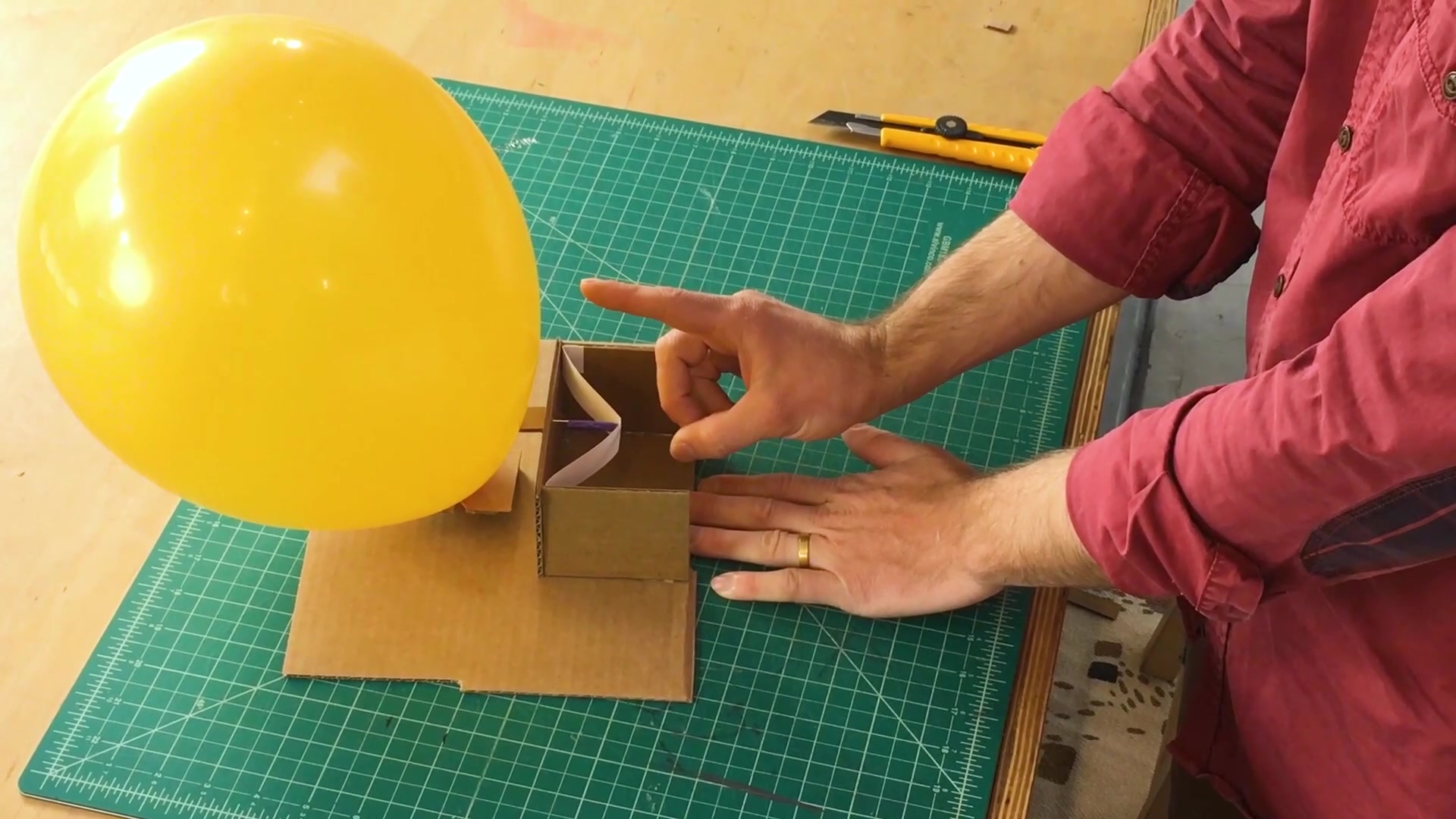
About this activity
Build a balloon popper using clothespins, rubber bands, cardboard, and tape to safely burst balloons and explore how design affects popping distance.
What you need
Step by step
- 1
Step 1
Gather all the materials on a clear table so everything is easy to reach.
- 2
Step 2
Cut a rectangle of cardboard about 15 cm long and 10 cm wide to make the base.
- 3
Step 3
Cut a long narrow cardboard strip about 20 cm long to use as the launching arm.
- 4
Step 4
Tape one end of the cardboard arm to the center of the base so it can lift up and act like a hinge.
- 5
Step 5
Tape a clothespin upright on the base a few centimeters from the hinge so its jaws can hold the arm tip.
- 6
Step 6
Attach one end of a rubber band to the front edge of the base with tape and stretch it toward the arm.
- 7
Step 7
Loop the other end of the rubber band around the tip of the arm and secure it with tape so the band will pull the arm forward.
- 8
Step 8
Tape a pushpin to the tip of the arm pointing forward and flat against the cardboard (adult help required for safety).
- 9
Step 9
Pull the arm back and slip the arm tip under the clothespin jaws to cock the popper.
- 10
Step 10
Inflate a balloon to a medium size and tie it closed.
- 11
Step 11
Use the ruler to measure 30 cm from the front of the base and mark that spot on the floor or wall.
- 12
Step 12
Place the balloon at the 30 cm mark and tape it lightly so it stays in place.
- 13
Step 13
Release the clothespin latch to fire the arm and try to pop the balloon.
- 14
Step 14
Move the balloon 10 cm farther away, repeat cocking and firing, and then change one design element (for example use a thicker rubber band or shorten the arm) and test again to see how the popping distance changes.
- 15
Step 15
Take a photo or write what you learned and share your finished balloon popper and results on DIY.org.
Fun facts
How do I build a balloon popper with clothespins and rubber bands?
Build a simple popper by making a sturdy cardboard base, taping a clothespin to one end with its jaws facing out, and anchoring one end of a rubber band to the base. Stretch the rubber band and hook it over the clothespin jaw to create tension. Slip a small, adult-handled pushpin or taped sharp point into the clothespin (adult-only), place a partly inflated balloon as a target, release, and measure how far the pop flew.
What materials do I need to build a balloon popper?
You’ll need sturdy cardboard for a base, one or more spring clothespins, several rubber bands of different sizes, strong tape (duct or packing), balloons, a ruler or measuring tape, and a marker for recording results. Add safety items: safety goggles and an adult-handled thumbtack or pushpin (optional). Scissors should be used by an adult or with supervision. Extra cardboard and tape help try different designs.
What ages is a clothespin balloon popper activity suitable for?
This activity is best for children ages 7 and up with close adult supervision because it can involve small parts and sharp items. Younger kids (4–6) can join by inflating balloons, measuring distances, and recording results while adults or older kids handle the building and any sharp pieces. Teens can lead redesigns and experiments with rubber-band tension and launch angles.
What safety precautions should I follow when making a balloon popper?
Always use adult supervision and safety goggles when testing poppers. Keep sharp items like pushpins or thumbtacks for adult handling only, or use taped-over dull tips. Don’t aim poppers at people, pets, or fragile objects. Use low-tension rubber bands for younger kids, secure the base to prevent slips, and collect balloon fragments immediately to prevent choking hazards. Test outdoors or in a clear area for safe distance measurements.
Watch & Learn
Need help?
What can I use if I don't have a clothespin or pushpin?
If you don't have a clothespin or pushpin, an adult can clamp a small binder clip upright on the base to hold the arm and tape a straightened paperclip or small nail flat to the arm tip as the popping point.
Why won't the arm snap forward or pop the balloon?
If the arm doesn't snap forward or pop the balloon, re-tape the rubber band to the front edge so it won't slip, shorten or double the rubber band for more tension, and make sure the hinge tape at the base allows the arm to pivot freely.
How can I adapt this activity for different ages?
For younger kids, skip the pushpin and tape a foam pad or coin to the arm tip so they can practice cocking and firing safely while an adult handles the sharp parts and inflation, and older kids can follow step 14 to vary arm length or rubber-band thickness and record how popping distance changes.
How can we make the balloon popper more powerful or personalized?
To improve or personalize the popper, decorate the cardboard base, add a second rubber band or use a thicker rubber band as in step 14 for more power, and mount the hinge on a sturdier board to get more consistent popping distances to photograph for DIY.org.