Break down a song
Listen to a favorite song, identify its beat, melody, lyrics, and instruments, and create a simple diagram showing each musical part and structure.


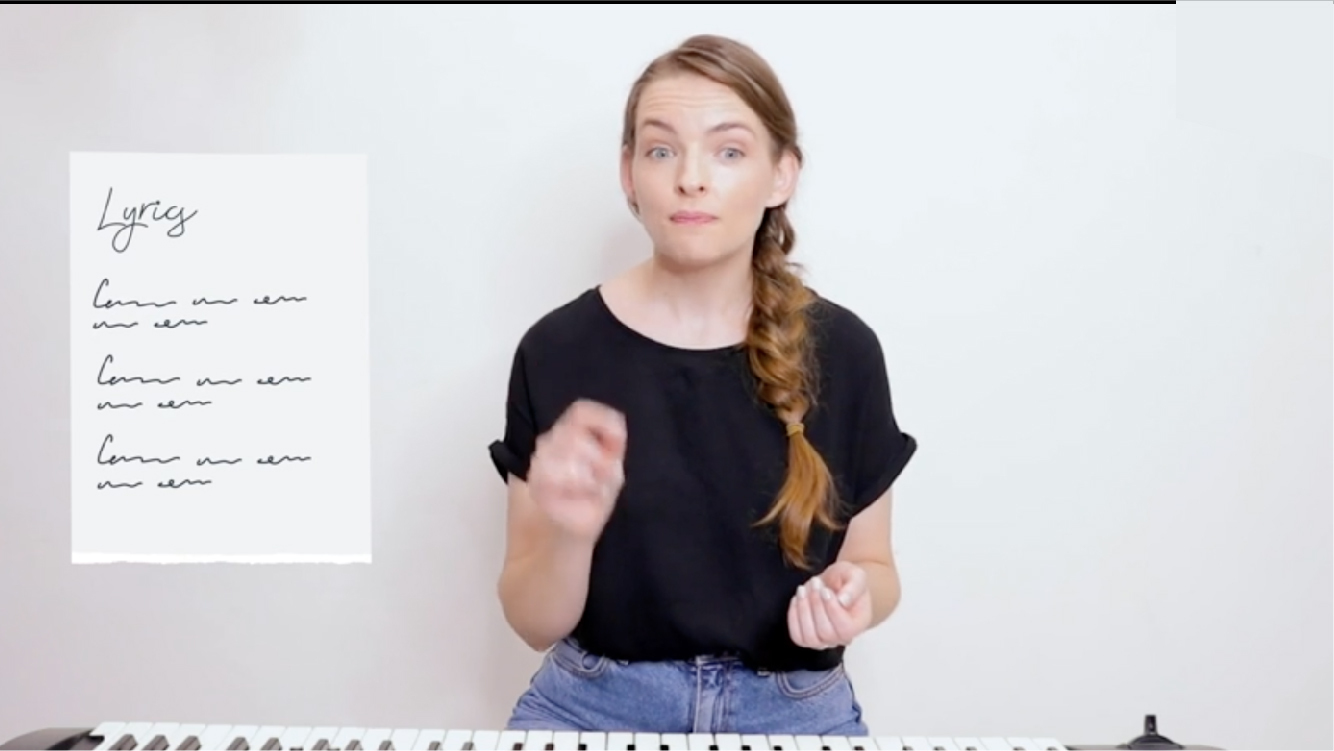

Step-by-step guide to break down a song
Step 1
Pick your favorite song and write its title and artist at the top of your paper.
Step 2
Sit in a quiet spot with your paper pencil ruler and colouring materials ready.
Step 3
Play the song once all the way through and just listen without writing.
Step 4
Play the song again and tap your finger or clap along to the steady beat.
Step 5
While you tap draw short vertical ticks on your paper for each beat you feel.
Step 6
Count how many ticks repeat in one group and write that number as the beats per measure.
Step 7
Play the song again and hum or sing the main tune to find the melody.
Step 8
Write a short note describing whether the melody mostly goes up down or stays the same.
Step 9
Listen for words that repeat and write down the chorus or any repeated lyric you hear.
Step 10
Make a list of each instrument you can hear in the song.
Step 11
Use the ruler to draw a straight timeline across your page.
Step 12
Divide the timeline into sections and label them Intro Verse Chorus Bridge and Outro.
Step 13
Use different colors to mark the melody the lyrics and each instrument on the timeline.
Step 14
Add arrows or small notes to show where sections repeat or where big changes happen.
Step 15
Share a photo of your finished diagram on DIY.org.
Help!?
What can we use if we don't have a ruler, colouring materials, or a device to play the song?
Use any straight edge like a book or cereal box for the ruler, crayons, colored pencils or washable markers for colouring materials, and a phone, tablet or laptop with headphones or speakers to play the song.
I'm having trouble finding the steady beat or counting beats per measure—what should we try?
Slow the song or use a free metronome app while you tap or clap along, mark ticks only on the strongest pulses, and replay the section until you consistently count the same number for beats per measure.
How can we adapt this activity for younger children or older kids?
For younger kids focus on just tapping the beat and coloring big sections on the timeline, while older kids can use the ruler to make precise divisions, write beat counts and time signatures, and label each instrument in more detail.
How can we enhance or personalize the finished diagram beyond the basic steps?
Add a small legend explaining your colors and symbols, paste a printed band photo or lyric snippet by the timeline, use different shaped icons for each instrument, and include a short recorded explanation when you share the photo on DIY.org.
Watch videos on how to break down a song
Guitar Lesson For Kids - Part 1 - Absolute Beginner Series #guitar #kids
4 Videos

Guitar Lesson For Kids - Part 1 - Absolute Beginner Series #guitar #kids

Recorder Lesson One: The Basics

How to Play Piano: Day 1 - EASY First Lesson for Beginners

Easy First Piano Lesson - For Kids!
Facts about music appreciation for kids
🎵 Melody is the part of a song you hum—the tune—while harmony supports it with chords.
🥁 The beat is the steady pulse you tap your foot to; many pop songs fall around 100–130 BPM.
🎤 Lyrics tell the song's story and repeating choruses help songs stick in your head.
🎸 Instruments have roles: bass provides low groove, drums keep the pulse, and guitars/keys often supply melody or chords.
📜 Western musical notation began developing around the 9th century so people could write down melodies.
How do I guide my child to break down a song step-by-step?
What materials do I need to analyze a song and make a diagram?
What ages is this song analysis activity suitable for?
What are the benefits of teaching children to break down a song?
