Blaze a trail
Create and mark a short backyard nature trail with handmade signs, a simple map, and compass directions, then follow it and record observations.


Step-by-step guide to create a backyard nature trail
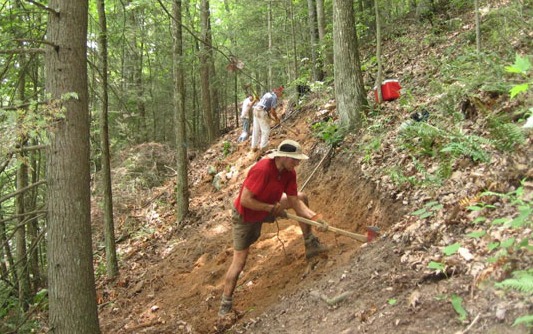
What Is A Trail Blaze? - The Hiker's Advice
Step 1
Pick a safe start and end spot in your backyard to be the beginning and finish of your short trail.
Step 2
Walk the yard and choose four to six interesting stops to include like a big rock a flower patch or a shady tree.
Step 3
Sketch a simple map on paper showing the start the finish and where each chosen stop will go.
Step 4
Use your compass to find north and draw a north arrow on your map so your map points the right way.
Step 5
Cut cardboard into sign shapes that are easy to hold or stick into the ground.
Step 6
Decorate each sign with a name or arrow using your colouring materials so people know what to look for.
Step 7
Tape or glue each cardboard sign to a wooden craft stick or small yard stick to make signposts.
Step 8
Place each sign at its chosen spot by pushing the stick into the ground or tying it to a branch with a helper.
Step 9
On your map write the compass heading from the start to each sign (for example N NE E) next to the sign location.
Step 10
Make a short observation checklist in your notebook with three things to look for at each stop such as color texture or sound.
Step 11
Follow your trail using your signs and map and stop at each sign to look listen and compare to your checklist.
Step 12
At each sign write one sentence in your notebook about what you found at that stop.
Step 13
Draw a small sketch of the most interesting thing you saw and add it to your map or notebook.
Step 14
Share your finished trail map signs and observations on DIY.org
Help!?
What can we use instead if we don't have a compass, cardboard, or wooden craft sticks for the signs?
For the 'Use your compass to find north' step a smartphone compass app or the sun's position works, and for signs substitute cereal boxes or paper for cardboard and pencils, chopsticks, or sturdy twigs for wooden craft sticks when taping or gluing them to make signposts.
What should we do if a sign won't stay in the ground or the map directions are confusing?
If a sign won't push into the ground during 'Place each sign' loosen the soil with a stick or small trowel or tie the sign to a branch as suggested, and reduce map confusion by clearly drawing the start/finish and adding the compass headings next to each sign location as in the 'On your map write the compass heading' step.
How can we adapt the trail activity for different ages?
For younger kids simplify by picking three stops, pre-cutting and decorating the cardboard signs, and helping with the 'write one sentence' and checklist steps, while older kids can choose four to six stops, add compass headings and distances on their map, and make more detailed sketches.
How can we make the trail more fun or unique after finishing the basic steps?
To enhance the activity personalize and extend it by turning stops into a themed scavenger hunt using your observation checklist, waterproofing decorated cardboard signs with clear tape, adding photos and distance notes to your map, and sharing the finished trail and observations on DIY.org.
Watch videos on how to create a backyard nature trail
What Do Hiking Trail Blazes Mean In The Midwest? - The Midwest Guru
4 Videos

What Do Hiking Trail Blazes Mean In The Midwest? - The Midwest Guru
How Do You Keep Kids Safe From Wildlife On Hiking Trails? - The Hiker's Advice
What Makes A Hiking Trail Truly Kid-friendly? - The Hiker's Advice

How Do You Prevent Kids From Getting Lost On Hiking Trails? - The Hiker's Advice
Facts about outdoor exploration and navigation for kids
🧭 The compass works because Earth acts like a giant magnet — its needle lines up with Earth's magnetic field so you can find north.
🗺️ Map-making is called cartography and people have drawn maps for thousands of years to help others find their way.
🚶♂️ The Appalachian Trail is about 3,500 km (2,200 miles) long — long-distance hikes can take months, while your backyard trail might take minutes!
🔎 Citizen science apps like iNaturalist let kids and families upload nature sightings — together they’ve collected millions of wildlife records.
🌿 Even a small backyard trail can be a wildlife hotspot, hosting dozens of plants, birds, and insects that use green spaces as homes and food sources.
How do I create and follow a short backyard nature trail with handmade signs, a simple map, and compass directions?
What materials do I need to make a backyard nature trail with signs, a map, and a compass?
What ages is a backyard nature trail activity suitable for?
What are the benefits and safety tips for making and following a backyard nature trail?
