Belt a show tune
Learn safe breathing, warm-ups, and posture to belt a favorite show tune confidently, practice phrasing and projection, then perform for family.


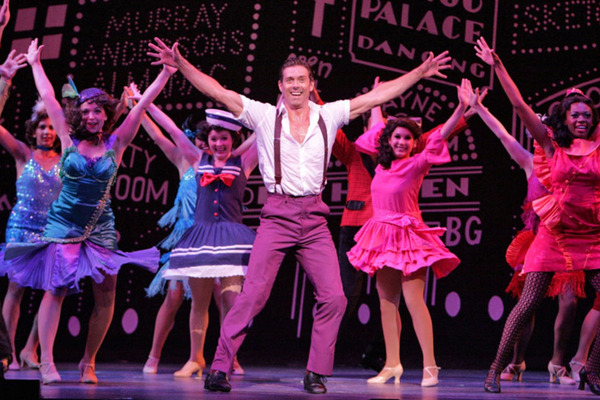

Step-by-step guide to belt a favorite show tune
5 Songs That Are Easy To Sing & Play On Piano (Beginner Lesson)
Step 1
Put on comfortable clothes so you can move and sing easily.
Step 2
Fill your water bottle with room-temperature water and set it within reach.
Step 3
Stand in front of the mirror.
Step 4
Adjust your posture by placing your feet shoulder-width apart keeping knees soft lifting your chest and relaxing your shoulders.
Step 5
Practice belly breathing by placing a hand on your stomach inhaling through your nose for four counts and exhaling for six counts; repeat five times.
Step 6
Do a gentle vocal warm-up by humming or doing a lip trill on a comfy pitch and sliding up and down a small range for about 30 seconds.
Step 7
Read your lyrics and mark where you will take breaths between phrases with a small dot or slash.
Step 8
Sing one marked phrase slowly focusing on steady breath support and a relaxed throat; repeat the phrase three times.
Step 9
Sing that same phrase louder using your breath support (not throat tension) to practice safe projection; repeat twice.
Step 10
Add expression and simple gestures while keeping your posture and breathing as you rehearse the whole song once.
Step 11
Perform the full show tune for your family with confidence and a smile.
Step 12
Share your finished performance on DIY.org.
Help!?
I don't have a mirror—what can I use instead for step 3 to check my posture and gestures?
Use a reflective window, the front-facing camera on a phone or tablet, or a large sheet of clean foil taped to a wall to stand in front of while keeping your water bottle and marked lyrics within reach.
I'm running out of breath when I try to sing louder in steps 7–8—how can I fix that?
Return to the belly-breathing step (place a hand on your stomach and repeat the 4-count inhale/6-count exhale five times), then rehearse the marked phrase slowly three times and do 30 seconds of lip trills to build steady breath support so projection uses breath not throat tension.
How can I adapt this activity for a younger child or a teenager?
For younger kids shorten the belly breaths to 2–3 counts, reduce warm-ups to a few hums and sing single phrases once, while teens can extend the warm-up to 45–60 seconds, repeat phrases more times for stamina, and add finer expression when rehearsing the whole song.
What are simple ways to enhance or personalize the final performance before uploading to DIY.org?
Add a simple costume or prop, mark a couple stage positions in front of the mirror, invite a family member to sing a harmony on a repeated phrase, and record a clean take after rehearsing the whole song with expression and gestures.
Watch videos on how to belt a favorite show tune
5 Very Easy Children Songs for Children to learn on the Piano (tutorial) - Volume 1
4 Videos
5 Very Easy Children Songs for Children to learn on the Piano (tutorial) - Volume 1
First Singing Lesson for Kids- Solfege Lesson 1
![5 Easy Tunes on Piano for BEGINNERS [single note & no hand movement]](https://img.youtube.com/vi/hxnGvTHr7Kw/mqdefault.jpg)
5 Easy Tunes on Piano for BEGINNERS [single note & no hand movement]
How To Sing & Play Piano AT THE SAME TIME
Facts about singing and vocal technique
🎤 Belting lets singers deliver loud, high notes using strong chest resonance — but it works best with careful breath support to avoid strain.
🫁 The diaphragm is the key breathing muscle for singers; learning to breathe from the diaphragm gives steadier, more powerful tones.
🎭 Show tunes are written to tell a story — great phrasing and clear projection help the audience feel the character's emotions.
🧘 Good posture (straight spine, relaxed shoulders, open chest) increases lung capacity and gives the voice more freedom.
📣 Short daily warm-ups (5–10 minutes) boost blood flow to the vocal folds and lower the chance of vocal fatigue during performances.
How do I teach my child to belt a show tune safely and confidently?
What materials do I need to belt a show tune with my child?
What ages is belting a show tune suitable for?
What are the benefits and safety tips for teaching kids to belt show tunes?
