Animate With a Colorful Strip
Make a flip-strip animation using a colorful paper strip, draw sequential frames, secure ends, and animate by flipping to watch movement.


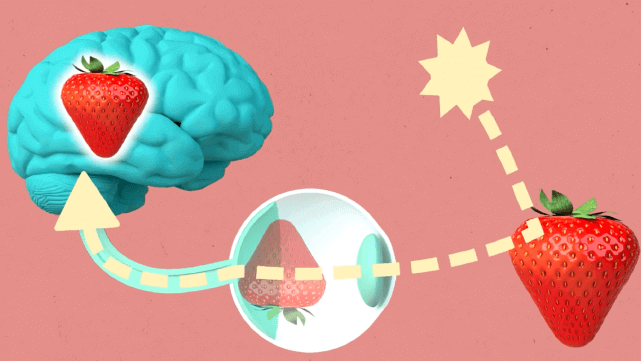

Step-by-step guide to Animate With a Colorful Strip
Step 1
Gather all the materials listed so you are ready to start.
Step 2
Cut a long strip of paper about 2 to 3 inches wide and 12 inches long using scissors.
Step 3
Use the ruler and pencil to draw vertical lines that divide the strip into 8 to 12 equal frames.
Step 4
Pick a simple action to animate like a bouncing ball a walking stick figure or a flapping bird.
Step 5
Lightly sketch the first frame of your action in the first box with your pencil.
Step 6
Draw the rest of the frames one by one changing the object’s position a little in each box so the motion flows.
Step 7
Add details and color to each frame using your coloring materials.
Step 8
Gently erase any extra pencil lines so each frame looks clean and bright.
Step 9
Bring the two ends of the strip together to form a loop and secure them with tape or a stapler.
Step 10
Flip the loop with your thumb to watch your drawings move and try different flip speeds to make the motion smooth.
Step 11
Share your finished flip-strip animation on DIY.org.
Help!?
What can we use if we don't have a stapler or clear tape to secure the loop ends?
If you don't have a stapler or clear tape to join the two ends (step 8), use a glue stick along the overlap or hold the loop with two paperclips or a small binder clip instead.
My flip-strip looks jumpy—how can I make the motion smoother?
To fix a jumpy animation, follow step 2 and 4 by increasing to 10–12 frames and making smaller position changes between each pencil sketch so the motion flows when you flip (step 9).
How can I adapt this activity for younger or older kids?
For younger kids (4–6) make the strip wider (about 3 inches), use only 6 big frames and crayons with adult help cutting (step 2 and 6), while older kids can use 12 frames, finer pencil sketches (step 4), and add shading or detailed coloring (step 6).
How can we extend or personalize our flip-strip animation once it's working?
After coloring and cleaning each frame (steps 6–7), personalize by adding a background across frames, combining two loops with tape (step 8) for a longer sequence, or recording the flip on a phone to add sound and share on DIY.org (step 9).
Watch videos on how to Animate With a Colorful Strip
Granulation, Gold & Dots: A Playful Stripe Painting Tutorial
3 Videos

Granulation, Gold & Dots: A Playful Stripe Painting Tutorial
The 7 Elements of Art Explained: A Fun and Easy Guide for Kids! 🎨
How to make a Film Strip Animation in Canva - Tutorial
Facts about animation for kids
🎞️ The first patented flip book was called a 'kineograph' and was patented by John Barnes Linnett in 1868!
👀 Our brains start to see smooth motion at around 16 frames per second — that’s why flipping pages quickly looks like animation.
🎨 Flip-strip and flip-book tricks inspired early filmmakers and are one of the oldest forms of storytelling with moving pictures.
✂️ You only need a handful of frames (often 6–12) to show simple actions like a jump or a wag — tiny changes create big motion!
🌈 Bright colors and bold outlines make movement pop — a classic cartooning trick to help the eye follow action.
How do I make a flip-strip animation with a colorful paper strip?
What materials do I need to create a colorful flip-strip animation?
What ages is the flip-strip animation activity suitable for?
What are the benefits of making flip-strip animations with kids?
