Animate a LEGO® minifig running
Create a short stop-motion video that shows a LEGO minifigure running by posing it frame-by-frame, using a phone, stand, and simple editing.
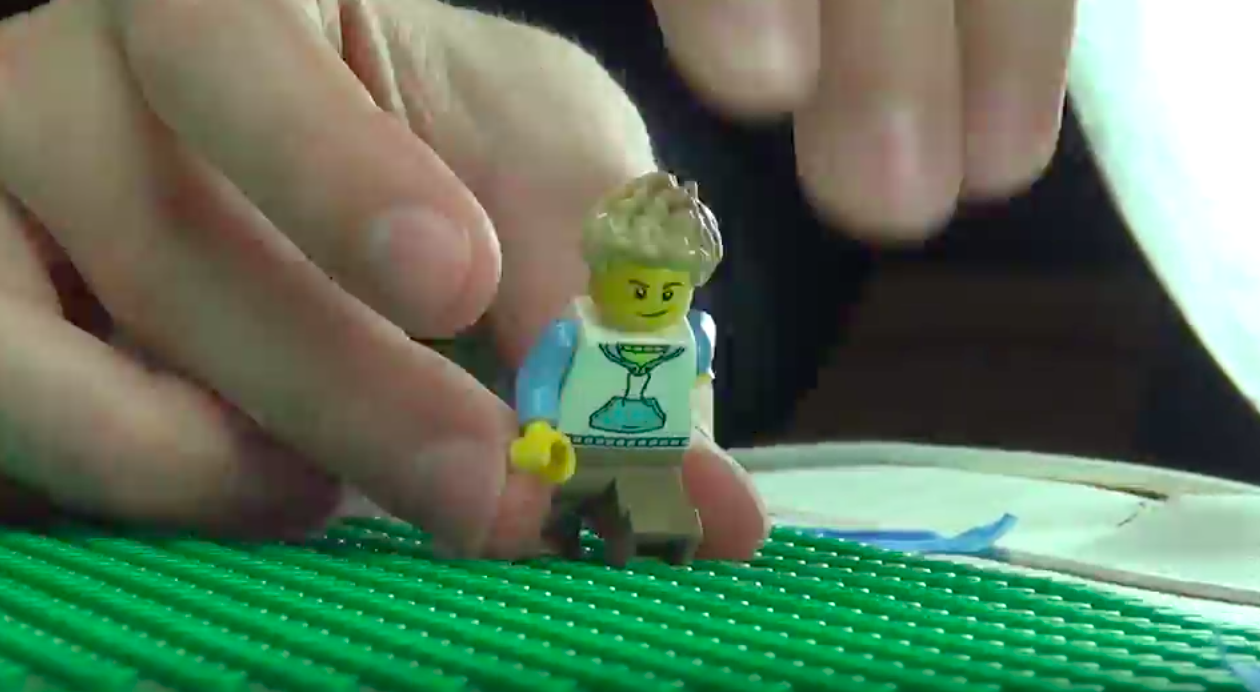
About this activity
Create a short stop-motion video that shows a LEGO minifigure running by posing it frame-by-frame, using a phone, stand, and simple editing.
What you need
Step by step
- 1
Step 1
Gather all the materials listed and bring them to a clear table or desk.
- 2
Step 2
Place the LEGO baseplate on the clear table or desk so you have room to work.
- 3
Step 3
Build a small scene on the baseplate using the extra LEGO bricks.
- 4
Step 4
Tape or drape the plain paper or cloth behind the scene to make a steady background.
- 5
Step 5
Stick a small dab of removable putty to the minifigure feet and press it onto the baseplate so the figure stands steadily.
- 6
Step 6
Set your phone on a stable surface or stand so the minifigure is centered and fills the frame.
- 7
Step 7
Open the camera or stop-motion app on the phone and lock the focus and exposure so the lighting and sharpness stay the same.
- 8
Step 8
Pose the minifigure in the first "running" position and take the first photo.
- 9
Step 9
Move the minifigure a tiny amount into the next running pose by shifting one leg and the opposite arm slightly.
- 10
Step 10
Take another photo of the new pose.
- 11
Step 11
Repeat steps 9 and 10 about 12 to 20 times, moving tiny amounts each time to make smooth motion.
- 12
Step 12
Play back the captured frames in the app to preview how the run looks.
- 13
Step 13
Adjust the playback speed to about 8 to 12 frames per second to make the movement look like running.
- 14
Step 14
Export or save the finished video file from the app to your device.
- 15
Step 15
Upload and share your finished LEGO running animation on DIY.org
Fun facts
How do I animate a LEGO minifigure running using stop-motion?
Set up your phone on a stable stand or tripod and frame the LEGO minifigure against a simple background. Pose the minifigure slightly forward for each frame—move an arm, leg, or torso a millimeter or two between shots. Use a stop-motion app or the phone’s camera timer to take each photo. Shoot 8–12 frames per second for smooth motion, then import to an editor to adjust timing and add sound. Review and retake as needed.
What materials do I need to make a LEGO stop-motion running video?
You'll need: a LEGO minifigure and a few spare legs or accessories, a smartphone with a stop-motion or camera app, a stable stand or tripod, a simple backdrop (paper or cardboard), good lighting (lamp or daylight), and tape or sticky putty to stabilize pieces. Optional: a small table, a macro lens clip, and basic editing app for trimming and adding sound. Keep pieces organized in a tray.
What ages is this LEGO stop-motion activity suitable for?
Stop-motion with LEGO is great for ages 5 and up with adult help; children 8–12 can do most steps independently. Younger kids (5–7) enjoy posing figures while adults handle the camera and editing. Teens can explore advanced timing and effects. Tailor complexity: simpler two-frame steps for younger children, longer frame sequences and editing for older ones. Supervise small parts for children under 8 to prevent choking hazards.
What are the benefits and fun variations of making a LEGO running stop-motion?
Creating a LEGO running stop-motion boosts creativity, patience, and fine motor skills while introducing basic filmmaking concepts like framing and timing. Variations: change backgrounds to create a race, use multiple minifigs for a relay, add simple props, or increase frame rate for smoother runs. For older kids, experiment with camera angles, lighting effects, or green-screen backgrounds. Always supervise when using small parts and hot lamps, and encourage kids to storyboard first.
Watch & Learn
Need help?
What can I use if I don't have removable putty or a LEGO baseplate?
Use a small rolled piece of masking tape or a sticky note ball to anchor the minifigure and use a piece of cardboard or a thin tray as the stable surface instead of the LEGO baseplate for steps 2 and 5.
My photos look blurry or the minifigure keeps tipping over; how do I fix that?
Set your phone on a stable stand or stack of books (step 6), lock the focus and exposure in the app (step 7), press the minifigure more firmly into the putty (step 5), and make tinier, consistent moves (steps 9–10) to prevent blur and tipping.
How can I adapt this activity for different ages?
For younger kids simplify the scene (step 3), take fewer frames with bigger movements so the run is obvious, and for older kids use 12–20 tiny moves (steps 9–11), experiment with 8–12 fps (step 13), and add a more detailed background (step 4).
How can we enhance or personalize the finished animation?
Add a painted paper or LED-lit background behind the taped cloth (step 4), include extra props in the scene (step 3), tweak playback speed for effect (step 13), and add sound or titles before exporting and sharing (steps 14–15).