Émilie Du Châtelet Facts For Kids
Émilie du Châtelet was a pioneering French mathematician and natural philosopher who made significant contributions to science and mathematics during the 18th century.
Select reading age

Émilie Du Châtelet Facts For Kids
Videos & Quizzesincluded
About this topic
Émilie du Châtelet was a brilliant French scientist born on December 17, 1706 🌟. She loved learning and studying math and physics, which are subjects that help us understand the world around us! Émilie was not only a mathematician but also a natural philosopher, which means she explored the laws of nature. She worked hard to make complex ideas easier to understand and even translated important works 💡. Sadly, she passed away in 1749 after giving birth, but her contributions continue to inspire scientists today!
Explore with ChatDinoKey Points
Du Châtelet's impact goes beyond just science.
Émilie du Châtelet had strong philosophical views that influenced her scientific work.
Émilie du Châtelet's legacy continues to inspire many people today 🌈.
Émilie du Châtelet wrote several important works that contributed to science and philosophy.
Gabrielle Émilie Le Tonnelier de Breteuil grew up in a noble family in France.
Émilie du Châtelet made many important contributions to science.
Émilie du Châtelet had a close friendship with the famous writer and philosopher Voltaire 📜.
Émilie du Châtelet played a key role in shaping modern physics!
Émilie du Châtelet is often seen as a feminist icon 🌸 in the world of science.
One of Émilie's biggest achievements was translating Isaac Newton's famous work, "Philosophiæ Naturalis Principia Mathematica," into French 📚.
Photos of Émilie Du Châtelet

In the frontispiece to Voltaire's book on Newton's philosophy, du Châtelet appears as Voltaire's muse, reflecting Newton's heavenly insights down to Voltaire.

The chateau of Cirey

The chateau of Lunéville
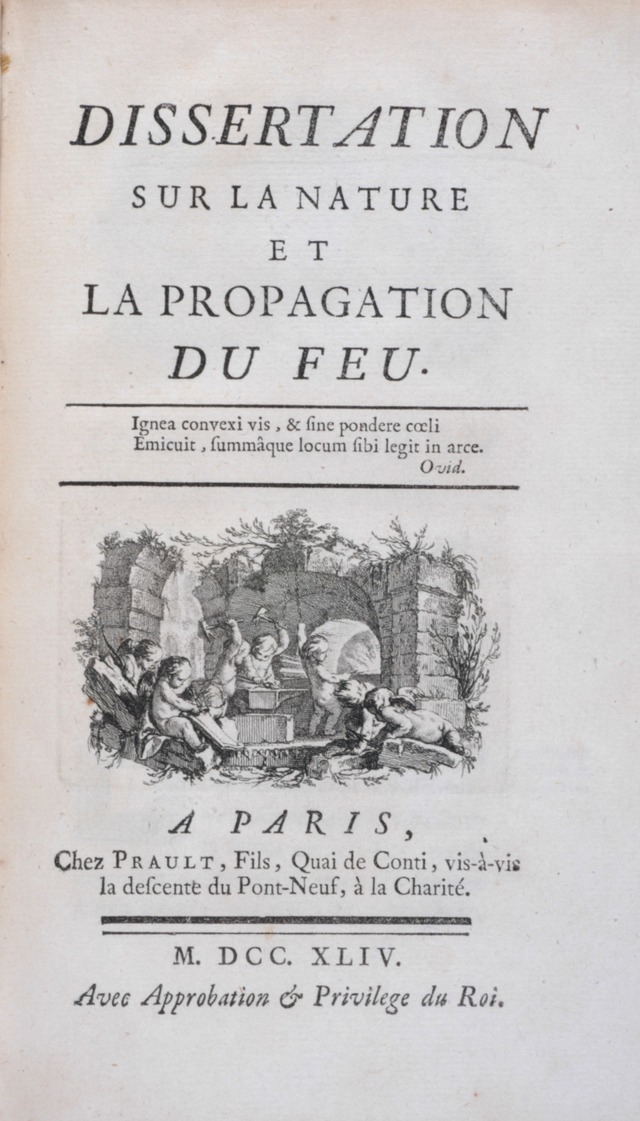
Dissertation Sur La Nature et La Propagation du feu, 1744

Réponse de Madame la Marquise du Chastelet, 1741

Portrait by Marianne Loir. Musée des Beaux-Arts de Bordeaux
👩🎨 Cultural Impact
Du Châtelet's impact goes beyond just science. She influenced literature, art, and philosophy! Many writers and artists admired her intelligence 👩🎨. In the 18th century, she broke barriers for women, encouraging them to pursue education and share their ideas. Her story has been told in books, plays, and movies. People recognize her as a trailblazer for women in history, showing that hard work and passion can lead to marvelous accomplishments. Through her life, she showed that curiosity and knowledge are truly powerful!
Go deeper🌍 Philosophical Views
Émilie du Châtelet had strong philosophical views that influenced her scientific work. She believed that reason and logic are the keys to understanding nature 🌍. Émilie was influenced by other philosophers like René Descartes and François Marie Arouet, known as Voltaire. She argued that knowledge is important for everyone and that women could also contribute to science! Her ideas promoted the belief that everyone should have the opportunity to learn and succeed, regardless of gender. This view helped pave the way for more women in the scientific field.
Go deeper🌈 Du Châtelet's Legacy
Émilie du Châtelet's legacy continues to inspire many people today 🌈. She showed that women can excel in science, which was not common in her time. Many schools and institutions honor her memory by teaching her discoveries and ideas. She is often recognized as one of the first women in science, paving the way for others. Organizations now promote women in science and encourage young girls to pursue STEM (Science, Technology, Engineering, and Mathematics) fields. Émilie's work still shines bright in the world of science!
Go deeper🌌 Works And Publications
Émilie du Châtelet wrote several important works that contributed to science and philosophy. Her most famous book is the "Foundations of Physics" where she explained ideas about energy and motion 🌌. She published essays discussing philosophy and mathematics too. Her writing style was clear and engaging, making complex topics easier to understand! Some of her works, like her translation of Newton's "Principia," are studied even today. Because of her contributions, Émilie is remembered as a talented author and scientist!
Go deeper🎓 Early Life And Education
Gabrielle Émilie Le Tonnelier de Breteuil grew up in a noble family in France. Born in Paris, she had access to great education 🎓. She was curious about science from a young age and often studied in her father's library. Émilie was encouraged by her father, who loved teaching her about math and physics. In those days, girls mostly didn’t study these subjects, but Émilie was determined to learn! She attended lessons and gained knowledge from the best thinkers of her time, making her a pioneer for women in science.
Go deeper⚡ Scientific Contributions
Émilie du Châtelet made many important contributions to science. She is best known for her work on energy and motion, particularly the law of conservation of energy ⚡. Émilie challenged accepted ideas and showed that energy can change forms, like from moving to stored energy! She wrote clear explanations and equations that helped explain her findings. This breakthrough was essential for modern physics. Her passion for science pushed her to explore new ideas, inspiring future scientists to keep asking questions and seeking answers!
Go deeper📜 Relationship With Voltaire
Émilie du Châtelet had a close friendship with the famous writer and philosopher Voltaire 📜. They met in 1733 and became both creative and intellectual partners. Voltaire admired her intelligence and knowledge, and they spent many happy moments discussing science and philosophy together. They even co-authored some works! Their relationship showed that collaboration can lead to great discoveries. After her death, Voltaire honored her memory and shared how much she had impacted his life and thoughts, showing how influential she was.
Go deeper🌀 Influence On Modern Physics
Émilie du Châtelet played a key role in shaping modern physics! Her work on energy laid the foundation for future scientists like Albert Einstein and his theories of relativity 🌀. By understanding energy and motion better, she helped unlock ideas that lead to discoveries we use today. Many of her concepts, including her interpretations of Newton’s laws, are still taught in schools! She opened the door for more research in physics, encouraging future scientists to build upon her groundbreaking theories.
Go deeper🌸 Feminism And Gender In Science
Émilie du Châtelet is often seen as a feminist icon 🌸 in the world of science. She fought for equal opportunities for women in education and science, even when it was rare for women to study these subjects! By pursuing her interests and excelling in math and physics, she changed perceptions of women. Her work encourages discussions about gender equality in STEM fields, helping women gain recognition for their contributions. Émilie showed that anyone, regardless of gender, can make significant contributions to science, inspiring future generations to follow their dreams!
Go deeper📚 Translation Of Newton's Principia
One of Émilie's biggest achievements was translating Isaac Newton's famous work, "Philosophiæ Naturalis Principia Mathematica," into French 📚. This book explains the laws of motion and gravity, concepts that are vital for understanding how the universe works. Émilie not only translated it but also added her own notes and explanations to make it easier for French speakers to understand! Her translation was so good that it’s still used by students and scholars today. This work helped spread Newton’s ideas throughout Europe, making her an important figure in science.
Go deeper