Ytterbium Facts For Kids
Ytterbium is a silvery-white metal belonging to the lanthanide series, renowned for its applications in electronics, optics, and metallurgy.
Select reading age
Ytterbium Facts For Kids
Videos & Quizzesincluded
About this topic
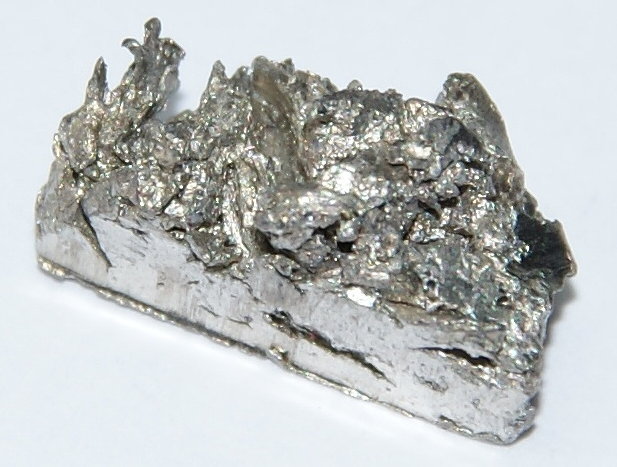
Ytterbium is a chemical element with the symbol Yb and atomic number 70. 🌟It is part of a group called the lanthanides, which are often found together in nature. Ytterbium was discovered by Swedish chemist Per Teodor Cleve in 1878. You can find this shiny, silvery-white metal in the Earth's crust, but it is very rare! Its name comes from Ytterby, a village in Sweden where several other rare elements were also found. Ytterbium is special because it can help make cool things like lasers and electronic devices!
Explore with ChatDinoKey Points
Ytterbium was discovered in the late 1800s during a time when scientists were exploring new elements.
Ytterbium likes to combine with other elements, such as oxygen and halogens.
Ytterbium is a soft and ductile metal, which means it can be stretched into wires.
Ytterbium can make several interesting compounds!
Ytterbium has some exciting uses!
Ytterbium is not found in large amounts, but it exists in minerals like gadolinite and xenotime.
Ytterbium has several isotopes, which are forms of the element with different numbers of neutrons.
Ytterbium is generally considered safe to handle!
Photos of Ytterbium

The Face-centered cubic crystal structure.


Ytterbium(III) oxide

Crystal structure of ytterbium(III) oxide

Jean Charles Galissard de Marignac
🔍 Historical Context
Ytterbium was discovered in the late 1800s during a time when scientists were exploring new elements. 🔍Just like many other rare earth elements, it was found in a Swedish village called Ytterby! Many great chemists, including Cleve, were interested in the lanthanides. Before its discovery, other elements like erbium and terbium had already been named after Ytterby. Over time, people realized how useful ytterbium could be for technology, leading to more research about its properties and applications. 📜
Go deeper🌍 Chemical Properties
Ytterbium likes to combine with other elements, such as oxygen and halogens. 🌍It can form different compounds, like ytterbium oxide (Yb2O3), when it reacts with oxygen. Ytterbium has three main oxidation states: +2, +3, and +4. This means it can lose a different number of electrons when it combines with other elements. Ytterbium is not very reactive at room temperature, but it can react with water and acids to form hydroxides and yttrium salts. 🔬
Go deeper🎉 Physical Properties
Ytterbium is a soft and ductile metal, which means it can be stretched into wires. 🎉It has a melting point of 824°C (1515°F) and a boiling point of 1392°C (2538°F), which tells us it can handle high temperatures! This metal looks shiny and metallic, similar to silver. When you see a piece of ytterbium, it may look grayish! In its pure form, ytterbium usually comes as a small metal piece or powder. Its density is about 6.96 grams per cubic centimeter, which is heavier than water! 💧
Go deeper⚡ Ytterbium Compounds
Ytterbium can make several interesting compounds! One of the most common is ytterbium oxide (Yb2O3), which is used to make powerful lasers and jump-start electronics. ⚡Another important compound is ytterbium trifluoride (YbF3), often used to improve certain materials and in research. These compounds can help scientists develop new technology! Ytterbium compounds can appear in different colors, depending on how they’re made and which elements they are combined with. 🟡
Go deeper👀 Applications And Uses
Ytterbium has some exciting uses! One big application is in making lasers, particularly for medical use, like in vision correction surgeries. 👀It’s also used in the production of stronger steel and electronics like fiber-optic cables! Ytterbium can help researchers in glass-making, making glass more durable and clearer. 🥽Additionally, it's used in special kinds of magnets and to create phosphors that glow in the dark. So, it helps make some amazing tools and technologies we use every day! ⚙️
Go deeper🌈 Occurrence And Extraction
Ytterbium is not found in large amounts, but it exists in minerals like gadolinite and xenotime. It's usually found alongside other rare-earth elements. 🌈To extract ytterbium, scientists first mine these minerals, then separate the different elements through complex processes. This includes methods like ion exchange and solvent extraction. As a rare element, it takes a lot of effort to obtain a little bit of ytterbium for its uses in technology and industry. 🌐
Go deeper🧪 Isotopes And Radioactivity
Ytterbium has several isotopes, which are forms of the element with different numbers of neutrons. 🧪The most common isotope, Yb-174, is stable, meaning it doesn't break down or emit radiation. However, there are radioactive isotopes, such as Yb-169, which are used in scientific research. Radioactivity refers to how some isotopes change and release energy over time. But don’t worry, the stable isotopes of ytterbium are safe and do not emit harmful radiation! 🎈
Go deeper😇 Safety And Environmental Impact
Ytterbium is generally considered safe to handle! 😇However, it’s important to use it properly in laboratories, as people should always follow safety rules. If ingested or inhaled in large amounts, it might cause health problems. Ytterbium is not known to be harmful to the environment; in fact, it naturally exists in small amounts in nature. 🌱Researchers make sure to keep its extraction and use sustainable so that we can keep enjoying the benefits of this special metal, while protecting our planet! 🌍
Go deeper