Western European Hedgehog Facts For Kids
The Western European hedgehog is a small, spiny mammal native to Europe, known for its adorable face, characteristic spines, and nocturnal nature.
Select reading age

Western European Hedgehog Facts For Kids
Videos & Quizzesincluded
About this topic
The European hedgehog, often called the common hedgehog or Western European hedgehog, is a small, spiky creature found throughout Europe 🌍. They are about the size of a football, measuring about 9-12 inches long! These little mammals have a rounded body covered in over 5,000 spines, which protect them from predators. They have a cute little nose, small eyes, and short legs, making them very endearing to see! You can find them in gardens, forests, and even parks, so keep your eyes peeled for this prickly friend! 🦔
Explore with ChatDinoKey Points
Did you know hedgehogs can run up to 4 miles per hour?
The European hedgehog is currently categorized as "Least Concern" by the IUCN, meaning they are not in immediate danger of extinction.
Hedgehogs have appeared in various stories and folklore throughout Europe.
While hedgehogs are quite spiky, they still have some predators!
Hedgehogs and humans can have a fun relationship!
European hedgehogs live in a variety of environments.
European hedgehogs are covered in sharp spines called quills that help defend them from danger.
Hedgehogs are insectivores, which means they love to eat insects!
Breeding season for European hedgehogs usually happens in spring.
European hedgehogs are mostly solitary animals.
Photos of Western European Hedgehog
 Image by Chermundy edited by Tony Wills, licensed under Creative Commons Attribution-Share Alike 3.0
Western European Hedgehog — photo 1

Western European Hedgehog — photo 2

Skeleton of a European hedgehog

Skull of a European hedgehog

Blonde hedgehog

A European hedgehog eating fish carcass, photographed in Altai Krai

A European hedgehog eating fallen fruits
Western European Hedgehog — photo 8

Western European Hedgehog — photo 9
🏃♂️ Fun Facts
Did you know hedgehogs can run up to 4 miles per hour? 🏃♂️ That's pretty speedy for a little critter! Also, when hedgehogs get excited, they can sometimes do a funny dance and roll around! They have a unique way of making friends—they can recognize smells and communicate with each other. 🗣️ And finally, never tickle a hedgehog! They may curl up into a ball, hiding their cute little faces. Hedgehogs are remarkable animals, and there’s so much to learn about them! 💚
Go deeper🌿 Conservation Status
The European hedgehog is currently categorized as "Least Concern" by the IUCN, meaning they are not in immediate danger of extinction. 🌿However, their numbers are declining in some areas due to habitat loss and other threats. That's why scientists and conservationists are working hard to protect their homes so these cute, prickly friends can continue to thrive in our gardens and parks!
Go deeper🦔 Cultural Significance
Hedgehogs have appeared in various stories and folklore throughout Europe. 🦔For example, in ancient mythology, they were seen as symbols of wisdom. They also appear in popular culture, like in books and movies! Characters like Sonic the Hedgehog have introduced kids to the world of hedgehogs, making them even more famous! Hedgehogs teach us about nature, making them special creatures that many people adore.
Go deeper🦉 Threats And Predators
While hedgehogs are quite spiky, they still have some predators! 🦉Birds like owls and larger animals, such as foxes and badgers, may hunt them. However, the biggest threats come from humans. 🚗Cars can harm them when they wander into roads, and habitat destruction due to building and farming takes away their homes. Keeping our gardens Hedgehog-friendly helps them stay safe and sound!
Go deeper🏡 Interaction With Humans
Hedgehogs and humans can have a fun relationship! Many people enjoy seeing hedgehogs in their gardens and even build special homes and feeding stations for them. 🏡It’s important to help them by keeping gardens tidy and ensuring they have places to hide. If you find a sick or injured hedgehog, it’s good to call an animal rescue to help them recover. Learning about hedgehogs can inspire kids to care for wildlife and protect the environment!
Go deeper🌳 Habitat And Distribution
European hedgehogs live in a variety of environments. They can be found in gardens, woods, grasslands, and open fields. 🌳🌼 You can find them in many countries across Europe, from Spain and Italy in the south to Norway and Finland in the north. They are also present in the British Isles. These little creatures enjoy places with plenty of bushes or tall grass that provide homes and hiding spots! If you’re in Europe, keep an eye out, especially during dusk when they are most active!
Go deeper🌳 Physical Characteristics
European hedgehogs are covered in sharp spines called quills that help defend them from danger. When scared, they roll into a ball, making it tough for animals to get to them! They have short, little legs that let them run quickly if needed. Their coat is brown or dark gray, which helps them blend into the background🌳. Hedgehogs have a pointed snout for sniffing out food, and they can weigh from 4 to 10 pounds! Isn’t it cool how their bodies have so many special features to help them survive?
Go deeper🐜 Diet And Feeding Behavior
Hedgehogs are insectivores, which means they love to eat insects! 🐜They nibble on beetles, worms, and snails, munching on about 50-150 grams of food each night! Hedgehogs can also eat berries and fruits, making them fans of dessert too! They are great hunters and can smell their food from far away. 🌱When they find food, they use their sharp teeth to chew. Just like us, they need a varied diet to stay healthy and strong!
Go deeper🌸 Reproduction And Life Cycle
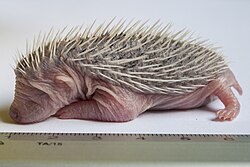
Breeding season for European hedgehogs usually happens in spring. 🌸Female hedgehogs can have 3 to 7 babies called hoglets. These tiny ones are born in nests made of leaves and grass. Hoglets are born blind and with no spines, but they quickly grow! After about 4 weeks, they start to explore outside the nest. By autumn, they can scavenge for food on their own! 🌕Hedgehogs usually live for about 3 to 7 years in the wild, but with care, they can live even longer in captivity!
Go deeper🦔 Behavior And Social Structure
European hedgehogs are mostly solitary animals. This means they like to live alone, although they may meet up during mating season! 🦔However, they often follow the same route to find food and may sniff each other out. These little critters are nocturnal, which means they come out at night to hunt for food. They can be quite noisy, making snuffling and huffing sounds! They also have an excellent sense of smell, and they use it to find food and avoid danger. 🌙
Go deeper