Volapük Facts For Kids
Volapük is a constructed language created by Johann Martin Schleyer between 1879 and 1880, aiming to facilitate international communication.
Select reading age

Volapük Facts For Kids
Videos & Quizzesincluded
About this topic
Volapük is a fun and interesting language made by a man named Johann Martin Schleyer in the years 1879 and 1880! 🌏He lived in Baden, Germany, and thought that God wanted him to create a way for people from different countries to talk to each other. Volapük means "world language" in itself! It became really popular in the late 1800s, and many people started using it. Imagine if everyone around the world could chat in one language! That was Schleyer’s big dream. Volapük has its own alphabet, sounds, and rules, making it quite special in the world of secret languages! 🔤
Explore with ChatDinoKey Points
Volapük has some unique grammar rules!
The story of Volapük began with Johann Martin Schleyer, who was inspired in 1879 after having a vision!
While Volapük is special, it faced some challenges!
Volapük wasn’t just a language; it created a community!
In Volapük, new words can come from other languages but are changed to fit its special rules!
Despite losing popularity, Volapük hasn't disappeared!
One important book in the world of Volapük is the “Volapük Dictionary” published in 1880.
If you’d like to learn Volapük, the internet is a great place to start!
Volapük is often compared to another fun language called Esperanto.
Photos of Volapük

Unofficial flag of Volapük

Commemorative inscription for J. M. Schleyer on the wall of the parsonage in Litzelstetten, Konstanz, written in Volapük and German: Menade bal – püki bal Eine Menschheit – eine Sprache (One mankind – one language)

1898 broadsheet advertising Volapük.

Schleyer proposed alternate forms for the umlaut vowels, but they were rarely used.
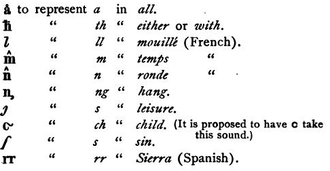
The author Alfred A. Post mentions in his Comprehensive Volapük Grammar some additional letters created by Schleyer.
📚 Grammar And Syntax
Volapük has some unique grammar rules! 📚First, the sentence structure usually follows the order: Subject + Verb + Object. For example, "I eat apples" would be "I völä, tul" in Volapük! Isn’t that neat? Also, nouns have different endings depending on whether they're singular or plural (like ‘cat’ vs. ‘cats’). 🌟Verbs change their endings to show who is doing the action. There are also many vowel sounds, which make it sound a bit musical! 🎶Learning how to create sentences in Volapük can be like solving a fun puzzle, making it exciting for kids and adults alike!
Go deeper👀 History Of Volapük
The story of Volapük began with Johann Martin Schleyer, who was inspired in 1879 after having a vision! 👀He thought everyone should understand each other, no matter where they lived. In 1880, he published his first book about Volapük, explaining its rules and words. Soon, people from around the world began to learn it, and there were even meetings called "Volapük gatherings" where enthusiasts would come together! 🌍By the 1880s, more than 200,000 people were trying to use Volapük. However, competition from other languages like Esperanto eventually slowed down its popularity. But it's still an important piece of language history!
Go deeper😕 Criticism And Challenges
While Volapük is special, it faced some challenges! 😕People found it harder to learn than other languages. Many thought its grammar rules were complicated, making it tough for kids and adults to pick up quickly. Stubbornness and confusion with the unusual letters also made learning tricky! 🧩As more people found Esperanto easier, they chose that instead of Volapük. Despite its challenges, Volapük is still respected for its unique approach to creating a shared language. This reminds us that creating something new sometimes has hurdles to overcome, but it’s the creativity that counts! ✨
Go deeper🌈 Cultural Impact And Usage
Volapük wasn’t just a language; it created a community! 🌈People who spoke it were excited to share ideas and stories. There were clubs and publications like "Volapük News." The first Volapük dictionary was published in 1880, helping others learn the language! 📖While it lost followers as other constructed languages like Esperanto grew, it had an impact on how languages could be created for everyone. Even today, people appreciate Volapük as an example of creative thinking! It reminds us how powerful language can be in bringing people together from around the world. 🌍
Go deeper🗣️ Vocabulary And Word Formation
In Volapük, new words can come from other languages but are changed to fit its special rules! 🗣️ For example, the word for "friend" is "plon" and the word for "love" is "lov." Words can be bounced around like a fun ball! ⚾Many words are built with little parts called "affixes" that add extra meanings. So “flog” means “to fly,” and “flög” means “flying.” The more you learn, the more you can mix and match to create new sentences! 🎉Isn’t it cool how you can create your own words by understanding the rules?
Go deeper🌟 Modern-day Presence And Revivals
Despite losing popularity, Volapük hasn't disappeared! 🌟There are still curious people interested in it. Nowadays, there are online groups and websites where you can learn Volapük. 🌐Some people even try to write songs or stories in this language! Revivals have also stirred some excitement, with small festivals celebrating Volapük. It's a language that reminds us about working together and thinking outside the box, just like Schleyer wanted! Volapük shows that even a language made long ago can still bring joy and creativity today! 🎉
Go deeper📖 Notable Literature And Documents
One important book in the world of Volapük is the “Volapük Dictionary” published in 1880. 📖It contains thousands of words to help learners. There are also stories and poems written in Volapük. In fact, some people have even published magazines in this unique language! 📰The literature not only helps in learning, but it also keeps the spirit of Volapük alive. This is significant as it showcases how a constructed language can have a rich culture and creativity behind it. Literary works help maintain interest and encourage younger generations to learn! 🌈
Go deeper🌐 Learning Resources And Communities
If you’d like to learn Volapük, the internet is a great place to start! 🌐There are websites that provide lessons, dictionaries, and games to help make learning fun. You can also find online communities filled with people who love Volapük! 📢You might even meet new friends who want to practice together. Some books and educational materials are also available. Remember, learning a language can be a fun adventure, just like exploring a treasure map! 🗺️ With a bit of imagination and practice, anyone can get started on their Volapük journey! 🌟
Go deeper🤔 Comparison With Other Constructed Languages
Volapük is often compared to another fun language called Esperanto. 🤔Esperanto was created in 1887 by L. L. Zamenhof and has a simpler structure and vocabulary! While Volapük was popular earlier, Esperanto became more widely used because it was easier to learn. 🎊Both languages aimed to connect people, but they took different paths. For example, Volapük uses many weird letters and sounds, while Esperanto uses more familiar parts from Latin languages. 📜This variety shows how different people can express their ideas about communication and friendship through language!
Go deeper