A vector space is a collection of vectors that can be added together and scaled by numbers called scalars, like a magical playground for arrows!
Set reading age
View for Kids
Easy to read and understand
View for Students
Clear, detailed explanations
View for Scholars
Deep dives and big ideas
Hey there, young explorers! 🌟Let’s dive into the world of vector spaces! A vector space is a special collection of objects called vectors. These vectors can be arrows pointing in different directions, or even groups of numbers! In a vector space, we can add vectors together and multiply them by numbers (called scalars). This lets us do lots of cool math tricks! Vector spaces are super important in areas like physics, engineering, and computer science. 🎓🌍 They help us understand things like motion, graphics, and much more! Ready to learn more? Let’s go! 🚀
Sometimes, we can create smaller vector spaces within a larger one! 💡These smaller spaces are called subspaces. Imagine a big park with lots of playgrounds. 🌳Each playground has its own equipment—like swings or slides! 🎠A subspace must also follow the rules of a vector space. For example, if we take a few vectors from the big vector space, all the combinations of these vectors still belong to this smaller space. 🌈So, a subspace is just like a mini version of the vector space that plays by the same math rules. How cool is that?
Let’s talk about the basis and dimension of vector spaces! 🌍A basis is like the magic recipe for creating all the vectors in a space. 🍰For example, in 2D space, the arrows pointing right and up can be a basis! If we can combine those two arrows, we can reach any spot in that space! ✨The dimension tells us how many vectors are in the basis. In our 2D space, the dimension is 2 because we have two basis arrows. In 3D space, it’s 3! 🎈Isn’t it fun to shape the world around us with just a few simple arrows?
Inner product spaces are a special type of vector space. 🛤️ They help us measure angles and lengths between vectors! ✏️ Imagine measuring how far apart two arrows are or whether they point in the same direction! To do this, we use something called an inner product. It helps us find a special number that tells us about those angles and distances. 🟡If the inner product is 0, the arrows are perpendicular, like a “T”! This kind of math helps in physics, computer graphics, and even in video games! 🎮Isn’t that awesome?
Now let’s learn about linear transformations! 🌀A linear transformation is like a magic machine that takes vectors and changes them into new ones. 🔄It follows special rules that keep vectors connected! Imagine you have an arrow pointing east. 🌅If we put it into our magic machine, it might come out pointing north and longer! 🌠This process can help us understand how things change in the world. In math, it’s super useful for solving problems and creating computer graphics that look just right! 🎨Transformations help us see how vectors relate and move!
Let’s imagine some fun examples of vector spaces! 🎨One common vector space is the space of arrows in a city map. 🗺️ Each arrow can represent a direction and distance, like heading north for 5 blocks or south for 10 blocks! Another example is the space of 3D points, like those in a video game. 🌌In a 2D space, you can represent pictures as groups of numbers, like coloring squares on a grid! 🎲Even in music, we can think of sounds as vectors! Isn’t it cool how vectors can connect various parts of our world?
A vector space is a set of objects that follow certain rules. 🌈The main parts of a vector space are the vectors and scalars. Vectors can be arrows, lines, or points in some space. Scalars are just regular numbers, like 1, 5, or -2. 🎉A vector space takes these vectors and allows us to add them together (like adding apples 🍎 to apples) and multiply them by scalars (like taking half of a pizza 🍕). As long as we follow some simple rules—like being able to add and multiply—voilà! 📏We have a vector space!
Vector spaces have special properties that make them unique! 💫First, if you add two vectors, the result is always another vector in the same space. This is called closure! 🎯Also, when you add vectors, it doesn’t matter which order you do it in (like putting your shoes on first or your hat! 🧢). Next, there is a special vector called the zero vector—which is like the number 0 in regular math. You can add this zero vector to any vector, and it won’t change the result! 🎈Lastly, every vector has a partner called the additive inverse that cancels it out.
Imagine you have some building blocks! 🧱You can combine them in various ways, just like we do with vectors! A linear combination is when we add together different vectors multiplied by scalars. For example, if we have vectors A and B, we can create a new vector C by doing A + 2B! 🎉The span of a set of vectors is all the new vectors we can make with linear combinations. Think of it as the playground created with all your building blocks! 🌳The span shows us how many different directions we can reach using these vectors.
Vector spaces are everywhere! 🗺️ They help us solve real-world problems. In computer graphics, artists use vector spaces to create amazing animations and designs! 🎨🌌 In physics, researchers use vectors to represent languages and forces, like how far a ball moves when kicked. ⚽Vector spaces also help in coding, artificial intelligence (AI), and even understanding music! 🎶Imagine how cool it is that vector spaces make all these fun creations possible! They help us organize information, create images, and understand motion in our world. 🌍
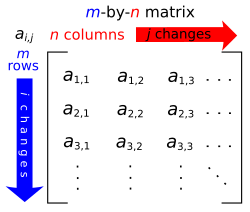
Vector spaces connect to many other math ideas! 🌐One important connection is with geometric shapes like lines or planes. ✏️ Vectors can represent these shapes, showing us positions and directions. There’s also a link to algebra, for example, when we solve systems of equations using vectors. 📏In calculus, vector spaces help us understand curves and surfaces! 🌟Additionally, structures like matrices can describe transformations in vector spaces. So you see, vector spaces relate to various branches of math and help us explain everything from shapes to changes in the universe! 💫Isn’t math amazing?


DIY is a creative community where kids draw, build, explore ideas, and share.
No credit card required