All Articles

Touchscreen

Touchscreen Facts For Kids

A touchscreen is a type of display that detects touch input from a user, allowing for direct interaction with the screen.
๐ŸŽจ Reading age for 6-8
Background blob
Touchscreen
Touchscreen
Facts for Kids!
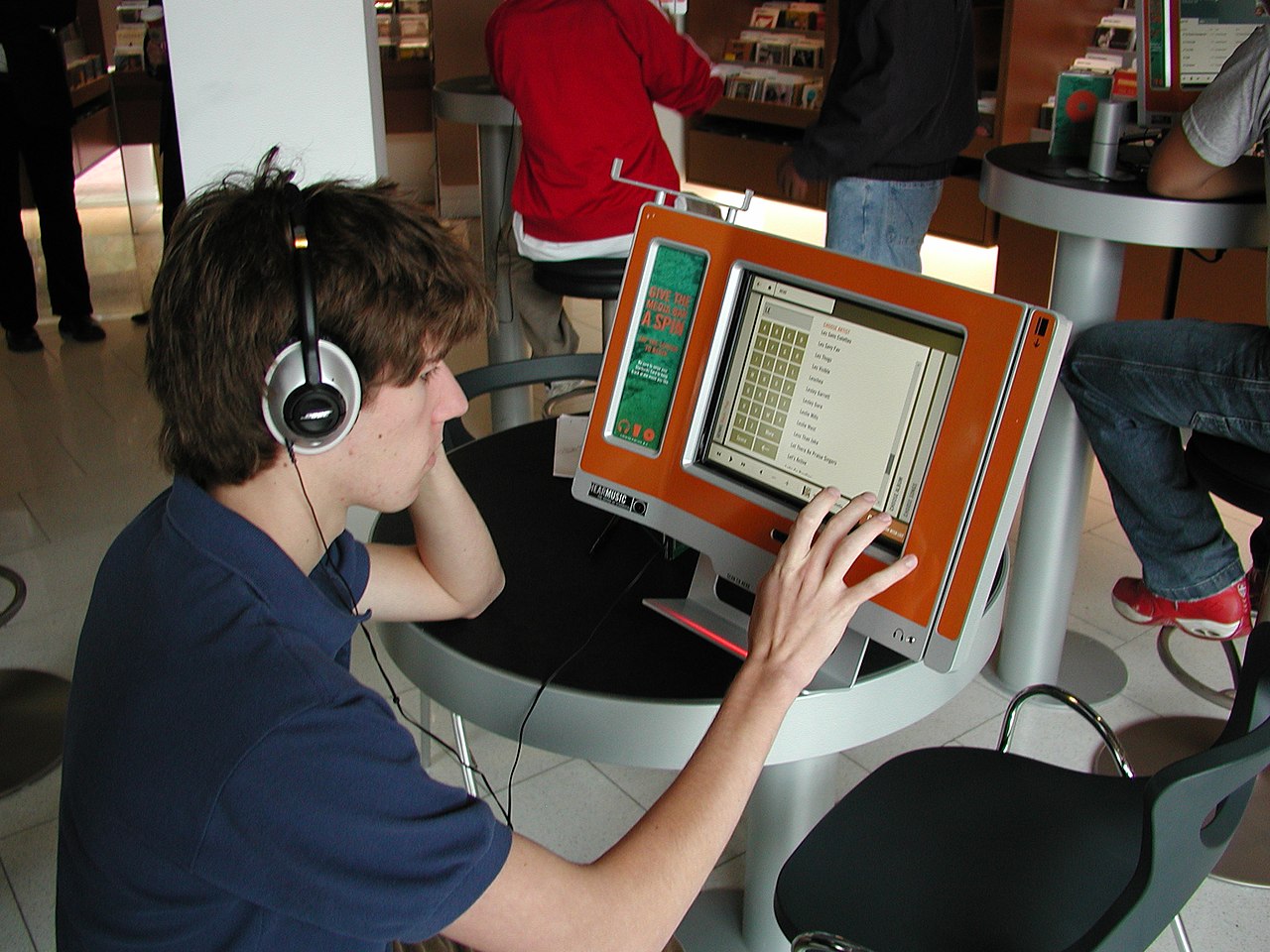
Image by Thomas Duesing from Austin, TX, USA ( tfduesing ), licensed under Creative Commons Attribution 2.0

Do more with AI

Introduction

A touchscreen is a special screen that lets you control things just by touching it! ๐Ÿ“ฑYou can find touchscreens on smartphones, tablets, and even some computers. They are super cool because they make using devices easier and more fun. Instead of using a mouse or keyboard, you can tap, swipe, or pinch the screen with your fingers. ๐ŸŒŸTouchscreens come in different shapes and sizes, from small ones on devices to big screens in stores. They help us play games, watch videos, and learn new things! Let's explore the amazing world of touchscreens together! ๐Ÿš€

Images of Touchscreen

Smart thermostat with touchscreenImage by Shadowncs, licensed under Creative Commons Attribution-Share Alike 4.0

Smart thermostat with touchscreen

The prototype[4] x-y mutual capacitance touchscreen (left) developed at CERN[5][6] in 1977 by Frank Beck, a British electronics engineer, for the control room of CERN's accelerator SPS (Super Proton Synchrotron). This was a further development of the self-capacitance screen (right), also developed by Stumpe at CERN[7] in 1972.Image by Maximilien Brice, licensed under Creative Commons Attribution 2.0

The prototype[4] x-y mutual capacitance touchscreen (left) developed at CERN[5][6] in 1977 by Frank Beck, a British electronics engineer, for the control room of CERN's accelerator SPS (Super Proton Synchrotron). This was a further development of the self-capacitance screen (right), also developed by Stumpe at CERN[7] in 1972.

Capacitive touchscreen of a mobile phoneImage by Medvedev, licensed under Creative Commons Attribution 3.0

Capacitive touchscreen of a mobile phone

The Casio TC500 Capacitive touch sensor watch from 1983, with angled light exposing the touch sensor pads and traces etched onto the top watch glass surfaceImage by Binarysequence, licensed under Creative Commons Attribution-Share Alike 4.0

The Casio TC500 Capacitive touch sensor watch from 1983, with angled light exposing the touch sensor pads and traces etched onto the top watch glass surface

Infrared sensors mounted around the display watch for a user's touchscreen input on this PLATO V terminal in 1981. The monochromatic plasma display's characteristic orange glow is illustrated.Image by Mtnman79 [1], licensed under Creative Commons Attribution 3.0

Infrared sensors mounted around the display watch for a user's touchscreen input on this PLATO V terminal in 1981. The monochromatic plasma display's characteristic orange glow is illustrated.

Printed circuit board from a control panel of a device using an infrared touchscreen, showing the arrays of infrared LEDs and photodiodes used to detect touchesImage by Jrw01, licensed under Creative Commons Attribution 4.0

Printed circuit board from a control panel of a device using an infrared touchscreen, showing the arrays of infrared LEDs and photodiodes used to detect touches

Fingerprints and smudges on an iPad (tablet computer) touchscreenImage by Sage Ross, licensed under Creative Commons Attribution-Share Alike 3.0

Fingerprints and smudges on an iPad (tablet computer) touchscreen

How Touchscreens Work

Touchscreens are like magic windows that respond to your fingers! โœจWhen you touch a screen, it detects your finger using electrical signals. Capacitive touchscreens create an electric field that senses your touch. ๐Ÿค—Resistive screens rely on pressure, so when you press down, the two layers make contact. Touchscreens then send this information to the device to perform tasks like opening an app or scrolling. โšกIt's like waving a wandโ€”just a light tap gets everything going! Touchscreens are fast, fun, and super helpful for everyone! ๐ŸŽฎ

Types Of Touchscreens

There are several types of touchscreens! ๐ŸŽจThe most common ones are resistive and capacitive. A resistive touchscreen has two layers separated by a tiny gap. When you press down, the layers touch and send a signal! ๐ŸคšCapacitive touchscreens work differently. They use electricity to detect your fingers. ๐Ÿ–๏ธ There are also multi-touch screens that can read multiple touches at once! These are fun for pinch-to-zoom actions! Another type, Optical touchscreens, use cameras to see where you touch. Each type has its uses and makes our devices exciting! ๐Ÿ’ป

Touchscreen User Interfaces

Touchscreen user interfaces (UIs) are like the friendly faces of apps! ๐ŸŒˆThey help you interact with your device. The touchscreen UI is designed with buttons, icons, and menus that you can easily tap or swipe. ๐Ÿ“ฒFor example, on a phone, the home screen shows your favorite apps. When you tap them, they open up! Touch UIs often have colorful graphics and sounds to make using them enjoyable. ๐ŸŽตDevelopers work hard to create UIs that are easy for everyone to understand, so using a touchscreen feels natural and fun! ๐ŸŽ 

History Of Touchscreen Technology

Touchscreen technology has an exciting history! It all started in the 1960s when a scientist named Dr. E.A. Johnson worked at the Royal Radar Establishment in England. ๐Ÿ‡ฌ๐Ÿ‡ง He created the first touchscreen, which could help control radar systems. โš™๏ธ The 1970s saw the introduction of the first commercial touchscreen at the University of Kentucky. In the 1980s, touchscreens gained popularity with ATMs! ๐ŸงBy the 1990s, touchscreens became common on devices like smartphones. Today, nearly everyone uses them for texting, games, and more! It's amazing how far they have come! ๐ŸŽ‰

Accessibility Features Of Touchscreens

Touchscreens have helpful accessibility features! โ™ฟ๐ŸŽ‰ They are designed for everyone, including people with disabilities. Many touchscreens have voice commands that let you control them without touching! ๐Ÿ—ฃ๏ธ You can ask your device to open apps or read text aloud. Some screens have larger icons and high-contrast colors to help people see better. ๐Ÿ‘€There are also settings for making the screen vibrate or produce sounds when tapped. These features make touchscreens easier for everyone to use and enjoy! ๐ŸŒˆ

Advancements In Touchscreen Technology

Touchscreen technology keeps getting better! ๐ŸŒŸNew advancements make screens more responsive and user-friendly. We now have flexible touchscreens that can bend! ๐Ÿคธโ€โ™€๏ธ Plus, some touchscreens can even work with gloves! ๐ŸงคThere are also pressure-sensitive screens that can sense how hard you press, letting you draw and create differently. ๐ŸŽจCompanies are working on holographic touchscreens, which can project images in 3D! How cool would that be? ๐ŸŒˆWith every development, touchscreens become more fun to use and help us in even more ways! ๐Ÿš€

Applications Of Touchscreen Technology

Touchscreen technology is everywhere! ๐Ÿ“บYou can find it in smartphones, tablets, and self-service kiosks. Fast food places like McDonald's use touchscreens for ordering. ๐Ÿ”In schools, tablets help students learn with interactive lessons. Touchscreens are also popular in gaming! With consoles like the Nintendo Switch, players can touch the screen to play games. ๐ŸŽฎHospitals use touchscreens for patient records, making it easier for doctors and nurses to help people. From shopping to learning and playing, touchscreens make life exciting and convenient! ๐ŸŽ‰

Future Trends In Touchscreen Development

The future of touchscreen technology is bright and exciting! ๐ŸŒŸResearchers are working on making screens smarter and more interactive. ๐Ÿ’กYou could see screens that recognize your face or even your voice! Imagine touchscreens that can project holograms for 3D experiences! ๐ŸŽ‰Flexible and foldable screens might let you take your favorite device anywhere. Scientists are also exploring how to use touchscreens in smart homes! ๐Ÿ”ŒPicture controlling lights and appliances just by touching a screen. With all these trends, we canโ€™t wait to see what touchscreens will be like in the future! ๐Ÿš€

Comparing Touchscreens With Other Input Devices

Touchscreens are different from other input devices like keyboards and mice. โŒจ๏ธ A keyboard has lots of buttons that you press to type. A mouse moves around the screen to click and drag objects. ๐Ÿ–ฑ๏ธ But touchscreens let you do all this with just your finger! ๐Ÿ‘†This makes them easier for younger users and cool for playing games! While keyboards are great for typing long messages or documents, touchscreens are faster for quick actions. ๐Ÿš€Together, they provide fun choices for everyone when using technology! ๐ŸŒŸ

Touchscreen Quiz

Q1
Question 1 of 10

Learn more about Touchscreen

Ready to create?

Drop Files here
Make

To create a safe space for kid creators worldwide!

Create

Vibe Coding

ChatDino

All Tools

Kibu

Resources

Worksheets

SafeTube

Blog

FAQ

Account

Pricing

Log-in

Sign-up

Data Deletion

Company

About

Community Guidelines

Privacy Policy

Terms of Service

2025, URSOR LIMITED. All rights reserved. DIY is in no way affiliated with Minecraftโ„ข, Mojang, Microsoft, Robloxโ„ข or YouTube. LEGOยฎ is a trademark of the LEGOยฎ Group which does not sponsor, endorse or authorize this website or event. Made with love in San Francisco.