Theorbo Facts For Kids
The theorbo is a large, plucked string instrument with an extended neck and additional bass strings, prominent in Baroque music for its rich tone and versatility.
Select reading age

Theorbo Facts For Kids
Videos & Quizzesincluded
About this topic
The theorbo 🎶 is a long-necked string instrument, like a guitar. It has two sets of strings: one for the regular notes and another set that plays deeper sounds. Originating in Italy during the late 1500s, the theorbo became popular in baroque music. It has a unique shape, with a curved body and an extended neck. This makes it look different from standard lutes! Theorbo players often strum or pluck the strings with their fingers. Today, you can still hear the theorbo in opera, orchestras, and even some modern musical performances. It helps create beautiful, layered sounds! 🌟
Explore with ChatDinoKey Points
Playing the theorbo requires practice and skill!
The theorbo was invented in Italy in the late 1500s!
The theorbo is carefully crafted using wood from trees like maple or spruce.
Throughout history, many talented musicians have played the theorbo!
Many composers have written beautiful music for the theorbo!
Believe it or not, the theorbo appears in movies and TV shows!
Today, you can still hear the theorbo in modern performances!
The theorbo belongs to the lute family, which includes other instruments like the archlute and the chitarrone!
Photos of Theorbo
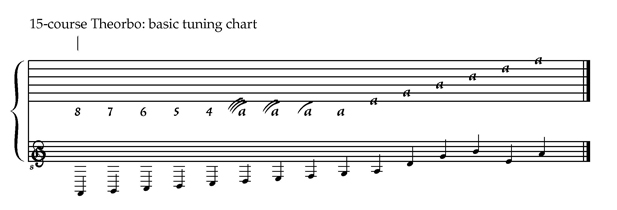
Theorbo basic tuning chart

A 1670 painting of an English theorbo player

Il suonatore di tiorba (The Theorbo Player), a painting by Antiveduto Grammatica.

Scott Pauley playing a theorbo
🎶 Playing Techniques
Playing the theorbo requires practice and skill! 🎶Players use a special technique called “fingerpicking” where fingers pluck the strings to create sweet melodies. Some players also strum the strings with their thumbs to make rich chords. The theorbo is often used to accompany singers or other instruments, adding depth to the music. The music can be fast and lively, or slow and calm. Players can also perform different styles, like baroque or folk music. 🎻With patience and dedication, young musicians can master the theorbo to create beautiful sounds that can fill concert halls and cozy homes!
Go deeper🎤 History Of The Theorbo
The theorbo was invented in Italy in the late 1500s! 🎤It developed from the lute, which was also popular at the time. Notable composers like Giovanni Gabrieli and Claudio Monteverdi wrote music for the theorbo. By the 17th century, the theorbo had spread to France and England. Classical musicians used it to create soothing melodies in theaters and during court performances. 😍The instrument flourished in the baroque period, which lasted from 1600 to 1750. Like a time traveler, it moved through events and styles! Although it isn't as common today, it still plays a role in classical music whenever special occasions call for it!
Go deeper🌲 Construction And Design
The theorbo is carefully crafted using wood from trees like maple or spruce. 🌲Its body is oval-shaped, which helps make it sound great! The neck is long, with about 14 to 19 frets where players press their fingers to create music. An important design feature is the two different sets of strings: the shorter ones produce high notes, and the longer ones give deep bass sounds. String materials can be made from gut (animal intestines) or metal. 🎸The theorbo's strings are often plucked using a thumb or finger, which is called "pizzicato." Each part of the theorbo is made by skilled artisans, making each one unique!
Go deeper🎵 Notable Theorbo Players
Throughout history, many talented musicians have played the theorbo! One famous player is Hopkinson Smith, known for his beautiful renditions of baroque music. 🎵He has taught many others about the theorbo and how to play! Another notable theorbo player is John Paul Jones, famous for being part of the rock band Led Zeppelin. He sometimes uses the theorbo in his music! 🎸These musicians inspire new generations to learn the instrument, showing that the theorbo is not just for classical concerts but can also rock out. 🌟
Go deeper🎼 Repertoire And Composers
Many composers have written beautiful music for the theorbo! 🎼One famous composer is Heinrich Schütz, who lived in Germany in the 1600s. He wrote pieces that paired the theorbo with voices and other instruments. Another composer is Johann Sebastian Bach from Germany, known for his incredible music during the baroque period. He created rich compositions that sometimes included the theorbo. Famous pieces can usually be found as part of guitar or lute music. Performing theorbo pieces gives musicians a taste of history while creating lovely sounds that everyone can enjoy! 🎵
Go deeper🎬 Theorbo In Popular Culture
Believe it or not, the theorbo appears in movies and TV shows! 🎬You might hear the theorbo in historical films to create an authentic atmosphere. One example is "The Three Musketeers," where you can feel the past through its music. 🎦The instrument has also been featured in video games set in old times, like "Assassin's Creed" series, adding layers to the storytelling. Some popular musicians even use theorbo sounds in their songs to give a unique twist! 🎤The theorbo's rich and soothing tones help make scenes feel magical and exciting, allowing everyone to enjoy its musical charm!
Go deeper🎻 Theorbo In Contemporary Music
Today, you can still hear the theorbo in modern performances! Sometimes it’s used in classical music orchestras, which still play compositions from the baroque period. 🎻Some contemporary musicians mix the theorbo with different genres, like jazz or even rock music. It may appear in movie soundtracks, where its unique sound adds drama and emotion. Artists like lutenist Paul O’Dette have adapted theorbo music for newer audiences. 🎤The instrument’s versatility allows it to blend in various styles. Even though it’s an ancient instrument, the theorbo is still bringing joy to music lovers around the world!
Go deeper🎸 Comparison With Other Lute Instruments
The theorbo belongs to the lute family, which includes other instruments like the archlute and the chitarrone! 🎸The main difference is that the theorbo has an extra long neck, making it easy to play deeper bass notes. While regular lutes usually have one set of strings, the theorbo has two—one for higher pitches and one for lower pitches. 🎶Each type of lute has its own type of music and playing style. Other lutes are generally smaller and have a brighter sound. Musicians choose different lute instruments based on the music they want to play and the sound they want to create!
Go deeper